


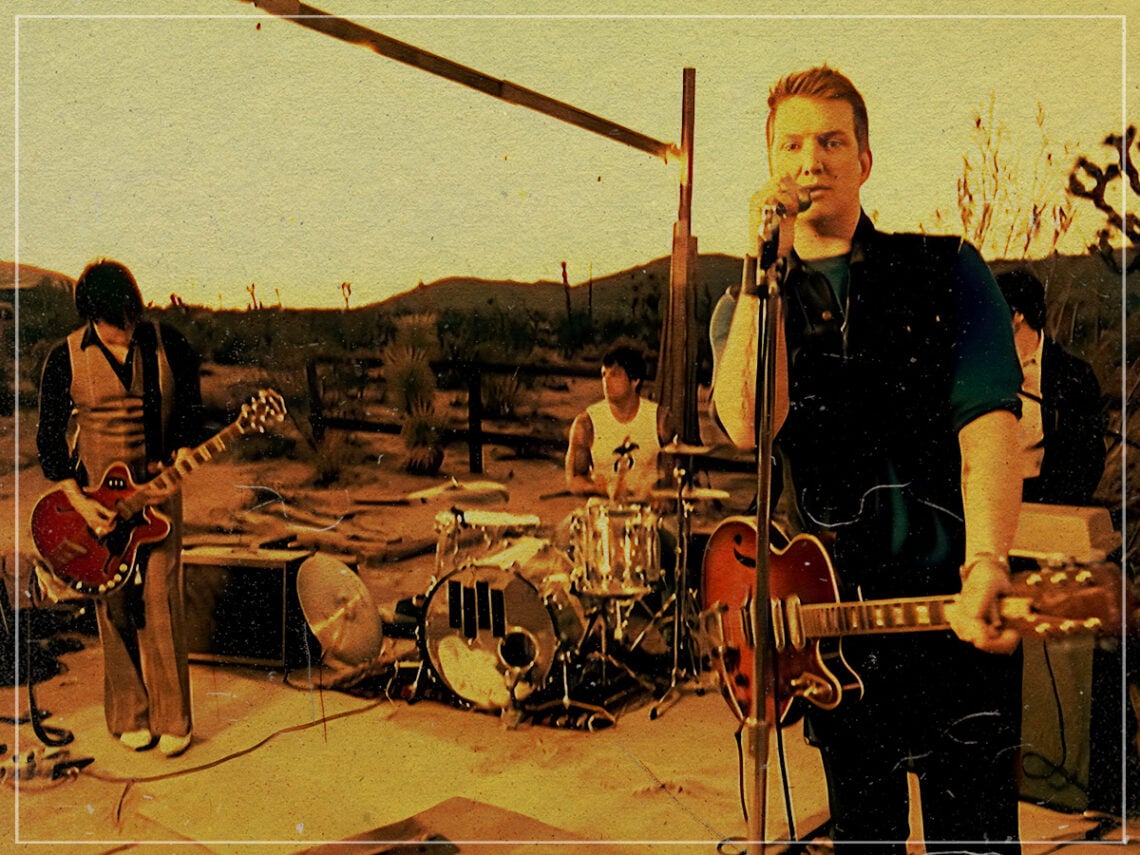
Queens of the Stone Age’s grand reinvention: How one album that made them “a new band”

Towards the tail end of the 2000s, the general perception of rock music was that it was on its last legs, and despite the mammoth efforts laid down by newer acts like Queens of the Stone Age in the early part of the decade, things were moving swiftly on to new territories.
The acts who were carrying on with tradition had made a valiant effort to inject a bit of vitality into the genre, but it seemed as though things had reached a dead end for the time being, with very few new ideas coming forth.
Having released Rated R in 2000 and Songs For the Deaf in 2002, perhaps two of the 21st century’s earliest candidates for the best rock albums of the new age, the band would take a step backwards on Lullabies to Paralyze in 2005. It’s by no means a bad record – in fact, it’s incredibly strong – but the world didn’t seem to be as infatuated with the sinister stoner rock riffs that Josh Homme and co were doling out as they were when they did so on their two previous efforts.
Either they would need to understand the importance of evolving and changing tactics a little bit to win their fans over or generate a new audience, or they would have to accept the diminishing returns in terms of public reception to their records. Drastic measures would have to be taken either way, and when they reunited in the studio to make their fifth album, things would end up being a lot freer than they had been in the past with regards to how the band were approaching genre and form.
Era Vulgaris, released in 2007, is an unusual record for how it somehow makes the band simultaneously more commercial, but doesn’t forego any of the aggression and grit that had been present on prior releases. Until they decided to record 2017’s Villains with Mark Ronson, it was undeniably the most commercial-sounding album that the band had ever made, with singles such as ‘Make It Wit Chu’ having more of a sleazy soft rock flavour to it than anything they’d previously attempted.
On the other hand, ‘Sick, Sick, Sick’ and ‘3’s & 7’s’ were still packed with the same sense of rock and roll bravado, and opening track ‘Turnin’ on the Screw’ takes their stoner nature to a whole new level – it doesn’t just sound completely blitzed after a couple of tokes, it’s fully entered another realm of consciousness. The reception that Era Vulgaris received was mixed, and some didn’t understand why the record shifted in sound so much, but Homme attests that this was entirely a conscious decision on the band’s part.
“I think this album is different even for us, I think it’s like we are a new band,” Homme told Clash Magazine. “The idea was to take our music to the kind of place where we can just play whatever we want and whatever sounds good. I just love good hooks. The album has a lot of different things going on, but musical schizophrenia can’t be cured with regular medication – it would be stupid of us not to change things around, you’ve just got to do your own thing otherwise it starts to grate.”
You have to admire him for his honesty and commitment to reshaping things when the sounds the band had been playing with were showing signs of stagnating. On the other hand, the dismissal of Era Vulgaris by some fans is perplexing because, if anything, it helped usher in the new and far bolder era of Queens of the Stone Age that was seen on the follow-up record, …Like Clockwork.
