


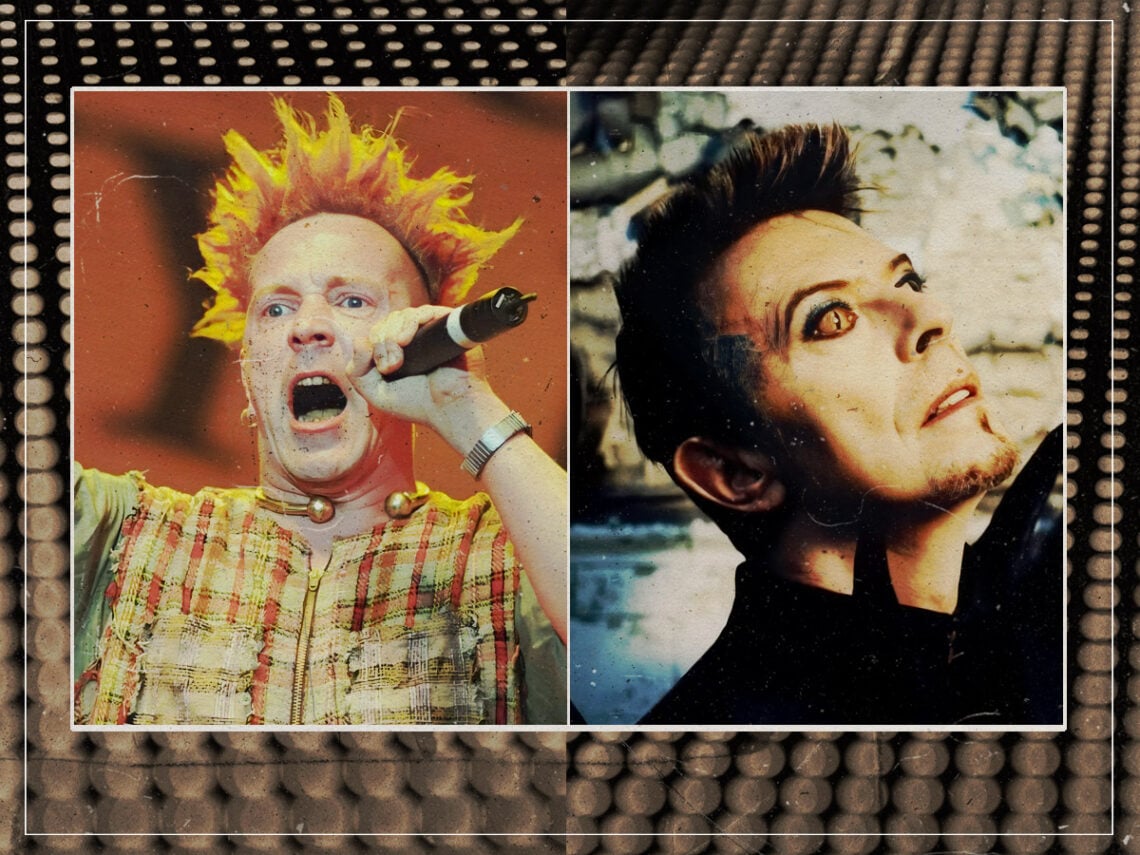
“Terrible fucking record”: The album that made John Lydon fall out of love with David Bowie

Punk would be nowhere without David Bowie. He was the alien that forecasted a revitalised future from the ashes of the 1960s prelapsarian dream. The arc of Ziggy Stardust almost literally prognosticated the revolution that lay ahead. John Lydon has always been keen to convey this, insisting that he heard the calls of his older English peers and brought them to fruition with the Sex Pistols without any assistance from the supposed first punks in New York City.
When I spoke to him myself pretty much half a century after the event, he still had the bit between his teeth regarding this cultural ‘discrepancy’. “Now, an awful lot of American journalism is saying that New York punk is where it all comes from. Oh, go fuck yourselves; it is talking shit. I was brought up in Britain!” Lydon yelled, leering towards his spittle-sprayed webcam.
“Mud, The Sweet, T. Rex, Mott the Hoople, Dave Bowie, Led Zeppelin, Alex Harvey Band, Status Quo, Traffic, a vast extending universe of music. That’s what influenced me,” the formidable frontman quickly added. Bowie was chief among them from the early days. While it seems unavoidable that the likes of The Ramones and Richard Hell did indeed have a bearing of what was to come in Britain, perhaps the truth to Lydon’s point is that the Starman’s glowing individualism had already lit the fuse for something fresh within the Sex Pistols singer.
This is a line that he has rolled out countless times over the years, bludgeoning the point towards truth. “Dave Bowie, T. Rex, fuck off, Electric Warrior, Hunky Dory, Ziggy Stardust. I need a bunch of New York poetry readers to influence me? I don’t fucking think so,” he said at a recent Q&A in Glasgow. “I loved Hunky Dory so much, I thought that was fucking amazing,” he said, highlighting the record that ranks among his all-time favourites.
There was a visceral difference between Bowie and anything else on the record, which is why perhaps Lydon has so carefully curated his publicly acknowledged influences thereafter. Alas, much like Never Mind the Bollocks, Bowie had the tracks to go along with the trailblazing. “Just the songwriting and the originality and the absurdity of it,” he effused. Adding that even Bowie’s early cult albums were on his radar and rendering him enamoured with this glorious alien.
However, Lydon is far from the sort of person who will leave his heroes unaccountable. Over the years, he would have several encounters with Bowie that didn’t quite go as planned and why he remained a firm fan of his early work. He was quick to call out when he felt the ‘Ashes to Ashes’ star had lost his way. This was apparent when he strolled into the Virgin Records office in Los Angeles in 1997.
Strewn out on the floor was a giant poster of Bowie’s Earthling album. Evidently, the jungle record had not been to Lydon’s taste. Journalist Roger Morton was awaiting Lydon for an interview about his new solo record. From the pre-arranged room, he recalled seeing the strange sight of Lydon in the lobby, leaping up and down upon the Earthling rendering on the floor, digging the point of his trainers into it as he landed. He looked upon his scuffs and proclaimed: “It’s fantastic!”
He would soon make it clear to a puzzled secretary why he was so hell-bent on befouling the giant Union Jack-clad ‘Dave’ sprawl across the office floor. He turned to the desk over a sustained period of denigrating leaps, and announced: “Terrible fucking record that was as well!”
“That was naughty shit,” he would later laud when it came to Bowie boldly splaying himself out on a bed in what appeared to be a dress for the cover of The Man Who Sold the World. “But he was so fucking good that it did not matter.” Seemingly, as the 2000s beckoned, Johnny Rotten had figured his hero was no longer up to scratch. He had showed him the “brave new world”, and he asserts he will always be indebted to him for that, but thereafter, he has always questioned the conceit of Bowie’s sustained brilliance.
