


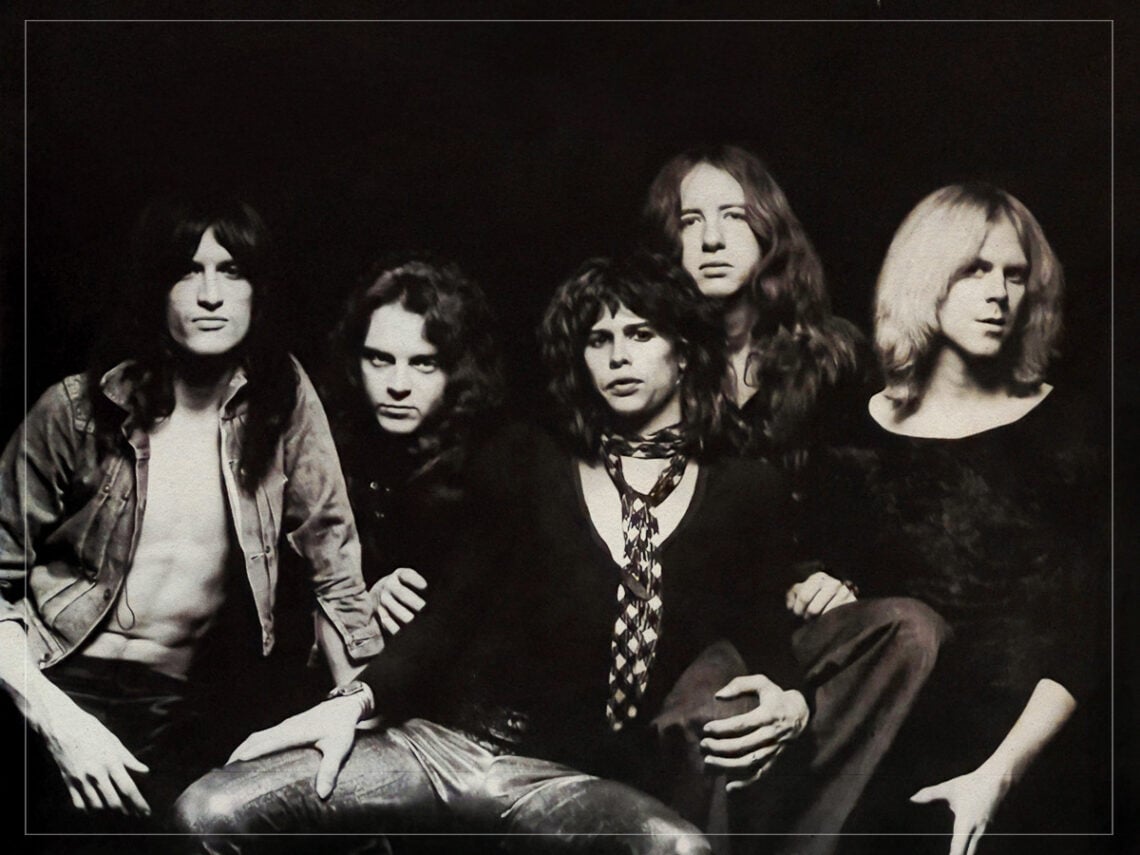
The Aerosmith classic Joe Perry called completely disjointed: “Trying to squeeze toothpaste out of an empty tube”

Aerosmith were enjoying a major high point in the mid-to-late 1970s, mainly thanks to their massively popular records, Toys in the Attic and Rocks.
However, much like the caricature drawing on the album artwork by Al Hirschfeld, certain parts of their world became far too excessive and over-the-top by the time it came to recording Draw the Line, making the previously fully operational ship that was Aerosmith fall victim to a storm they didn’t know they could ever come back from.
To their credit, it’s a tale as old as time: rock band becomes big and successful, certain members lose themselves to the rock ‘n’ roll lifestyle, and, suddenly, life in the studio becomes nearly impossible, with those hitting rock bottom losing all sense of decorum under the wave of intense substance abuse.
This is what happened across the sessions for Draw the Line, with the band showing up at New York’s the Cenacle simply due to obligation, no longer tight-knit or anchored by the trusty writing contributions from Steven Tyler or Joe Perry. This was because, as Petty rather bluntly put it in his memoir, “Steven and I had stopped giving a fuck.” Things were so bad, in fact, that he also declared this period “the beginning of the end” for Aerosmith and “the decay of our artistry”.
In his view, there was one fundamental issue with the way they handled things at the time, and it was that they’d long stopped acting like musicians who did drugs from time to time, and were instead acting like drug addicts who made music from time to time. Tyler also admitted that, where he’d once been something of a perfectionist, listening to every note and every word to make sure it was all exactly right, he didn’t care anymore, often turning up stoned and without his usual sharpness.
Suffice to say, therefore, that the material suffered catastrophically as a result. After all, if the recording process wasn’t difficult enough, the fact that each member seemed entirely detached from one another made the entire process feel unnatural and disjointed, much like how the music sounds from an outsider’s perspective; defined by its own chaos, with elements that often seem entirely misplaced in the same space.
What’s worse is that many could immediately tell that Aerosmith had lost its spark, and when you listen to a record and can tell that the artist doesn’t give a damn about their own music anymore, then it almost feels offensive that they put it out there in the first place. But that, ultimately, was their first – and biggest – mistake: they weren’t in the place to put in the care that it needed, and so, from day one, Draw the Line was destined to fail.
“The truth is that we were all together yet totally apart,” Perry later explained in his memoir, recalling how they were “separated from one another” in the studio, and the entire “vibe was mellow”, like the liveliness to create something great had simply faded into nothing. As Perry rather scathingly reflected, “When it came to writing, though, it felt like we were trying to squeeze toothpaste out of an empty tube.”
Perhaps, therefore, in some way, there’s something poetic about its title, Draw the Line, specifically with the images it conjures relating to excess and coming up with your own lines, only to cross them all, no matter the consequences. And, of course, it also has strong associations with the literal act of snorting coke lines and taking other drugs, all while the collateral damage was the one thing that meant the most: the art.
