


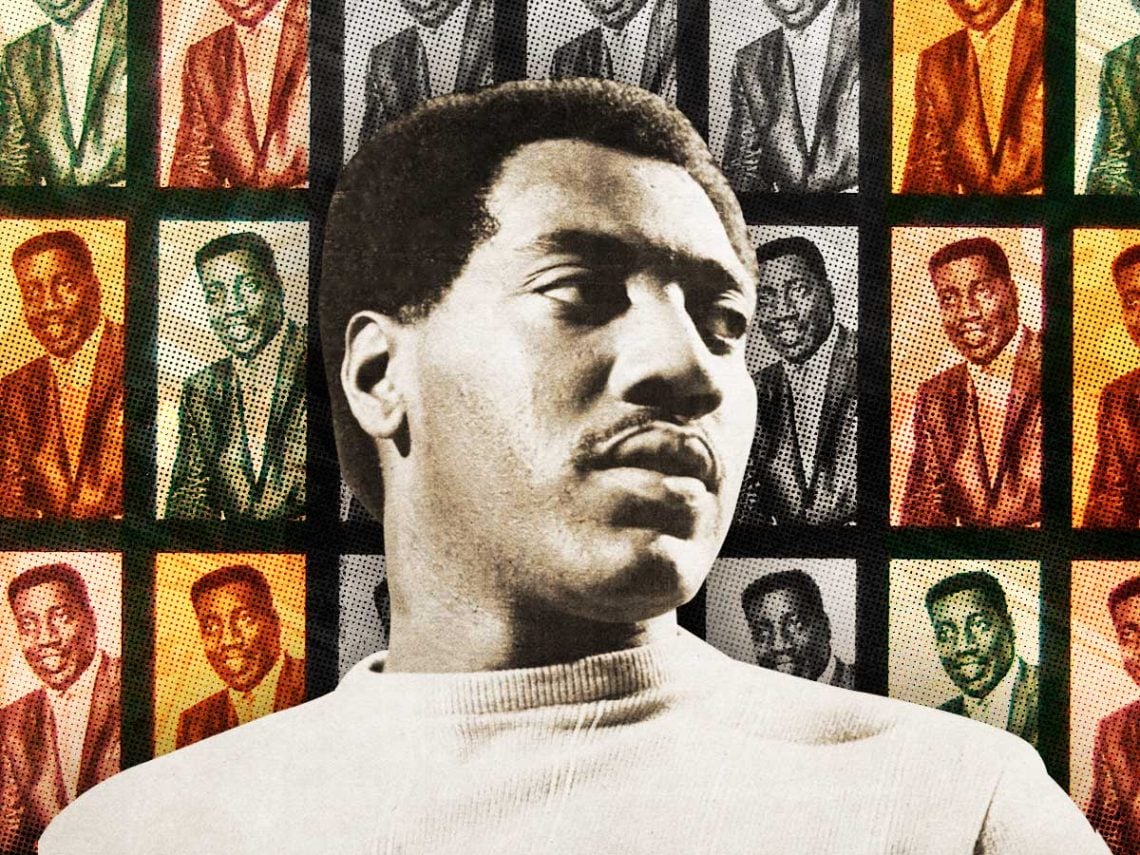
“A loss to the whole world”: The tragic death of Otis Redding

A week before Christmas, 1967, at the end of a year in which the Summer of Love had gone sour and civil unrest was erupting into riots in dozens of American cities, one of the unifying figures of the era, Otis Redding, was laid to rest in Macon, Georgia.
As his casket was carried down the steps of the City Auditorium, Redding’s friends and admirers didn’t gather by the awaiting hearse; they instinctively huddled around the other artists there in attendance, the ones tasked with carrying the torch for the King of Soul: James Brown, Solomon Burke, Aretha Franklin, Joe Tex, Stevie Wonder, Wilson Pickett.
After the ceremony, Atlantic Records executive Jerry Wexler, who’d worked with Redding and delivered his eulogy, called the late singer “a natural prince. When you were with him he communicated love and a tremendous faith in human possibility, a promise that great and happy events were coming. In some magic way, his recordings have the same inspirational quality.”
Redding’s song ‘(Sittin’ On) The Dock of the Bay’, which he’d recorded just three days before his death at the age of 26, went straight to number one when it was released several weeks after his funeral. Wexler called the song “Otis’s epitaph. It proves that a singer can do his own thing and still be commercially successful. Otis is tremendously responsible for the fact that so much of the young white audience now digs soul the way the black audience does.”
Every subsequent generation that’s been introduced to the music of Otis Redding tends to experience the same stone-cold realisation. No matter which song or record you’re listening to, the voice you’re hearing is essentially that of a kid, never older than 26, but somehow able to communicate the pain, weariness, wisdom, heartache, and passion of a grizzled troubadour or seasoned preacher twice his age.
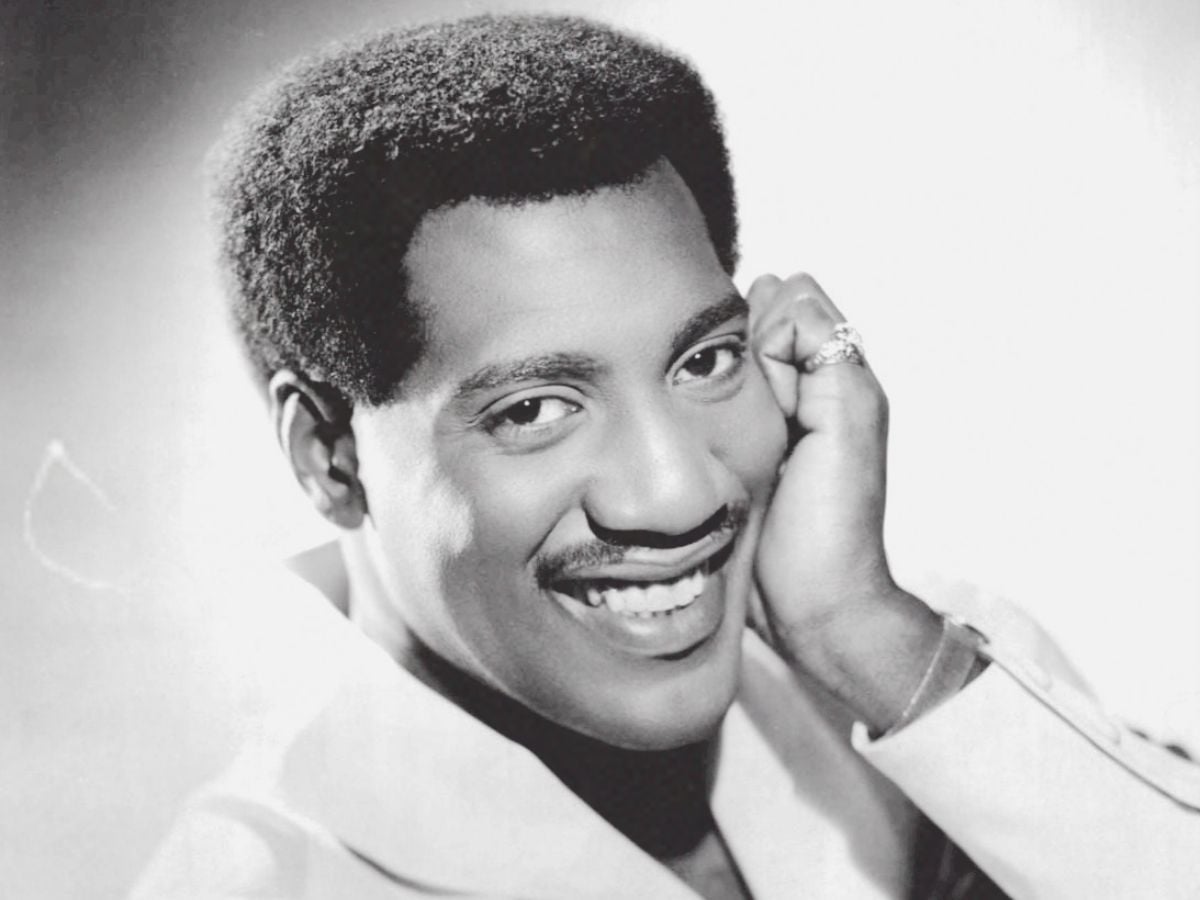
Otis’s physical traits only further defied the reality of his youth, the fact that his career had only really just begun.
“What impressed me was his actual physical size,” recalled Mitch Ryder, who played alongside Redding at the latter’s last televised performance in 1967. “He put his arm on my shoulder during the song, and was holding me close,” Ryder told the New York Post as part of a 2017 retrospective on the 40th anniversary of Redding’s fatal plane crash. “He’s rocking back and forth, and every time he rocks, my foot comes up.”



Redding was married with three kids, and, as evidenced by the private plane that ultimately spelt his doom, was living a very good life for a self-made man with just a few records under his belt. His first studio album, Pain In My Heart, was released in March of 1964, when he was 23, meaning that the entire length of the soul legend’s recording career was less than four years. Because of this, though, Redding’s original drive and vision as an artist were always relatively fresh in his mind.
“I want to become two things; first, an international recording and performing star. Then I would like to fill that silent vacuum that was created when Sam Cooke died.”
Otis Redding
In December of 1964, almost exactly three years before Redding’s death, his hero, Sam Cooke, was shot to death at the age of 33. In the same way soul fans looked to James Brown and Aretha to carry on the spirit of Otis’s music after his loss, Redding had been handed the same intimidating baton by Cooke’s worldwide fan base, asked to take his place as the new standard bearer for soul singing in America. Most artists wouldn’t have the shoulders to take on such a weighty expectation, but Redding seemed to relish the responsibility.
In the mid-1960s, he proved equally adept at writing his own classic tunes (‘Respect’, ‘Mr Pitiful’, ‘I Can’t Turn You Loose’) and masterfully interpreting the work of others (The Beatles’ ‘A Hard Day’s Night’, the Stones’ ‘Satisfaction’, Sam Cooke’s ‘Shake’). Unlike some of his fellow superstars, he was also consistently humble, confident and ambitious but never selfish or entitled.
“My original feeling for Otis wound up to be my final feeling for Otis,” Redding’s guitarist and songwriting partner Steve Cropper said. “He was a pure man. Anything you say about him has to be good. He was a good person. He always got along well with the people around him. . . and it showed up in his records and in his work. … He always gave the musicians credit for everything that he did. If he had a hit record, he’d tell us, ‘Man, I couldn’t make it if it weren’t for you.’ . . . You can’t help but like people like that.”
The fateful night of December 10th, 1967
One of the more startling artefacts in the exhibits at the Rock and Roll Hall of Fame in Cleveland, Ohio, appearing rather unceremoniously in an otherwise hum-drum display about soul music pioneers, are two sections of the fuselage from Otis Redding’s fatal plane crash.
The singer’s name is still displayed stylistically across the two pieces, clear and vibrant as it was when Redding was using the small private jet to tour the US nearly 60 years ago. On their final flight, Otis and his backing band, coincidentally, had taken off from Cleveland after a performance on a popular local TV show called ‘Upbeat’ and multiple gigs at an African American club called Leo’s Casino. Their next destination was a scheduled gig in Madison, Wisconsin, but in rough December weather, they never got there, crashing into Lake Monona, three miles from shore.
Along with Redding’s pilot and valet, four members of his backing band, the Bar-Kays, perished. They were guitarist Jimmie King Jr, drummer Carl Cunningham, organist Ronnie Caldwell, and saxophonist Phalon Jones. All of them were just teenagers—barely 18 or 19—full of Memphis swagger and fueled by the possibilities opening up to them under the guidance of Redding and the Stax Records family.
Incredibly, there was also one survivor of the crash. Trumpeter Ben Cauley, who was the eldest member of the Bar-Kays, having just turned 20, was thrown from the plane on impact and clung to life in the freezing lake until rescuers arrived. Another member of the band, bassist James Alexander, had not been on the flight. He’d flown commercial that day, as the small private plane couldn’t fit everyone, putting him in a similar position to the one Waylon Jennings faced on the “Day the Music Died,” suffering from lifelong survivor’s guilt from a random twist of fate.

Another person with an extremely unique perspective on the tragedy was a young newspaper reporter named Joe Eszterhas, future Hollywood screenwriter of Flashdance and Basic Instinct, who was a 23-year-old employee of the Cleveland Plain Dealer at the time, and interviewed Redding backstage after his final performance on December 9th at Leo’s Casino, the night before the flight. It was supposed to be a quick 20-minute chat, but it became a friendly hangout over drinks that carried on for hours.
“We talked until almost 3 in the morning,” Eszterhas recalled in a 2022 piece for The Wrap, “And at the end of the many beers and the ‘soda pops’ and the conversations and the laughs, we were friends. He gave me his home phone number and I gave him mine. And I told him that the next time he was in town I was going to take him to the same Hungarian restaurant where I had taken Jimi Hendrix and introduce him to the wonders of chicken paprikash. I had more fun with Otis than with any other person that I had interviewed.”
The next day, at the Plain Dealer offices, the teletype machine started ringing repeatedly, indicating a major news story was developing. Eszterhas read the AP report as it came in: Otis Redding had died in a plane crash. The concert from the night before, the interview afterwards, and the new friendship formed were all the last of Redding’s life.
“It was another chapter in a lesson that I had always resisted,” Eszterhas wrote. “America was not always a place where the streets were paved with gold. It was sometimes a place where the streets were spilled with blood and a place where its residents were suffused with despair. And one more part of that lesson, though I knew Otis would argue against it: God is not always good.”
Down in Memphis, where Redding had recorded most of his classics for the Stax label, the news reached the musicians who’d worked with him and saw him as family.
“It was a loss to the whole world,” Steve Cropper said, as quoted in Jane Schiesel’s The Otis Redding Story. “Now nobody will know what he had in store for them. He was just starting to come into something, to get out of hard rhythm and blues. He went beyond that. He was hitting everybody all over the world.”
