


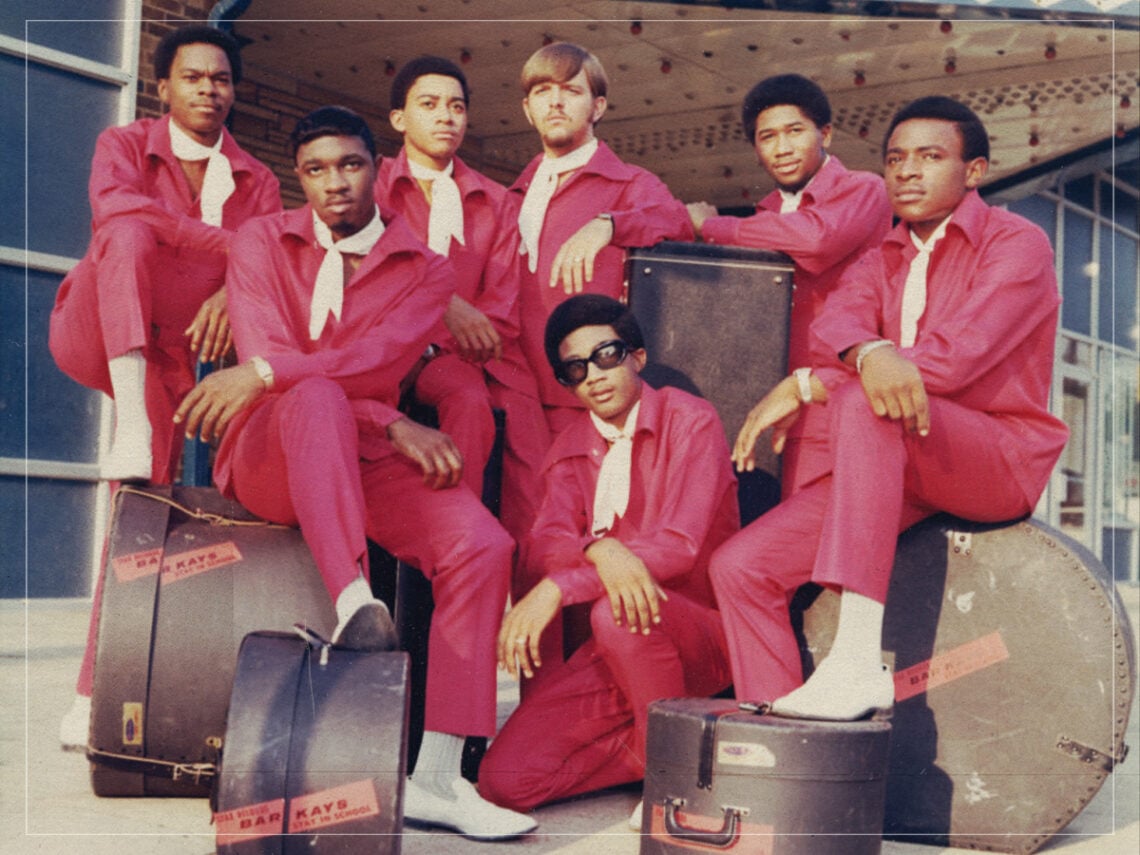
The Bar-Kays: The band that rose from the ashes of Otis Redding’s tragic plane crash

One of the more jarring artefacts in the exhibits at the Rock and Roll Hall of Fame in Cleveland, Ohio—appearing rather unceremoniously in an otherwise hum-drum display about soul music pioneers—are two sections of the fuselage from Otis Redding’s fatal plane crash in 1967.
The great singer’s name is still displayed stylistically across the two pieces, clear and vibrant as it was when Redding was using the small private jet to tour the US nearly 60 years ago. On the fateful day of December 10th, Otis and his backing band, coincidentally, had taken off from Cleveland after a performance on a popular local TV show called ‘Upbeat’. Their next destination was a scheduled gig in Madison, Wisconsin, but in rough winter weather, they never got there, crashing into Lake Monona, three miles from shore.
The headlines the next day told of the unthinkable loss of one of the world’s most popular young voices, silenced at the height of his powers, at just 26 and weeks away from releasing what would posthumously become his signature song, ‘Sittin’ on the Dock of the Bay’. But there were seven other people in that plane with Otis Redding, and all but one of them also lost their lives that day.
Along with Redding’s pilot and valet, four members of his backing band, the Bar-Kays, perished. They were guitarist Jimmie King Jr, drummer Carl Cunningham, organist Ronnie Caldwell, and saxophonist Phalon Jones. All of them, incredibly, were just teenagers – barely 18 or 19 – full of Memphis swagger and fueled by the possibilities opening up to them under the guidance of Redding and the Stax Records family.
There were only two survivors associated with the band. Trumpeter Ben Cauley, who was the eldest member of the group, having just turned 20, was thrown from the plane on impact and clung to life in the freezing lake until rescuers arrived. He was the sole survivor of the eight passengers. Bassist James Alexander, the sixth Bar-Kay, had not been on the flight. He’d flown commercial that day, as the small private plane couldn’t fit everyone, putting him in a similar position to the one Waylon Jennings faced on the ‘Day the Music Died’, suffering from lifelong survivor’s guilt from a random twist of fate.
Before the tragedy, the Bar-Kays had been more than Redding’s band; they were poised to become Stax’s next breakout stars. Their instrumental hit ‘Soul Finger’, released earlier in 1967, had already cracked the top 20 on the US Billboard chart and top 40 in the UK, and their live performances backing Otis were drawing attention and acclaim everywhere they went.

Once they’d mourned their lost bandmates and dealt with the shock, Alexander and Cauley were left with a difficult choice: pursue a different track for their careers, or try to rebuild the Bar-Kays as a tribute to those they’d lost.
“A lot of our fellow musicians cared about the Bar-Kays,” Cauley recalled to the Memphis Commercial Appeal newspaper in 2007, “A lot of them was crazy about us, and they helped us put the band back together.”
With the blessing of Stax, the duo went to work recruiting new talent and officially reformed the Bar-Kays in 1968, with a lineup featuring Cauley, Alexander, saxophonist Harvey Henderson, organist Ronnie Gorden, guitarist Michael Toles, and drummer Willie Hall. Later, when vocalist Larry Dodson joined the group, the new group began their evolution into a band better suited for the changing sounds of the 1970s, expanding beyond soul instrumentals into funk, with gritty, syncopated grooves, attitude, and energy that Otis himself would surely have appreciated.
They toured with Isaac Hayes, becoming a cornerstone of his Hot Buttered Soul revue, and eventually re-emerged as stars in their own right with disco-funk anthems like ‘Shake Your Rump to the Funk’ and ‘Shut the Funk Up’, finding chart success in the late ’70s.
James Alexander remained the group’s anchor through decades of shifting lineups and additional tragedies, including the unsolved murder of guitarist Marcus Price in 1984. Ben Cauley, the other original Bar-Kay, left the group in the early 1970s, but he remained close with Alexander and continued to play music into the 2000s.
In 2007, to mark the 40th anniversary of the Otis Redding plane crash, Cauley returned to Lake Monona, Wisconsin, for the first time, joining other musicians in a tribute to the victims.
“Lord knows, it just really touched me to be there,” Cauley said. “You know, for a long time I used to tell my kids, ‘One day I’m going back.’ I just had to see the lake [his voice trails off]. I had to see it.”
In 2015, Cauley and Alexander reunited, along with other past and present members of the Bar-Kays, for the band’s induction into the National Rhythm and Blues Hall of Fame. For Cauley, who’d carried memories of the Wisconsin plane crash with him for 50 years, it was a chance to see the Bar-Kays celebrated for their accomplishments across decades and not merely for their status as a sad footnote in the Otis Redding story. Cauley, himself, died just a few months after the ceremony at the age of 67.
