


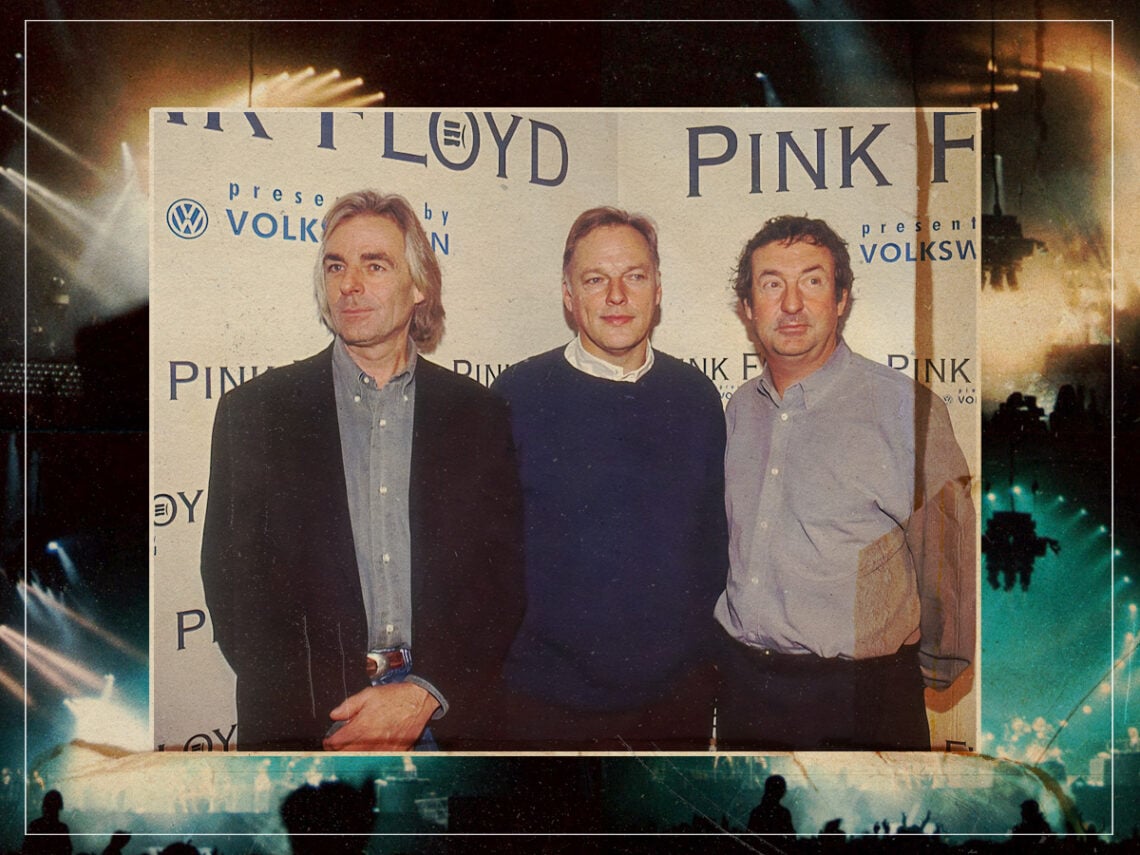
The 1994 Pink Floyd song David Gilmour thought was one of the band’s best: “A great classic”

Pink Floyd leader David Gilmour has written countless classics throughout his career.
While he wasn’t with the band when they produced their 1967 debut album, the psychedelic masterpiece The Piper at the Gates of Dawn, his introduction in December that year – as frontman Syd Barrett’s mental health issues started to take their toll – would give the band a breath of fresh air. Gilmour’s arrival re-energised the band for the end of Barrett’s tenure and helped them refocus for their next chapter.
Together, Gilmour and Roger Waters would form one of their day’s most potent songwriting partnerships. Whilst the pair would become increasingly atomised, they had defining hands in Pink Floyd producing classic albums such as Meddle, The Dark Side of the Moon and Wish You Were Here. This is not a slight to drummer Nick Mason or keyboardist Richard Wright, who were both incredible, but without Gilmour and Waters, it’s likely that Pink Floyd wouldn’t have become such a titan of popular culture.
As is well known, after the success of 1973’s The Dark Side of the Moon, things started to fracture for Pink Floyd, with interpersonal relationships fraying and Waters gradually taking a creatively dictatorial grip on the creative side of things. It would all come to a head during the recording of 1983’s The Final Cut, Waters’ final album with the quartet. After he tried to sue the band into splitting up, he and Gilmour would enter into an acrimonious feud that is still ongoing today.
However, more importantly, after Waters’ departure in 1985, Gilmour became the executive of the group, and together, they would release three more albums, 1987’s A Momentary Lapse of Reason, 1994’s The Division Bell and their most recent and final effort, The Endless River. Whilst some of the band’s longtime fans might not have been overawed with their work in the modern era, they still produced many classics.

Part of the scepticism surrounding Pink Floyd’s later work stemmed from how closely the band had become associated with Waters’ conceptual ambition during the 1970s.
Albums such as Animals and The Wall were so dominated by his worldview that many listeners struggled to separate the identity of Pink Floyd from Waters himself after his departure. Gilmour’s version of the band therefore faced the difficult task of preserving Floyd’s sonic identity while simultaneously proving the group could still function creatively without its most outspoken member.

‘High Hopes’ became one of the clearest examples of that balance. Built around Gilmour’s melancholic guitar work and reflective lyrics about lost time and fading ideals, the song captured many of the emotional qualities that had always defined Pink Floyd at their best. Its sweeping arrangement and sense of nostalgia felt deeply connected to the band’s classic era, which is likely why Gilmour continues to view it as one of the strongest pieces produced during the post-Waters years.
This is something that David Gilmour is aware of. When sitting down for a special interview on the 2006 DVD release of the 1994 Pulse concert, he described ‘High Hopes’, the closer of The Division Bell, as one of “our great classic songs”.
He said: “When I now hear something like ‘High Hopes’, come on, it does sound like one of our great classic songs. So did they go down extremely well in those concerts?”
Elsewhere, when speaking to Mojo, Gilmour reflected on the track again and credited his wife Polly Samson with helping him write it, saying she had “the great Yoko Ono factor.”
“I cannot talk about anything past The Division Bell without crediting Polly with her help,” he explained. “But we still have to deal with criticism. The great Yoko Ono factor.”
Gilmour concluded: “I guess, we made some of the Pink Floyd classics in our later incarnation. ‘High Hopes’ from The Division Bell, which I wrote with Polly, certainly falls into that category”.
Listen to ‘High Hopes’ below.
