


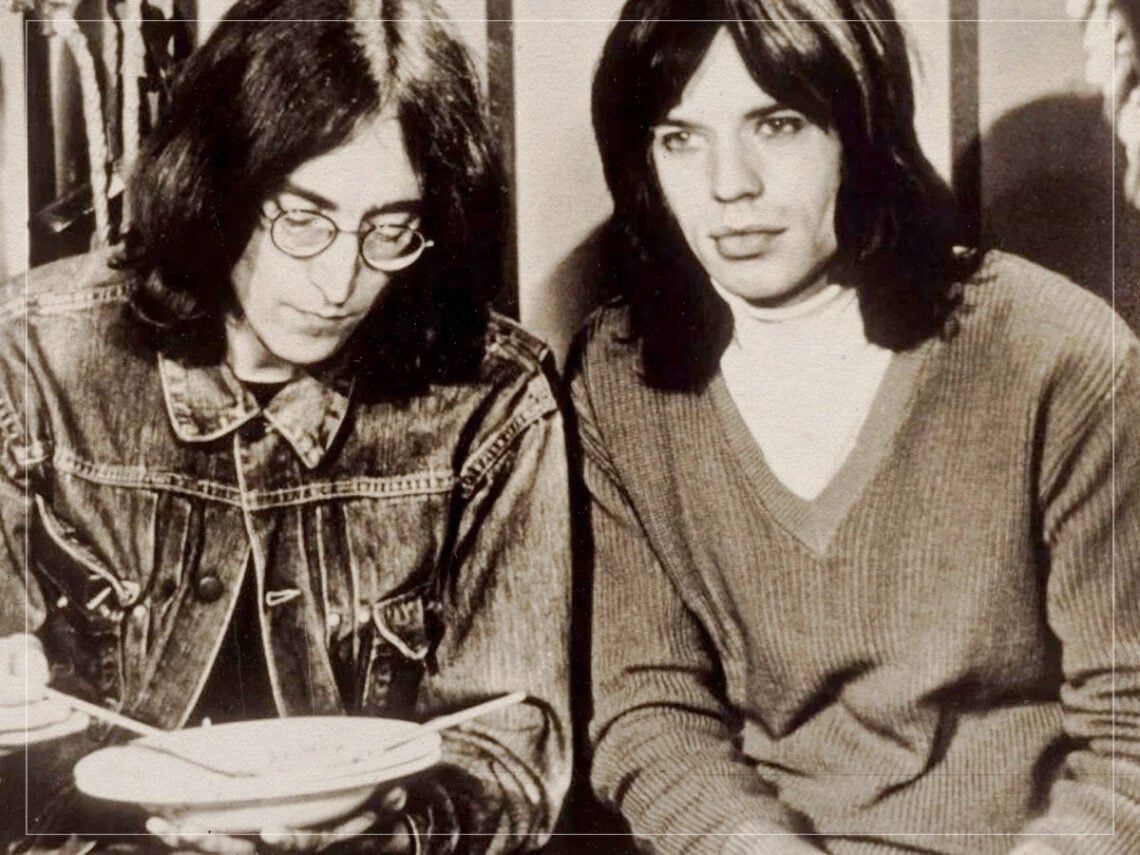
“Really angry”: the 1968 Rolling Stones that John Lennon was envious of

Contentment is a comfortable feeling that some people just aren’t cut out for. John Lennon was many of those people all at once.
I refer to him in plural because the Beatle was far from a measly, single human over the course of his life. Each new incarnation of Lennon seemed restless, so accustomed to discomfort that, no matter who he became, he always seemed to recoil from the comfortable existence fate had afforded him.
To those of a breezier disposition, being a member of The Beatles and then concerning yourself with the musical output of others is like building The Great Pyramids of Giza, then growing jealous about your neighbour’s new extension.
But Lennon was always fussing and fretting, so much so that at the mention of some bands, he would fly into a jealous rage. He might have been fiercely critical of his own group on some occasions, but that sporadic derision can often be seen as his bid to nurture the narrative surrounding them. He would belittle the “Granny Shit” songs in order to draw more serious attention towards ‘I am the Walrus’ and other proverbial pyramids of avant-garde ambition.
Elliot Mintz got to know this peculiar tango with frustration very well during his years as Lennon and Yoko Ono’s publicist, friend, and showbiz gossipmonger. “He took great pride in most of the Beatles’ material,” Mintz told Spin. “There were some songs that he disliked, upon reflection,” but by and large, he proved rather precious over the Fab Four’s perception.

As a passionate radical and subversive who believed that music had a purpose beyond silly love songs, Lennon lamented the notion that The Beatles were merely the safe, mainstream darlings that the likes of Lou Reed purported them to be. Obviously, they had plenty of daring hits to point to in their latter chapter to override this view; however, the bespectacled Beatle feared that the mop top days might one day overshadow what followed, and the seditious spirit of the band would be “lost in the cacophony of the screams”.
So, he did his level best to angle the spotlight away from that, as was his wont. “But, when somebody criticised their music, or pretended it was something greater than what the group had accomplished, John came out of his corner swinging,” Mintz reflected. He had a particular preoccupation with swinging against The Stones.
The pair are endlessly pitted against one another, but Lennon firmly disagreed with the prevailing polemic that the Fab Four won the war and most of the battles, but when it came to punky radicalism, they had to concede a trouncing defeat. In fact, it was the Liverpudlian’s view that his little gang started the whole snarling and sordid side of the British invasion to begin with.
“With hindsight, you could say Hamburg was The Beatles’ punk period, their edgy and dangerous days that were hard to square away with the almost chocolate-box pop proposition they became,“ Ian Anderson told Louder Sound, reflecting on the Fab Four’s gritty, working-class roots.
When Anderson first saw “tough guy” pictures of the band in Hamburg, he noted that they had “an air of menace” that others would later attempt to copy. And he would claim that they failed. “Mick Jagger always looked too self-conscious to be considered a tough guy; he looked like he’d fall over if you blew on him,“ Anderson comically concluded. Certainly no street fighter, then.
“These weren’t young boys from leafy Surrey, and Lennon in particular, you expect, was already familiar with the wrong side of the tracks in Liverpool.”
Ian Anderson
It wouldn’t be difficult to convince Lennon to hold a similar view. But his issue was that most of the public thought otherwise. As Mint recalled, “One night when he was asking me who I was going to be interviewing for upcoming shows, and I told him Mick Jagger, he went off again about the fact that he felt The Rolling Stones got the kind of adulation and respect that ‘The Mop Tops’ didn’t, and that The Stones were perceived as the revolutionaries”.
Whenever this would come up, Lennon would largely pin it to one glaring anthem in The Stones’ arsenal. As The Stones were really cementing their status in the mainstream in ‘68, they came “forward with ‘Street Fighting Man’ as opposed to ‘I Want To Hold Your Hand’” and he figured that this gnarled and angular anthem of discontent and danger imbued them with a rarified edge that he envied.
The sweeter days of ‘This Boy’ would always be part of The Beatles’ story, while ‘Blue Turns to Grey’, a song The Stones shared with Cliff Richard of all people, had long been eroded from the record book by the time that ‘Street Fighting Man’ aggressively gushed out of the gates in 1968. Most people would’ve shrugged that off and smiled contentedly at their nest egg of hits, but Lennon liked discomfort, and he chaffed against the growled Stones song.
Yet, he was complex enough to also admire the anthem and the fellows behind it. “He loved Mick Jagger,” Mintz happily concluded, “and the two of them spent countless nights together in London. But when he would get really angry about it, he’d called [sic] them ‘The Rolling Pebbles’.”

Never Miss A Beat
The Far Out Beatles Newsletter
All the latest stories about The Beatles from the independent voice of culture.
Straight to your inbox.