


From David Lynch to James Bond: The 10 worst opening movie scenes of all time

It’s stating the blindingly obvious to say that every movie needs an opening, middle, and final act – at least those adhering to conventional structure anyway – but it’s nonetheless important to note that bungling even one of them can have a massively detrimental effect.
There’s been no shortage of potentially great films that failed to stick the landing and unravelled at the seams by the time they reach their grand finale, while there’s the frustrating features that kick off with a spectacular introduction before failing to reach those heights ever again for the remainder of their runtime.
Somewhere in the middle are those that begin with a terrible opening scene and then face a futile battle to recover any sense of goodwill from the viewer simply because, as in cinema and life itself, it’s very difficult to get off on a bad foot with anyone or anything and then atone for it afterwards.
That’s not to say the following ten titles are amongst the worst movies to have ever been made – although a couple of them do state a strong case – but the thing they all have in common is kicking off with an interminable opening scene the rest of the film had no chance of overcoming.
10 worst opening movie scenes:
10. Indiana Jones and the Dial of Destiny (James Mangold, 2023)
After the Kingdom of the Crystal Skull debacle, nobody was crying out for a new Indiana Jones movie, especially one that took another 15 years to release and featured an 80-year-old Harrison Ford in the lead. As a famous adventurer once said, “It’s not the years honey, it’s the mileage,” but Dial of Destiny tried to have that cake and eat it, too.
James Mangold’s sequel begins with an extended action sequence as the franchise is wont to do, but it’s cloaked in almost impenetrable darkness when the action shifts outside, presumably to cover up the shortcomings in de-ageing the title character. It’s fine in isolation, but from the second Indy’s face moves and Ford’s grizzled old man voice emerges, it’s a one-way trip to the uncanny valley.
Dial of Destiny wanted to restore Indiana Jones as a character and property to its former glories, but all it accomplished was delivering a serviceable set piece that underlined in no uncertain terms desperate pangs of nostalgia were never going to be enough in a film that ended up as one of the biggest box office bombs in history no less.
9. For Your Eyes Only (John Glen, 1981)
Spite can be a dangerous thing when wielded ruthlessly, as James Bond discovered when his most fearsome and iconic arch-nemesis was dispatched in a nature entirely unbecoming of his reputation.
Played by John Hollis in person and voiced by Peter Marinker, the character in the pre-credits scene isn’t officially Ernst Stavro Blofeld because the character was tied up in the legal red tape of Thunderball producer Kevin McClory, maintaining he had the sole rights to use the legendary antagonist, but Eon Productions made its view on the matter perfectly clear nonetheless.
Giving such an intrinsic part of the Bond mythos a death that existed somewhere between comical and farcical, it was a brazen middle finger to McClory’s claim realised on-screen, laying down a dismal and petty marker one of the most forgettable entries in the series could never recover from.
8. Star Wars: The Rise of Skywalker (J.J. Abrams, 2019)
When The Last Jedi proved to be one of the most polarising blockbusters of the modern era, Lucasfilm spiralled into panic, re-hired J.J. Abrams to steer the sequel trilogy over the finish line, and embarked on a nostalgia-baiting exercise in retconning everything the hardcore fans hated about Rian Johnson’s film from the very first frame.
Bowing to pressure and demand, any subversions of a galaxy far, far away were immediately discarded after the filmmakers hit the big red button marked ‘Palpatine’ and resurrected the end-of-level boss to be revealed as the one pulling the strings for a third consecutive trilogy.
“The dead speak,” the opening crawl intoned before pinning everything that had happened up to that point on “the late Emperor Palpatine” to groans of resignation. It was the point of no return for Episodes VII through IX, and endemic of Disney being so desperate not to rock the boat that returning to the well and putting on the rose-tinted glasses was deemed the safest option by far.
7. Alien 3 (David Fincher, 1992)
Nobody dislikes Alien 3 more than David Fincher, who was fighting such an uphill battle against studio politics from the second he was hired that he’s wisely opted to completely omit the sci-fi sequel from his filmography, making the entirely accurate point that it isn’t his movie.
There were many ways for the film to distance itself from its predecessors, but by killing popular characters Newt and Hicks in such casual fashion, not only did it infuriate fans of the franchise, Michael Biehn was so pissed off he successfully sued 20th Century Fox for using his likeness without permission.
Bumping off two leading lights from Aliens so unceremoniously set the tone, and from there, there was no chance Alien 3 would be afforded a shred of goodwill. It was a bold call but one that only hastened the irreversible decline of the once-mighty spacefaring series and got the studio into legal trouble for good measure.
6. Scream 4 (Wes Craven, 2011)
Wes Craven‘s Scream had always thrived on its self-awareness and metatextuality, but things reached a nadir in the opening of the fourth instalment when winking at the audience too hard caused the entire franchise to come perilously close to disappearing up its own arse.
Roping in a number of guest stars, including Lucy Hale, Anna Paquin, and Kristen Bell, Scream 4 begins with two victims being eviscerated by Ghostface, who turn out to be characters in the universe’s own sequel, Stab 6.
However, one of the people watching Stab 6 from the comfort of their own home then murders the other because they’re actually characters in Stab 7, which is being viewed by the characters of Scream 4 proper. It was an admirable attempt doing the movie-within-a-movie-within-a-movie-within-a-movie gimmick, but it came off as a smug and self-serving way to start off the weakest Scream to date.
5. Madame Web (S.J. Clarkson, 2024)
“He was in the Amazon researching spiders with my mom right before she died” didn’t even make it into the final cut of Madame Web, to the disappointment of many, but the opening scene of the mind-numbing Marvel misfire underlines just how heavily it was reworked in post-production.
S.J. Clarkson is a talented director who helmed the phenomenal bachelor party episode of Succession, but she was left at the mercy of Sony, a studio that didn’t even bother to consider the fundamentals of how cinema is supposed to work when reconstructing Madame Web‘s opening scene.
There are words that come out of the mouth of Tahar Rahim’s Ezekiel Sims despite said mouth clearly not moving at all, while there are at least two other instances of dialogue being spoken that blatantly doesn’t match the mouths of the characters speaking it. This all happens within the first five or so minutes of a movie that cost at least $80million to produce, which did at least offer a helpful indication of just how bad things were going to be from then on out.
4. Terminator: Dark Fate (Tim Miller, 2019)
For the third time in ten years, the Terminator franchise promised to deliver a sequel that would restore the flagging property to its former glories, and for the third time in a row, it resolutely failed to deliver on its word.
James Cameron was back as co-writer and producer, which was supposed to be an encouraging sign, only for Dark Fate to render his two classic opening instalments as completely and utterly pointless by the end of the very first scene.
A digital Arnold Schwarzenegger straight-up murders de-aged Edward Furlong shortly after the canonical conclusion of Judgement Day, which makes everything that happened in the 1984 and 1991 barnburners redundant, irrelevant, and in service of nothing. It was a way to justify Linda Hamilton’s return to gun-toting badassery, but not for the first time in this list; it ended with an all-timer of a flop and eroded the last shreds of goodwill Terminator had left.
3. Halloween: Resurrection (Rick Rosenthal, 2002)
Virtually every long-running horror franchise ties itself in knots to continue cranking out sequels, but not often has it been bungled as cack-handedly as it was in the first minutes of Halloween: Resurrection.
Previous chapter H20 was supposed to be the final stand for Jamie Lee Curtis’ Laurie Strode, to the extent it was signposted pretty clearly when she decapitated Michael Myers with an axe. However, there was still money to be made, which necessitated an eye-rolling retcon and a terrible opening scene.
As it turned out, Laurie had actually lobbed the head off an innocent paramedic, and not her arch-enemy, before Michael inevitably shows up seconds later and throws her from a roof to her death. Just like that, a horror icon was dispatched in the most underwhelming of circumstances – for the time being, at least – all in the name of squeezing as much cash out of the Halloween brand as possible.
2. Dune (David Lynch, 1984)
Frank Herbert’s Dune had long been deemed unfilmable, and that seemed truer than ever until Denis Villeneuve came along, with David Lynch establishing within the first scene of his attempt that trying to wrestle such a sprawling tome into a feature film was beyond even a filmmaker of his talents.
What’s the worst way to let an audience know there’s a mountain of world-building and in-universe terminology with which a movie can’t be enjoyed without on the way? Kicking things off with an excruciatingly lengthy exposition dump that almost impressively manages to say an awful lot and nothing at all at the same time.
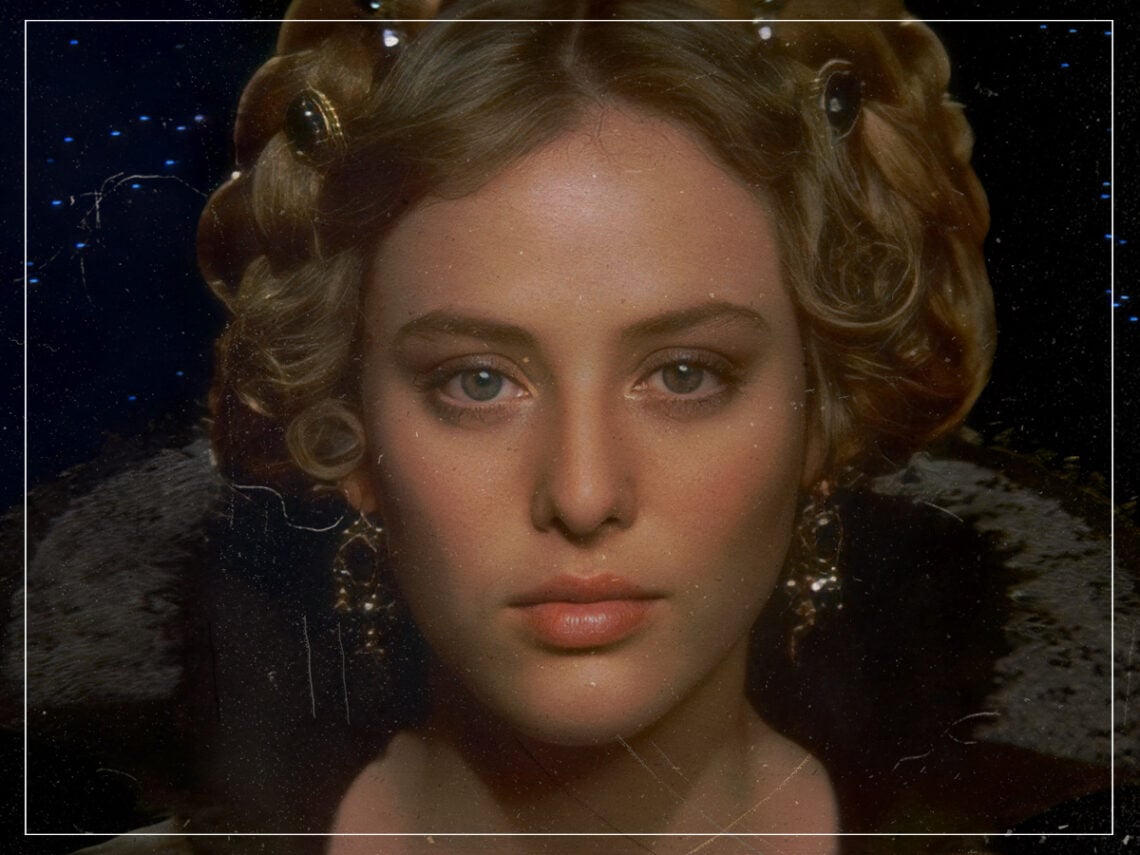
Virginia Madsen’s Princess Irulan dominates the frame with a look that’s every bit as inexpressive as her monotone delivery, painstakingly detailing the ins and outs of Arrakis, its main players, and how it all fits together. From that moment forward, it was clear Lynch and Dune would fail to do justice to the source material.
1. Postal (Uwe Boll, 2007)
Using 9/11 as the backdrop to an extended gag that both makes light of the tragedy and offends an entire religion is quite the double-whammy, one Uwe Boll had no issues pulling off in his 2007 adaptation of the popular video game.
The scene finds fictional terrorists Asif and Nabi calling up Osama bin Laden to find out exactly how many virgins they’re going to end up with in the afterlife for carrying out his orders. When they decide it isn’t enough, they abandon their plans to crash a plane into a building to reroute the aircraft to the Bahamas instead.
However, the passengers onboard what’s eventually revealed to be Flight 93 aren’t privy to their change of heart, attempt to retake the plane, and accidentally sent it careening straight into the south tower of the World Trade Center. It’s abhorrent, offensive stuff, but sadly typical of Boll’s status as a bargain basement filmmaker who couldn’t craft a half-decent movie to save his life.
