


10 great movies with terrible endings

First impressions are everything. With a stellar opening sequence, a movie can seize the attention of the viewer, set the scene and get them sufficiently primed for things to come. Just as important as first impressions are satisfying final conclusions, with a great film being nothing without a killer climax that rounds off the drama and ties everything up in a nice satisfying bow.
Just look at how some of the best movie endings of all time for inspiration, with Stanley Kubrick finishing off The Shining with one final haunt, Claire Denis capping off Beau Travail with some rhythmic flair and John Ford creating one of the most iconic shots of all time with the parting moment of The Searchers. Unfortunately, however, for this list, we’re not looking at the greatest endings of all time.
Alas, instead of the very best endings, here we’ll be focusing on some of the very worst from films that really should’ve known better. Indeed, there’s nothing worse than sitting through a great movie, only for the ending to massively disappoint, making the previous hours of dedication feel like an utter waste of time.
Take a look at our list of disappointments below as we recount ten great films with terrible endings, including movies from the likes of Christopher Nolan, David Fincher and Martin Scorsese.
10 great movies with terrible endings
The Dark Knight Rises (Christopher Nolan, 2012)
We’re sorry to report that Christopher Nolan’s final film in the Dark Knight trilogy really isn’t as good as you remember. Despite making two solid films, Batman Begins and the iconic superhero classic The Dark Knight, The Dark Knight Rises was a major disappointment. There was much to like in the film, with Tom Hardy delivering a powerful performance as the villain, Bane, but it was the ending that really let the film down.
At the end of the film, Batman saves Gotham City by flying a nuclear bomb into the sunset, sacrificing himself for the city he loves. The problem is that he doesn’t die at all, making for a nonsensical final ten minutes.
The Game (David Fincher, 1997)
Having only directed multiple music videos, the celebrated crime movie Seven and the major disappointment Alien 3, David Fincher was an unpredictable talent in the 1990s. This proved to be true with the release of 1997’s The Game, a film which told the story of a man whose life is turned upside down when he takes part in a mysterious game. Starting with great promise, Fincher wasn’t able to keep up the high tension.
The ending reveals that the title of the movie wasn’t lying and that, indeed, the whole film was a game. Spoiling the tension and mystery that the film had created, the ending for The Game was a lazy attempt at shock value.
High Tension (Alexandre Aja, 2003)
A good twist is hard to pull off; this is no secret, with director Alexandre Aja knowing this all too well. Although his 2003 thriller High Tension, which tells the story of a pair of women who are stalked by a dogged masked assailant, starts well enough, its attempt to create a satisfying twist falls embarrassingly short.
*Spoiler warning* (although we really don’t recommend watching this film), the killer ends up being one of the victims themselves. This makes about as much sense as it sounds, forcing utter angry confusion by the end of the movie.
Identity (James Mangold, 2003)
Director James Mangold has proven himself to be quite an impressive filmmaker in recent years, helming Walk the Line with Joaquin Phoenix, the Marvel movie Logan and the fifth Indiana Jones flick, The Dial of Destiny. Relatively early on in his career, however, he made the 2003 thriller Identity, a film with a promising premise that was set in a motel where a group of ten strangers are being killed off one by one.
The pointless twist ending reveals, however, that none of the characters was actually real at all, being mere fabricated figures from one person’s imagination. It just makes the whole film feel entirely pointless.
Kill List (Ben Wheatley, 2011)
Back at the start of the 2010s, Ben Wheatley was one of the most promising filmmakers in British cinema, creating such favourites as 2012’s Sightseers and the innovative indie flick A Field in England in 2013. Word of his potential was spread after the release of Kill List in 2011, however, an eerie folk horror that told the story of a pair of hitmen who find themselves at the centre of a pagan cult.
With fantastic performances from the likes of Neil Maskell and Michael Smiley, Kill List has a chokehold on the viewer the entire film until the final moments of the film when Wheatley resorts to a nonsensical ending that feels like a complete cop-out.
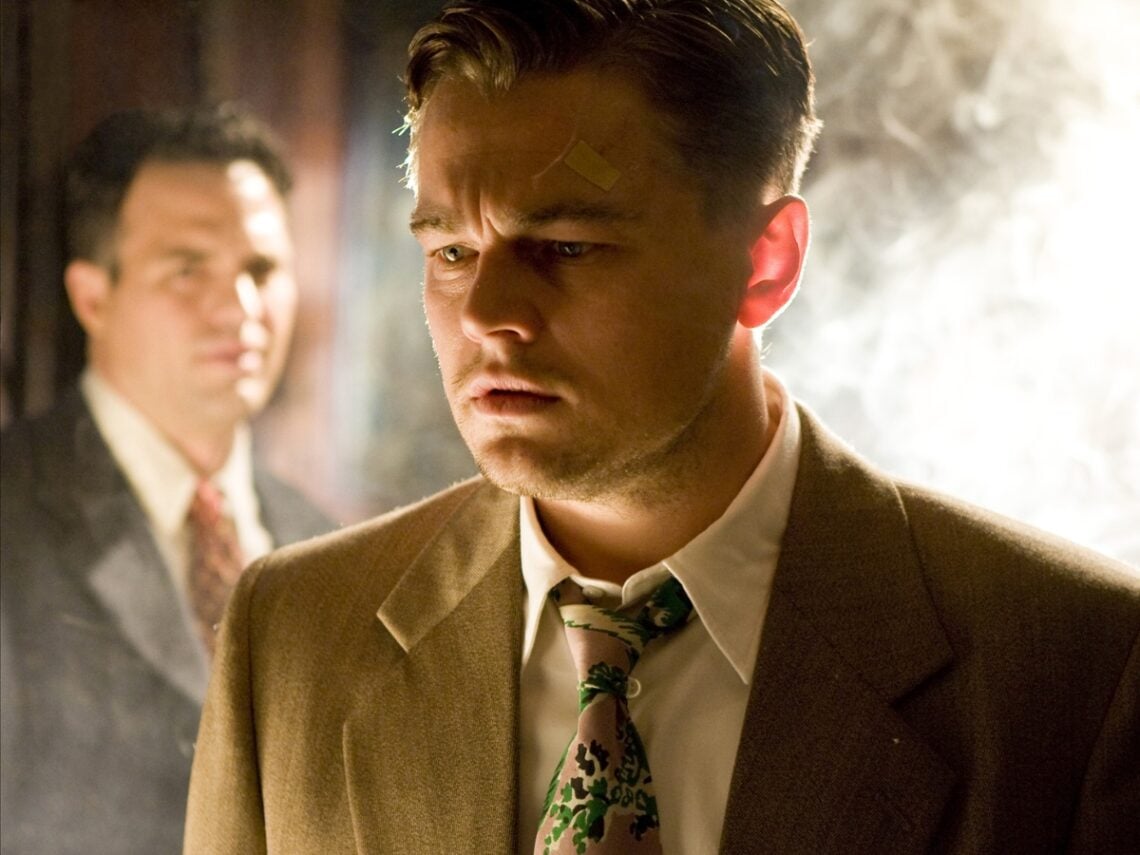
Shutter Island (Martin Scorsese, 2010)
There’s no doubt that Martin Scorsese has made some of the greatest movies of all time, including 1976’s Taxi Driver and 1990’s Goodfellas, but his modern movies haven’t been quite so consistent in quality. Case in point, the 2010 dark thriller Shutter Island, starring Leonardo DiCaprio, a film that follows the story of a U.S Marshal who is investigating the disappearance of a murderer from a mental hospital.
Though the film is pretty intriguing throughout, keeping your interest with some nice set pieces, the ending is so predictable that it makes the entire film just seem very ‘meh’. It’s far from Scorsese’s best.
Signs (M. Night Shyamalan, 2002)
We’re lovers of M. Night Shyamalan, but there’s no doubt that he likes to experiment when it comes to a film’s third act. His 2002 movie Signs is one of his very best, telling the story of a former reverend and his family living on a Pennsylvania farm during a mysterious alien invasion. With a fantastic cast that includes the likes of Joaquin Phoenix and Mel Gibson, much of Shyamalan’s film is pretty decent sci-fi goodness.
The film’s conclusion was a little too far-fetched for some, however, with the invading aliens retreating due to the fact that water burned their skin. Considering that 71% of the earth’s surface is water, how did they not discover this life-endangering fact before?
Sinister (Scott Derrickson, 2012)
Countless esteemed filmmakers started off in the horror genre, with the American director Scott Derrickson kicking his career off strong with the release of Sinister in 2012. Whilst he had helmed a number of films prior to this, Sinister felt different. Grimey, dark and disgusting, Sinister established a terrifying tone that made it feel like an innovative piece of contemporary horror until the third act kicked in.
The whole story surrounds children who killed their families after being possessed by a pagan spirit, giving themselves up to the fantastical deity. So Derrickson thought it would be a good idea to bring all these children back from the dead at the end, creating a bizarre sequence that is just plain silly.
Sunshine (Danny Boyle, 2007)
There’s no doubt that Danny Boyle is one of the greatest British filmmakers of the 21st century, with the director releasing the ‘Best Picture’ winner Slumdog Millionaire in 2008 and 127 Hours in 2010, on top of coordinating the opening ceremony of the 2012 Olympic Games. Before this, he released the 2007 sci-fi Sunshine, a promising movie with a mighty ensemble cast that includes Cillian Murphy, Chris Evans, Michelle Yeoh, Rose Byrne and Mark Strong.
For the most part, the 2007 film is excellent, telling the story of a team of scientists who are tasked with reigniting the sun, but by the end, the film turned into a horror story that made very little sense at all. Disappointing.
The Village (M. Night Shyamalan, 2004)
Our final entry on this list is the second M. Night Shyamalan film we’ve mentioned, with the director being susceptible to writing a silly ending. Still, his 2004 film The Village starts strong, setting up a story that follows the members of a small isolated countryside village who are kept penned in their community by strange, dangerous forest folk. For the most part, it’s an intriguing mystery, but by the end, it’s pretty awful.
The film’s conclusion sees a mighty revelation that the ancient-seeming community actually exists in the modern world, giving a pretty pointless and weak ‘message’ to the previous 90 minutes of cinema.
