


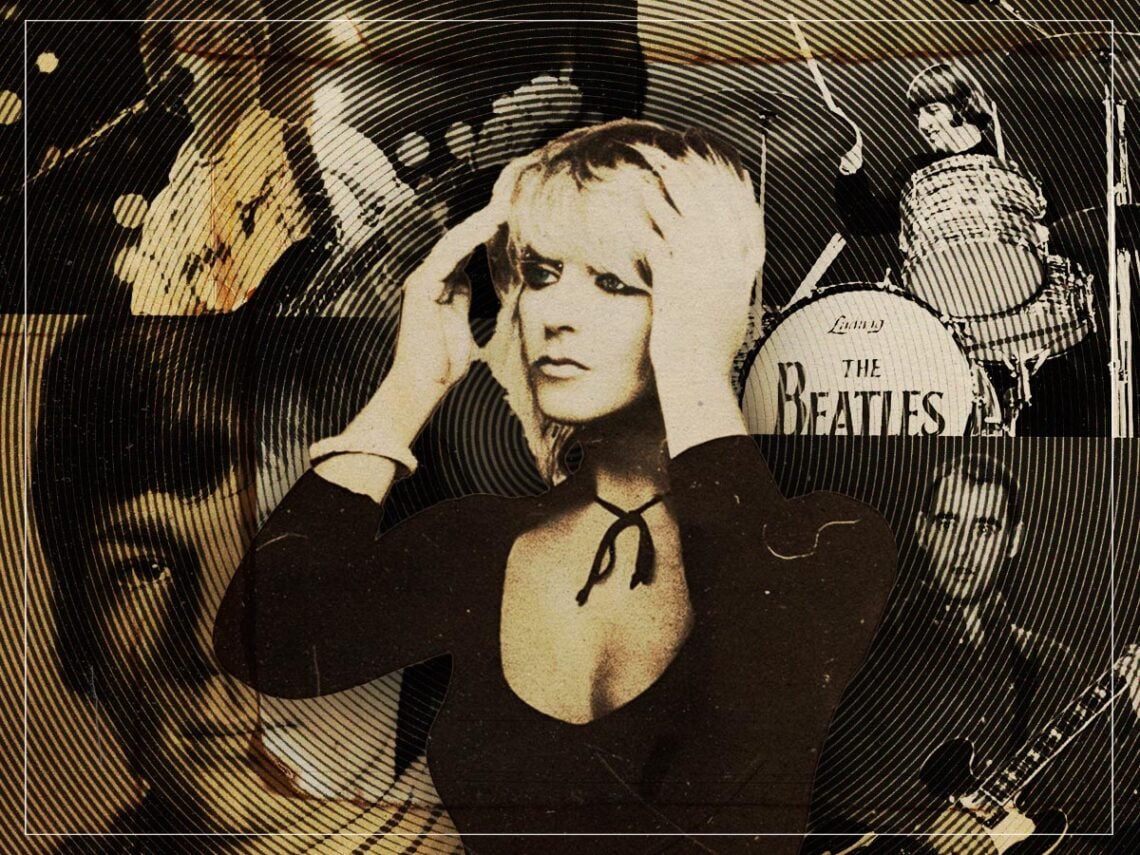
10 musicians in huge bands who never got the credit they deserve

The music industry may be one of the least fair businesses in the world. Even if someone does exactly what it says on the tin, sometimes their fellow bandmates end up getting all the star power and take all the credit for work that they couldn’t have done without your help. It’s never easy being left in the dark by legions of fans, but acts like Fleetwood Mac always did have some fine players that were kept just off to the side.
Although many of the greatest artists in the world get to the point where almost every member is a household name, these faces tended to allude to the masses by staying quiet. Some of it was by choice, but when standing next to brilliance on either side of you, it would be almost impossible to claim that you deserve as much attention as the person singing out front because of what the recording sounds like.
Then again, some artists are comfortable out of the spotlight, and as much as they tend to fade into the background of their respective bands, their presence is more felt than seen most of the time. The more people go deeper into the back catalogue, the more they realise just how important these artists are to their outfits, either being responsible for entire sections of songs or having the occasional lead vocal that throws everyone in a loop.
So, while the business doesn’t seem fair sometimes, that doesn’t mean that some of the greatest names in music haven’t gone unnoticed. They were just better left on the side, and even if someone else was at centre stage, there was no doubt that each group would collapse had they not had a musician like this in their lineup.
10 musicians who deserve more credit:
10. Brad Whitford – Aerosmith
When Aerosmith first debuted, it was almost impossible to talk about them without bringing up a certain other rock and roll juggernaut from overseas. The group clearly worshipped the ground that The Rolling Stones walked on, and while that may be all well and good, Steven Tyler and Joe Perry would get ridiculed relentlessly for being a bit too close for comfort to the ‘Glimmer Twins’. So, if the lead singer and guitarist are already getting torn through the mud, just imagine how much baggage Brad Whitford had to plough through.
Although he was the last to officially join the group, Whitford is the one who gave the ‘Bad Boys From Boston’ a legitimate kick in the ass. There had been plenty of guitarists on the East Coast at the time, but whereas Perry was focused on groove half the time, Whitford was interested in making some of the heaviest music that anyone had ever heard.
Listening back through their deep cuts, Whitford is normally responsible for some of their heaviest riffs, including the bone-rattling lick in the middle of ‘Nobody’s Fault’ and laying down the solo in the middle of ‘Last Child’. Everyone ended up getting bent out of shape when Perry left in 1979, but while Night in the Ruts was still a competent record, not having any Whitford on Rock in a Hard Place is when Aerosmith truly started to lose their way.
9. Maureen Tucker – The Velvet Underground
There’s a case to be made that The Velvet Underground as a whole never got the credit they deserved as a rock institution. They’re far from the first band that people think of when talking about the beginnings of hard rock and punk, but Lou Reed’s odes to life in the gutter are still some of the most remarkable pieces of rock history to come out of the 1960s. Their legacy has been secured over time, but while Nico is still known as the female face of the group, Maureen Tucker struck the greatest balance between aggressive and sensitive during her tenure.
Although none of the members could have claimed to have had proper training behind their instruments in the early days, Tucker sculpted herself into one of the greatest artists to ever pick up two sticks. Regardless of how many people had tried to make rock and roll sound dangerous, the drumming on ‘Sister Ray’ is what makes the track work for all 17 of those minutes on White Light/White Heat.
Even when she got behind the microphone for the song ‘After Hours’, the amount of material that she got out of just two minutes was enough to predict the ukulele-style balladeers of the modern age. But influence wasn’t something that any of The Velvets were looking for. They set out to capture their time, and somewhere along the road, Moe Tucker turned the concept of hard rock drumming on its head.
8. Izzy Stradlin – Guns N’ Roses
The art of being a great rhythm guitarist usually gets lost on too many people. For everyone who thinks that the rhythm guitarist is the one who looks cool onstage pumping out the chords, there are still people questioning what exactly their job is other than just filling out the sound. Whereas most rhythm guitarists could easily be replaced with a backing track these days, what Izzy Stradlin brought to Guns N’ Roses is impossible to reproduce.
Since Slash is still one of the biggest presences in hard rock history, Stradlin was forever bound to be on the fringes of the group, usually being dead silent off to the side. When looking at his track record for songs, though, he has his fingers on nearly every great deep cut they ever made, from penning the openhearted love song ‘Think About You’ to the acoustic ditty ‘Patience’ to taking the lead vocals on ‘Dust N’ Bones’.
Neither of the guitarists in Guns N’ Roses was all that comfortable in the spotlight, but Stradlin was just fine not being considered a guitar god. He was more interested in writing the next great tune, and since they were being considered the Rolling Stones of their generation, there was a similar kind of energy between what Stradlin was doing and what Ronnie Wood has continued to give The Stones.
7. Bonehead – Oasis
There’s no doubt that Oasis should have been more accurately called ‘The Gallagher Brothers’ or something along those lines. Admittedly, Oasis is far catchier, but there was no doubt that both Noel and Liam were the ones who called the shots in the group, and that was that. Any Britpop fan wouldn’t have batted an eye when they changed lineups, but as soon as Bonehead left, there was bound to be a gaping hole where the guitar sound had once been.
Although Noel is a fine lead and rhythm guitarist in his own right, Bonehead was the one bringing the punk edge back into their sound. For all of the praise the group has given to Sex Pistols over the years, the crunch coming out of Bonehead’s amplifiers was what made them sound like Steve Jones when cranking out hits like ‘Bring It On Down’ or the heavy section of ‘Champagne Supernova’.
And now that the group has patched things up, it’s only fitting that Bonehead be given a spot at left centre stage where he belongs. There might have been some bad blood coming out of the 1990s, but no matter what kind of music they would make in a post-Be Here Now world, Bonehead’s rhythm guitar became the kind of thing no one realised they needed until it wasn’t there anymore.
6. Carol Kaye – The Beach Boys
The Beach Boys have always been best when they were under the supervision of Brian Wilson. Mike Love is the one that steers them through every facet of their touring life, but if Brian hadn’t been there to guide Love and his brothers Carl and Dennis, their creative leap on Pet Sounds would be virtually nonexistent. For a group that has been known by their male nomenclature for years, there was an unofficial Beach Girl in Carol Kaye whenever they got in the studio.
Since Brian had access to world-class session musicians in The Wrecking Crew, Kaye quickly turned into the most valuable asset of the team. Instead of just playing the standard bassline for any given song, hearing her plunking out the rhythm on ‘Good Vibrations’ and countless other Beach Boys hits made the low-end cut through the mix every time she got behind the fretboard.
Beyond just The Beach Boys, Kaye was instrumental in soundtracking various pieces of people’s childhoods, whether that was playing the theme song for The Brady Bunch or eventually laying down the guitar line for Mission Impossible years before Tom Cruise got his hands on the franchise. She may have been known for her session work, but if it was good enough for Wilson to call her the greatest in the world, she was well worth more than just a faceless album credit.
5. Benmont Tench – Tom Petty and the Heartbreakers
Anyone in a group named after one of the band members isn’t really looking to be one of the heavy hitters onstage. No one was complaining that they were the second bill in Paul McCartney and Wings, and no matter how many times Mitch Mitchell wowed audiences wherever he went, the band was still called ‘The Jimi Hendrix Experience’ for a damn good reason. But the whole reason why there are any Heartbreakers in Tom Petty’s band is partly because of the work of Benmont Tench.
For the first few years after his first band, Mudcrutch, disbanded, Petty wanted the chance to get his own group together. Since he already had Mike Campbell as his co-captain, Tench was everything he could have asked for in a keyboardist, playing through the music most of the time and always working off of what Campbell was filling in on lead guitar throughout tracks like ‘Here Comes My Girl’.
And despite being the kid in the group, Tench was never afraid to speak his mind, usually telling Petty when he thought something wasn’t good enough and that he was aiming a little lower than he needed to on any given day. As he continues session work to this day after working with the likes of Johnny Cash and Stevie Nicks, Tench has mastered the one rule of every great rock sideman: it’s about serving the song, not yourself.
4. Richard Wright – Pink Floyd
The whole point of Pink Floyd’s later years was about remaining as faceless as possible. The group were still ranked among the greatest in the world in the 1970s, but their visuals were more focused on the amount of striking imagery baked into their live performances rather than the people actually playing the music. People could still name David Gilmour and Roger Waters as essential pieces of the puzzle, but Richard Wright deserved a much better fate than getting written out of the room.
Although Waters was responsible for half the writing on the group’s classic albums, Wright breathed life into the arrangements. Across Dark Side of the Moon, his pieces on ‘Us and Them’ and ‘Great Gig in the Sky’ are strokes of genius for rock music, almost like he found the closest middle ground between the sounds of Miles Davis and Little Richard throughout his compositions.
Even when he paired down his technique on albums, each of his featured moments felt like a major event, whether that was those droning notes that run through Animals or hearing him take one final lead vocal as ominous as ‘Wearing the Inside Out’ from The Division Bell. Waters already claimed that he was Pink Floyd when he left, but without Wright there, nothing would have been the same.
3. Christine McVie – Fleetwood Mac
It’s hard to even keep track of the lineup changes that Fleetwood Mac had throughout their time together. Peter Green has certainly gone down in legend, and Bob Welsh’s jazzy textures helped them reach a new audience, but for casual pop fans, Stevie Nicks and Lindsey Buckingham may as well have been the group’s saviours going into the 1970s. All the while, though, Christine McVie was the one constantly pushing her soulful tunes to the forefront.
Amid the Rumours era, her songs were the biggest hit for a damn good reason. From the slow moodiness of ‘You Make Loving Fun’ to later hits like ‘Little Lies’, there was a certain level of quality running throughout every one of her tunes, especially when paired with some of the moments that tested one’s patience on albums like Tusk.
And given the fact that Nicks doesn’t see a future for the group without her, Christine may have been as integral to the sound and energy of the group as John Bonham was for Led Zeppelin when they called it quits. She was more than happy to just sit behind her keyboard and pour her heart out, but compared to Buckingham’s freakouts, Nicks’s self-indulgent moments, or even Green’s bluesy dirges, Christine went the whole way through Fleetwood Mac and never wrote a song that could be considered ‘bad’.
2. John Deacon – Queen
Anyone could make a legitimate case that anyone in Queen not named Freddie Mercury could qualify for this list. Mercury was the perfect example of what a showman should be, and during his time on this Earth, he gave a clinic on how well one person could entertain a crowd. People could still recognise Brian May if they saw him in public, but John Deacon may be one of the most quiet pop masters of the 1970s.
Deacy was always a bit timid ever to attempt to bring his songs to life. He was the last to join, after all, so he didn’t want to assert himself if he didn’t have to. When looking through his track record on the charts, he is responsible for everything from ‘You’re My Best Friend’ to ‘I Want To Break Free’ to ‘Another One Bites the Dust’ and somehow has never bragged once about any of it.
Because that was never what Deacon was about. He was far more interested in just making his music for the masses, and once Mercury passed away, his way of bowing out following the Freddie Mercury tribute concerts was one of the most graceful exits from the spotlight any rockstar had ever done.
1. Ringo Starr – The Beatles
The entire premise behind The Beatles’ early career could have easily been whittled down to John Lennon and Paul McCartney. The twin sides of the Fab Four’s songwriting team had become an institution half the time, and even when George Harrison stepped up as one of the greatest songwriters in the group, there was never any tune that Lennon and McCartney differentiated credits on. But while everyone knew Ringo Starr would never come up with a ‘Hey Jude’ or anything, he is about as important to the group as any of his fellow geniuses.
For all of the people who claim that Starr had won the musical lottery the minute he said yes to joining the group, his knowledge of groove and flair behind the kit is what made those songs work. Most of what Lennon and McCartney came in with in the early days were sketches of what could be great songs, but the minute that Starr added his feel to the tune, they became iconic, whether that was the opening drum fill of ‘She Loves You’ or his bossa nova style playing on ‘I Feel Fine’.
He never wanted to be the person sitting there trying to write the next pop hit because that was never what he was designed for. His work was best served behind the kit, and despite McCartney playing drums on a handful of Beatles tracks, Starr was the ultimate example of internalising the song and hearing exactly what a tune needed when it was time to layer percussion on top of everything.
