


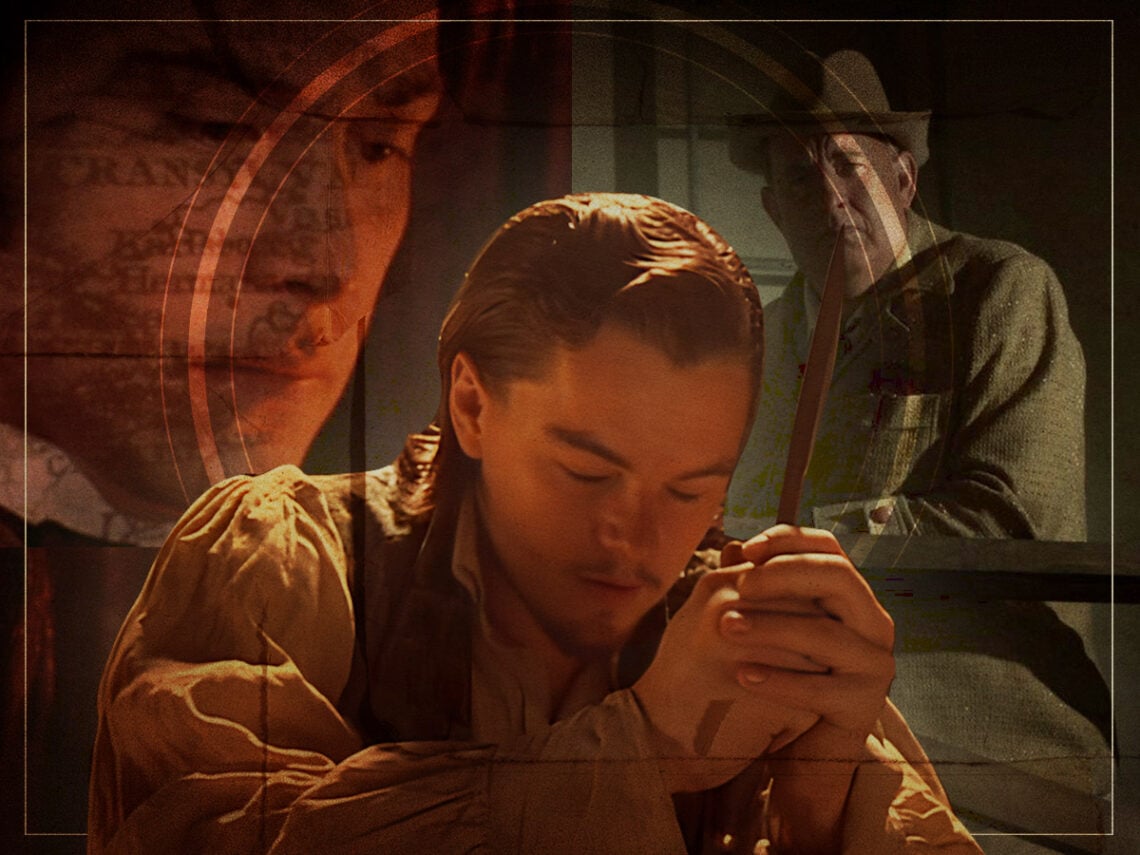
Good actors, bad parts: 10 promising movies crippled by fatal miscasting

All of the visual splendour in the world doesn’t mean much if a director miscasts a leading role. Plenty of movies have failed to maximise their potential after hiring the wrong actor to play a key part.
One bad performance in a great film is an easy thing to overlook, but less so when it’s one of the most pivotal cogs in the machine being created. If anything, bad acting in a good movie is even more noticeable when a substandard performer ends up struggling in the face of the excellent work being done by those around them.
Of course, everyone has a bad day at the office now and again, regardless of their profession, but it’s a lot more obvious when it happens to an actor because millions of people discover they’ve failed to bring their A-game to the table when they take their seats in the theatre.
Not every one of the following ten features was a disaster, and many of them were big hits or awards season contenders, but the thing that unifies every single one of them is that they’d have turned out a damn sight better than they did if at least one key character had been played by somebody else.
10 movies thwarted by bad casting:
10. Terminator Salvation (McG, 2009)
For 25 years, the Terminator franchise had been teasing audiences with a war set in the future where the last vestiges of humanity battled against their robotic oppressors, so it was only a matter of time before it was realised onscreen.
There were always concerns about the director because McG had never made anything even halfway close to good, but the presence of Christian Bale was enough to give Salvation a pass. If one of the best actors of their generation was happy to sign on, then the script must have had something about it.
Instead, the star gave a lifeless and uninterested performance that hinted he was driven entirely by the paycheque. Sam Worthington takes second billing, and he’s even more wooden, with Anton Yelchin the only cast member who seems like they can be arsed. The movie had so much promise, but its shortcomings were only enhanced by its two leads delivering such turgid turns.
9. Elvis (Baz Luhrmann, 2022)
Austin Butler fully deserved his Academy Award nomination for ‘Best Actor’, but the downside was that Tom Hanks equally merited his own accolade for Baz Luhrmann’s Elvis when he took home a Razzie.
Hanks was named ‘Worst Supporting Actor’ and shared the prize for ‘Worst Screen Couple’ with “his latex-laden face (and ludicrous accent),” which was fair enough. At no point did Colonel Tom Parker feel like anything more than ‘America’s Dad’ hamming it up in a fat suit, which affected Elvis as a whole.
It’s a rousing, by-the-numbers biopic that does justice to a cultural icon like ‘The King’, but every time Hanks appears, he gives the impression that he’s been transplanted from another movie entirely and an awful one at that.
8. Robin Hood: Prince of Thieves (Kevin Reynolds, 1991)
The lasting legacy of Robin Hood: Prince of Thieves is either that damned Bryan Adams song or Alan Rickman’s magnificent masterclass in scenery-chewing, which worked out pretty well for Kevin Costner.
Instead of an infamous English outlaw and prodigal son driven by revenge to seek retribution and embrace destiny, Costner plays him like the affable California-born everyman he is off-camera, which sticks out like a sore thumb.
Christian Slater is just as bad, but when it’s Costner who has to go toe-to-toe with Rickman in such delightfully unhinged form, the end result is the leading man and focal point of the movie being blown offscreen by his hammy counterpart. Costner tends to struggle when he’s asked to play characters who aren’t himself but never was it more egregious.
7. Valerian and the City of a Thousand Planets (Luc Besson, 2017)
Thanks almost entirely to The Fifth Element, there was excitement and intrigue surrounding Luc Besson returning to the realms of the space opera for one of the most ambitious international productions ever attempted.
After a staggering opening sequence that outlined the potential of the film, Valerian and the City of a Thousand Planets quickly careened off the rails, not least of all whenever Dane DeHaan and Cara Delevigne opened their mouths.
They’ve got no chemistry together, no screen presence or charisma to speak off individually or as a collective, and any sense of naturalism is nonexistent when monotone line readings and blank expressions are the order of the day. It may have failed either way, but Valerian would have stood a much better chance of success had it picked a pair of different leads.
6. Alexander (Oliver Stone, 2004)
If four different versions failed to polish the cinematic turd that was Oliver Stone’s Alexander, then maybe there was nothing that could have saved the filmmaker’s passion project from landing with a dull thud as a critical and commercial catastrophe.
That being said, it would have helped matters significantly if Colin Farrell and his terrible dye job had not been tasked with leading the line because at no point in any cut of the film does the actor look comfortable as one of history’s most legendary figures.
Farrell thought he’d be in the thick of the Oscars conversation for his work, only for anyone unlucky enough to be exposed to Alexander finding out that miscasting the title role is one of the easiest ways to torpedo a movie that was already on a shaky peg.
5. Psycho (Gus Van Sant, 1998)
It’s easy to decry the utter pointlessness of the Psycho remake, but it’s just as easy to overlook the intrigue that followed the do-over, which marked the first post-Good Will Hunting movie from the undeniably talented Gus Van Sant.
Fresh from a two-time Oscar winner that landed him a ‘Best Director’ nod, he must have had a good reason for deciding his next port of call would be repurposing a classic from one of the greatest directors in history, right? Right? Wrong. The curiosity was there, but the execution certainly was not.
Quentin Tarantino is a fan for some reason, but regardless of how little it needed to exist, it goes without saying that Vince Vaughn is not Anthony Perkins. It’s not that Psycho would have been a nailed-on hit with anyone else in the lead, but it was an awful performance by an unconvincing star doomed from the first second.
4. Mary Shelley’s Frankenstein (Kenneth Branagh, 1994)
After Francis Ford Coppola had steered his reimagining of a horror classic to box office glory and three Academy Award wins, there was an air of cynicism surrounding Mary Shelley’s Frankenstein from the start.
With Coppola on board as a producer and distribution being handled by the same studio, it appeared to be a thinly veiled attempt to see if lightning would strike twice. It didn’t, with director and star Kenneth Branagh’s gothic fantasy earning $100 million less at the box office and leaving critics and audiences twice as cold.
Whereas Gary Oldman was a sumptous Dracula, Robert De Niro was a woeful Frankenstein. He’s one of the best to ever do it, but deciding to play the 18th-century creation in a world full of cut-glass accents as a brooding loner from Noo Yawk was a baffling decision, one that hampered the end product immeasurably.
3. Bram Stoker’s Dracula (Francis Ford Coppola, 1992)
Speaking of Coppola’s dark and sultry take on Bram Stoker’s influential novel, poor Keanu Reeves made the wrong call in trying to stretch himself as an actor when he signed on to play Jonathan Harker.
Even if it wasn’t for the accent, his performance would still be terrible, with his doe-eyed bemusement and expressionless attempts at exuding sheer terror drowned in a choice of brogue that continues to haunt dialect coaches everywhere more than 30 years later.
It often goes unmentioned or overlooked that Winona Ryder struggles greatly, too, but Reeves is so bad she tends to escape unscathed. Not ideal when they accounted for 50% of the central quartet, never mind with Oldman and Anthony Hopkins making them look like untrained amateurs by comparison.
2. Kingdom of Heaven (Ridley Scott, 2005)
For whatever reason, when Ridley Scott needed the perfect actor to embody a world and battle-weary warrior ready to defend his kingdom from an onslaught of invaders, he decided Orlando Bloom was the best possible choice.
In the long run, Kingdom of Heaven did the star’s long-term leading man prospects no favours, with the historical epic showcasing just how ill-equipped and limited he was as a performer when he was forced to shoulder the burden and pit his wits against a talented roster of supporting players as the above-the-line star in a major production.
The director’s cut might be a substantial upgrade on its underwhelming progenitor, but the additional 45 minutes added back into Kingdom of Heaven only continued to hammer home just how wrong Bloom was for the part of Balian.
1. Gangs of New York (Martin Scorsese, 2002)
Just to clear things up in case there’s any confusion, Gangs of New York is a good movie. A very good one, even. However, it’s not quite in the top tier of Martin Scorsese pictures, but it might have been had he found more worthy sparring partners for Daniel Day-Lewis.
The legendary method man is as reliably excellent as his reputation would suggest as Bill Cutting, a ferociously electrifying performance that inadvertently hampered his co-stars. Cameron Diaz took the heaviest pelting for being miscast, but Leonardo DiCaprio was almost every bit as shaky.
Releasing on the cusp of his evolution from boyish heartthrob into a dramatic powerhouse, DiCaprio never comes across as being entirely sure of himself in the part of Amsterdam Vallon. While that was admittedly a key aspect of the character, his inability to gain a handle on what he wants to bring to the role ends up with Day-Lewis eating him alive and ensuring the antagonist is the easiest character to root for, which isn’t ideal.
