


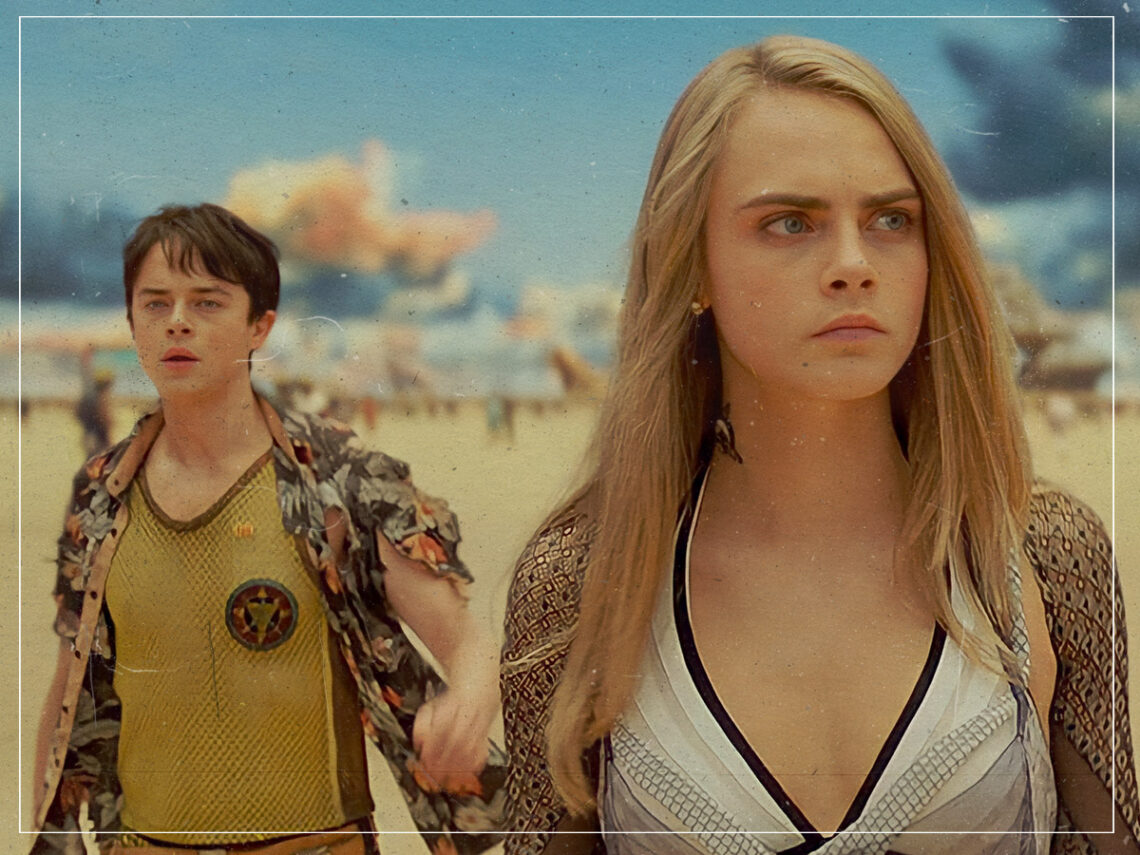
‘Valerian and the City of a Thousand Planets’: A movie that had no right to start that well

Independent cinema is largely associated with intimate, character-driven pieces, minuscule budgets, and powerful thematic messages. Absolutely none of those things applied to Luc Besson‘s Valerian and the City of a Thousand Planets, but it’s still an indie film.
Without the backing of a major studio, the filmmaker funded and financed the comic book adaptation independently. With that in mind, it shouldn’t come as a surprise that with an estimated production budget of around $220million, Valerian is the single most expensive indie movie in the history of cinema.
Besson admirably had eyes on a franchise, even if he was forced to start all over again when another sci-fi extravaganza changed the game. “I had my script ready to go,” he said to Newsweek. “I watched Avatar. I took my script and threw it in the garbage. And I started again”. Almost a decade later, Valerian was finally released, but things didn’t quite pan out how its creator envisioned.
The film may have recouped its enormous budget from cinemas, but it still lost so much money that Besson’s EuropaCorp production company saw its value plummet by €15m on the stock exchange the day after its opening weekend on the big screen, even if the losses were widely spread among a number of outfits after he’d secured so many partners and financial backers to make it happen in the first place.
It’s an impressive achievement on a visual level, with the CGI-enhanced landscapes and soaring space battles every bit as awe-inspiring as anything to emerge from Hollywood, but Valerian never escapes the fatally miscast central pairing of Dane DeHaan and Cara Delevingne, who simply aren’t strong or convincing enough to anchor such an epic tale of intertwining cosmic destinies.
That being said, the opening act is utterly spectacular, with the introductory credits offering a montage that doubles as an origin story for the titular City of a Thousand planets, with David Bowie’s ‘Space Oddity’ the accompanying musical choice. An alternate history that begins in the real world before branching off into Besson’s fantastical universe, it is a visual exposition on a stunningly realised scale, introducing the various players and alien species of the story relative to humanity’s trajectory of space exploration, laying the groundwork for what’s to come.
Even the first major action sequence is a riot, an expansive and enthralling chase that unfolds between two parallel dimensions simultaneously, juxtaposed by the stark differences between a barren desert planet and a vast cityscape. Along the way, DeHaan’s title character finds himself being pursued by three-nosed pirate aliens known as the Kodar’Khan, with John Goodman voicing their leader, Igon Siruss. It’s weird, it’s wonderful, and it’s a delirious height Valerian and the City of a Thousand Planets never comes close to reaching again.
Kneecapped by poor casting choices, a muddled narrative, and a terrible script, Besson’s passion project displayed in its first act that it had the potential to become a modern sci-fi classic. Instead, it followed the path trodden by countless other blockbusters before it, including Zack Snyder’s Watchmen, X-Men Origins: Wolverine, and 28 Weeks Later, by peaking far too early.
