


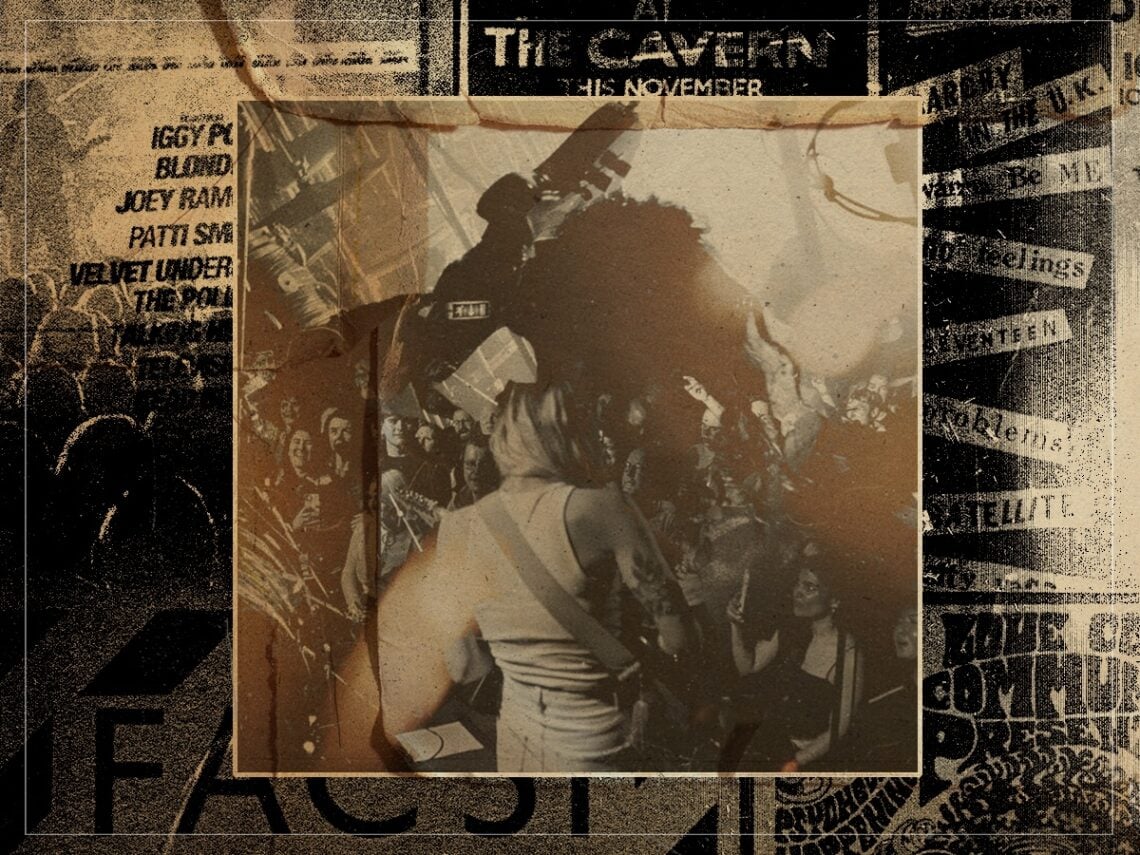
The 10 most influential grassroots music venues in history

While there are many definitions and size categories for what constitutes a grassroots venue, they are traditionally small, intimate spaces that provide a platform for independent artists to perform and hone their craft. Audiences typically range from modest double figures to the hundreds. Although some grassroots venues can hold over 650 people, discussions often focus on those with capacities under half that size. Regardless of these specifics, one thing is clear: without these venues, we wouldn’t have had legendary acts like The Beatles or Nirvana.
Simply put, a grassroots venue is to music what the local football pitch is to football. Without these spaces, the industry wouldn’t have its conveyor belt of talent or the environment needed to nurture those diamonds in the rough, giving them a chance to evolve. Grassroots venues give artists the opportunity to conduct what is essentially market research—to test what works and what doesn’t and to discover firsthand whether a career in music is truly their calling.
Grassroots venues are the bedrock of what makes music so brilliant. However, in the midst of the cost-of-living crisis, where everyone is struggling to make ends meet, musicians and venues alike are facing an uncertain future due to skyrocketing costs. Thankfully, organisations like the Music Venue Trust are tirelessly advocating for these essential spaces, urging policymakers to protect this cultural institution from being swept away by neoliberal forces. Their efforts aim to ensure that these venues, which have given rise to so many iconic artists, continue to thrive.
With significant venues across the UK closing or at risk, such as Manchester’s influential Night and Day Café, it is more important than ever to recognise the vital role grassroots music venues play in supporting music, local communities, and culture as a whole. Below, we highlight the ten most influential grassroots venues of all time.
The 10 most influential grassroots venues:
10. 924 Gilman Street
The Alternative Music Foundation, also known as ‘Gilman’, is a non-profit, all-ages, collectively organised music club located at 924 Gilman Street, West Berkeley, California. Unlike most of the venues on the list, it is still open and most closely associated with the famous 1990s West Coast punk revival that produced the likes of Green Day, Rancid, AFI, The Offspring, and many others.
While the venue is most inextricable from punk, particularly hardcore and the polarising pop punk, it also proved the breeding ground for a host of other acts ranging from metal to hip-hop. The Californian venue’s sound was so influential that it can still be heard in music today. ‘Gilman’ has not been without its controversies either; in 2016, a boycott was held by members of the club’s community, citing its failures in upholding its explicit rules and ethics, as well as allegations of ableism, sexism and transphobia.

9. The Haçienda
No list of influential grassroots venues would be complete without including Manchester’s former home of culture, The Haçienda. Opened by Tony Wilson’s powerhouse independent label Factory Records in 1982, it proved to be a critical environment in fostering the nascent acid house and rave scenes later in the decade. It was also a vital place for the label’s biggest acts like New Order – who partly subsidised it with the funds from 1983’s ‘Blue Monday’ – to discover new music and develop their craft further.
A truly radical place at the time, The Haçienda took its name from the Situationist slogan, “The Haçienda Must Be Built”, found in political theorist Ivan Chtcheglov’s Formulary for a New Urbanism. Without this iconic space, British music as we know it would be vastly diminished. The entire Madchester scene, Oasis, and countless bands influenced by the sounds of Factory Records would likely never have existed in the same way.

8. 9:30 Club
Hardcore punk had a handful of venues key to fostering its sound and ethos in the early years, but arguably the most important was Washington DC’s 9:30 Club. The club was originally The Atlantis, a short-lived local venue located in the rear of the Atlantic Building’s ground floor at 930 F Street NW. Even in that early, ephemeral guise, it played a crucial role in the city’s punk scene.
In early 1979, the Atlantis closed, but on May 31st, 1980, it reopened under new ownership. Its first show was that day for New York City jazz-punks, The Lounge Lizards and local new wavers Tiny Desk Unit, and it would go on to welcome many notable names to its stage. These include Bad Brains, Minor Threat, and California’s Black Flag, formative hardcore bands who established the musical and philosophical outlook of the genre. It also proved a rite of passage for later groups, such as Nirvana, R.E.M. and Red Hot Chili Peppers, when they were on their way to the top. A genuine cultural force, it also provided a home to the city’s go-go genre.

7. 100 Club
The 100 Club, located at 100 Oxford Street in London, has been a hub for live music since 1942, originally known as the Feldman Swing Club. It wasn’t until 1964, when the current owner Jeff Horton’s father took over, that it adopted its now-iconic name. While the 100 Club has welcomed a variety of genres over the years, it will always be remembered as the spiritual home of the first wave of British punk.
Across two days in September 1976, the 100 Club housed the game-changing ‘100 Club Punk Special’. Following on from the Sex Pistols leading the charge and making waves at Manchester’s Lesser Free Trade Hall that June, it was a concerted effort that showcased punk to the world for the first time, helping shift it from the underground to the mainstream. A truly star-studded event, it wasn’t just the Pistols who played, but also Buzzcocks, The Clash, The Damned, The Jam, The Stranglers and Siouxsie and the Banshees. Under the direction of the ‘Punk Special’ organiser Ron Watts, the 100 Club then became the European dwelling of punk, booking other bands ranging from UK Subs and The Adicts to Black Flag.
It became such an institution that in 1982, The Rolling Stones played a surprise warm-up show there and returned in 1986 to play a tribute concert for deceased co-founder Ian Stewart. The 100 Club remains open and has seen more recent acts play, such as Black Midi, Fat White Family, Idles, and Sleaford Mods.

6. Max’s Kansas City
Max’s Kansas City is undoubtedly one of the most iconic venues on this list. The now-defunct nightclub and restaurant was situated at 213 Park Avenue South in New York City. Through its various iterations, it was a hub for some of the most influential creatives of all time, from William S Burroughs to Jack Whitten. Opened by Mickey Ruskin in 1965 until its closure in 1981, it welcomed a more eclectic and prominent bunch than anywhere else on this list.
Max’s Kansas City is most famous for being a favourite hangout of Andy Warhol and his superstars, and in true form, The Velvet Underground played there many times, including their final shows with Lou Reed before he quit in 1970. It was also a home of glam rock in the city, and the likes of Marc Bolan, David Bowie, Iggy Pop, and The New York Dolls graced its stage. Elsewhere, Patti Smith, Bruce Springsteen and Aerosmith also played early shows. Later, the city’s culturally significant punk and new wave acts would also find a home there, something of a sister site to CBGB.
Bad Brains were the final headliners before Max’s Kansas City closed, with Beastie Boys opening up the show.

5. Marquee Club
The Marquee Club might have opened in 1958 primarily for jazz and skiffle acts, but it became essential to the ‘Swinging Sixties’ rock boom. Famously, The Rolling Stones played their first live show there on July 12th, 1962, which was the start of it etching its name into the history books. It would go on to host residencies by some of the definitive acts of the era, including Alexis Korner, Pink Floyd, Jethro Tull, Led Zeppelin, The Jimi Hendrix Experience, The Yardbirds, The Who, Yes and more. Even David Bowie’s early act, The Manish Boys, played numerous times, and it was the place where Peter Green’s Fleetwood Mac debuted in 1967.
Other greats to grace its stage include Queen, Status Quo, Iron Maiden, The Jam, and Def Leppard. In March 1984, Metallica gave their first-ever UK show at the Marquee, with others such as Genesis and Cardiacs also playing. Despite being one of the most essential venues that Britain and, by virtue, the world has ever seen, the Marquee closed its doors in 2008.

4. Central Saloon
While most musical history concentrates on New York City, London and Los Angeles, it often forgets just how important Seattle, in the rainy Pacific Northwest of the US, has been for music. It wasn’t just the epicentre of grunge – Generation X’s answer to the advancements made by The Beatles and their peers in the 1990s – but was also, fittingly, the hometown of Jimi Hendrix.
There have been several venues that have played a significant role in Seattle’s cultural and musical story, but arguably the most distinguished is Central Saloon. Although it is roughly two years younger than the oldest bar in the city, Jules Maes Saloon, it was opened in 1892 and, as you might expect, has a long and varied history. Not only did the great Hendrix play at the Pioneer Square bar, but it was also an incubator for grunge, with the likes of Nirvana, Soundgarden, and most of the scene’s most important acts playing frequently. Significantly, it was the location of Nirvana’s first show in the city, which led to them being signed by Sub Pop. Vital.

3. CBGB
CBGB is undoubtedly the most famous grassroots venue included on this list, with its name and logo known worldwide. Founded by Hilly Kristal in December 1973 out of the ashes of his East Village nightclub, Hilly’s, the new one named CBGB & OMFUG, which stands for “Country, Bluegrass, Blues, and Other Music For Uplifting Gourmandizers” found at 315 Bowery, Manhattan, was intended for “voracious” consumers of music, not foodies. It became New York’s definitive home of music.
Despite the genres in its name, CBGB was the home of punk rock and new wave, providing a sanctuary for the likes of Blondie, Ramones, Patti Smith, Talking Heads, Television, and elsewhere, Madonna. It was later home to the city’s widely influential hardcore movement, with Agnostic Front, Youth of Today, Gorilla Biscuits, and Cro-Mags playing regularly.
An enterprising venue, the storefront next to CBGB became a record store and café. CBGB Record Canteen. In the late 1980s, it was used as a gallery and second performance space, CB’s 313 Gallery, drawing in acoustic, folk, jazz and experimental acts, while the mother venue housed the heavier alt-rock, hardcore, post-punk, and metal. 313 was also where the city’s goth scene developed, and Alchemy, the weekly goth night, played darkwave, goth, and industrial. After longtime financial issues, in 2006, CBGB was closed for good with a performance by Patti Smith, who played for three and a half hours.

2. Whisky a Go Go
It might have taken us a while to get to Los Angeles, but here we are. While the City of Angels has an extensive array of important grassroots venues, the Whisky a Go Go, which has a capacity of 500 people and is located at 8901 Sunset Boulevard, is the most important. It was central to the city’s music scene and place on the cultural map from the 1960s to the 1990s.
The quintessential Southern Californian hub of the counterculture in the 1960s, The Doors were once the house band, with Buffalo Springfield, The Byrds and Love all regulars. It gave rise to Frank Zappa, whose first famous outfit, The Mothers of Invention, secured their record deal after a performance there. The legendary Metallica bassist Cliff Burton was also hired after a performance with Trauma, and who knows how their story might have played out without him.
Elsewhere, in the early 1990s, the venue was the home of the alt-rock and grunge insurrection, with the likes of Hole, Melvins, Mudhoney, and Soundgarden all playing. Even British music has made an impact there, with Oasis performing there in 1994. In one of their most infamous anecdotes, frontman Liam Gallagher was inebriated, leaving his brother Noel Gallagher to temporarily quit and head to San Francisco. The venue is still open today.

1. The Cavern Club
Controversial shout, I know, but hear me out. While it would have been agreeable to include one of the venues in Hamburg that The Beatles cut their teeth in, it just had to be The Cavern Club that took the top spot. It is the venue most closely associated with the Fab Four, who played there regularly as they refined their sound and primed themselves to change the world.
Opened in 1957 as a jazz club, like most venues of the era, The Cavern Club could not resist the winds of change, as bands of youths and their friends descended and played this new form of fast blues known as rock ‘n’ roll. The club would become the main place that Merseybeat formed, and in their early years, The Beatles would play there consistently, attracting fans from far and wide, including Lemmy, who was in doubt about their chops as the best band of all time.
For any doubters about The Cavern Club’s status, one must only hypothesise what the world would look like without it giving a platform to The Beatles, who changed culture in ways the contemporary listener will never truly fathom if they weren’t there. From the music itself to aesthetics and industry standards, this holistic shift opened the gates to everything that followed, and for that reason, The Cavern Club takes the top spot.

