


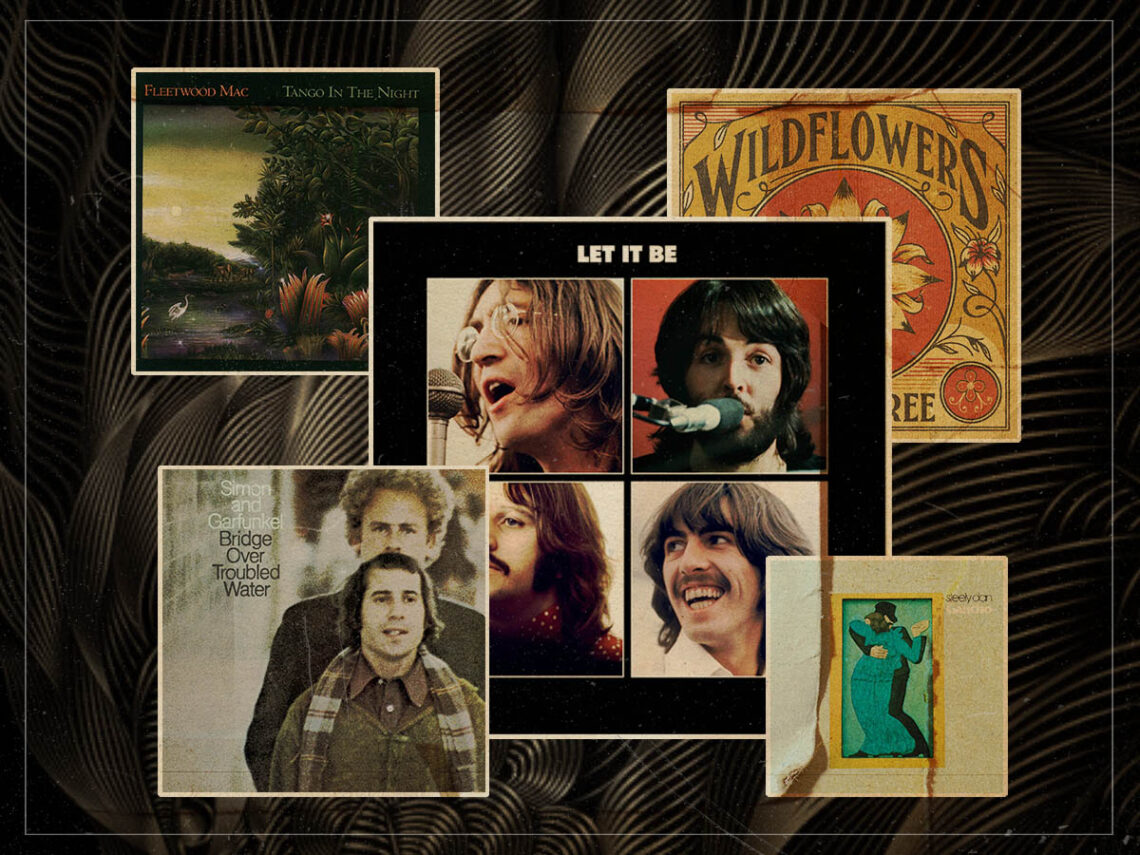
10 masterpieces made as bands were falling apart

It takes a small army for any group to make a record that’s halfway decent. Even if they have the songs, the production, and the intuition to make a great record, who knows whether some other wrench will get thrown into the system and disrupt everything they were working towards? While most professional bands have been known to work through the bugs of their sound to get the right tunes, artists like Van Halen made some of their finest works when wanting to pull each other’s hair out.
Then again, there’s more than one way to break up a band than a couple of songs that people disagree with. There were bound to be some fine moments from bands that had been together for a long time, but whether it was a dust-up behind the scenes or someone disagreeing about where to take the next chapter of their sound, it wouldn’t have been shocking if those involve were flipping each other off during separate takes.
For all of the pain that came from these albums, though, everyone was able to channel that into making songs that felt real. Even if not everyone was going through inner pain, you could feel the genuine hurt in their voices and even the frustration as they bang away at their instruments in some vain attempt to make all of their problems go away for at least the length of the tune.
Many of them ended up going their separate ways once everything wrapped up, but they at least had their masterpieces to prove that it wasn’t made in vain, either. They may have bitched at each other and wanted to strangle their bandmates, but as long as they had the songs to back it up, nobody could touch them.
10 masterpieces made as bands were falling apart:
Alice in Chains – Alice in Chains

When talking about bands on the verge of collapse, it usually centres around everyone hating each other. The whole group dynamic is never an easy tightrope to walk, and even if people can be professional about it, it’s hard to be that invested with a group for that long. When Alice in Chains made their final record with Layne Staley, though, it felt more like a moral obligation than any artistic statement.
By the end of Jar of Flies, Staley had relapsed on hard drugs and was at death’s door throughout most of the recording for this album. And while the record does get difficult to listen to at certain points because of how frail Staley sounds in the mix, it does give way to some of their best tracks. Jerry Cantrell does a fine job fronting the band on ‘Heaven Beside You’, and despite Staley sounding horrible, his voice lends a menacing edge to a song like ‘Grind’ and ‘God Am’.
But for all of the great music on here, it’s hard not to hear the final song ‘Over Now’ as a way of the credits rolling on Staley’s life. He had committed his entire life to Alice in Chains, and as much as he belted his lungs out, his body was never going to hold him for very long once heroin finally took over his entire existence.
Innuendo – Queen

In a perfect world, chances are we would be awaiting what the next Queen record would have sounded like after the turn of the century. After Freddie Mercury was tragically diagnosed with AIDs at the end of the 1980s, though, every single record they made after felt like it could be his final will and testament on vinyl. While The Miracle was supposed to be Mercury’s final bow as a frontman, given his condition, his true swan song consisted of some of the most outlandish moments of the band’s entire career.
Right out of the gate, Innuendo’s title track manages to give ‘Bohemian Rhapsody’ a run for its money in terms of raw grandiosity, and throughout the rest of the album, the band knuckled down to create one epic after another, even if a few are cute tributes like Mercury’s ‘Delilah.’ You would never guess that Mercury was living with a death sentence, but looking at the video for ‘I’m Going Slightly Mad’, it was clear that things were looking fairly grim during the final months of his life.
And while Made in Heaven was eventually scraped together at Mercury’s insistence, ‘The Show Must Go On’ will forever be his true grand finale, living with a terminal ailment and giving one of his finest performances from what might as well have been his deathbed. Innuendo may have been the final chapter of Mercury’s career on this Earth, but if it taught us anything, it’s that his music was going to continue to reverberate whether he was onstage or buried in the ground.
Bridge Over Troubled Water – Simon and Garfunkel

Living life in a duo is never the easiest thing to manage. It’s bad enough trying to deal with four to five different egos in a rock band, but when that responsibility comes split right down the middle, it’s easy for one person to believe that they are the true dictator amongst everyone else. While Simon and Garfunkel could normally be cordial when making their best albums, Bridge Over Troubled Water was the kind of strained experiment that gave them their final masterpieces.
Since Garfunkel was more interested in making movies from Simon’s perspective, a lot of the record was made around his schedule. Despite Garfunkel later rejecting some of Simon’s songs like ‘Cuba Si Nixon No’, he did give one of his finest vocal performances once he sang the title track, which may as well be a prayer for humanity rather than a proper song. Out of all the albums on this list, though, this is the one that actually sounds ramshackle.
From including one live track to hearing Simon cut what would be, in essence, solo tracks on tunes like ‘El Condor Pasa’, this was an example of them being on two completely different creative wavelengths. But just like any great chocolate and peanut butter combination, sometimes two things that don’t always go together can be absolutely transcendent if you have the right idea.
Gaucho – Steely Dan

Steely Dan was never going to put a record out if they felt it was merely “good enough.” By the time Walter Becker and Donald Fagen made the studio their home, nothing they made would be put out unless it sounded like the gods blessed it. So, for a band that already had a masterpiece like Aja under their belt, the fact that Gaucho held its own is a small miracle considering how many things went wrong.
Outside of using every session player, they could get their hands on, the sessions turned into a virtual assembly line for Fagen and Becker, trying out countless drummers to get the right feel for any one of their songs. When they were outside the studio, things weren’t much better, from Becker getting hit by a car and hearing his girlfriend passed away to Mark Knopfler getting disrespected to an intern accidentally erasing one of their best songs by accident.
Any other band would have wanted to quit after making a record like that, but Steely Dan’s need to walk away after Gaucho was about more than simply fatigue. They had made the musical equivalent of perfection on their last few records, so why try to continue on when the only direction you can go is down?
One Hot Minute – Red Hot Chili Peppers

By the 1990s, it felt like Red Hot Chili Peppers were finally going to get their due as one of the best bands in the world. They finally had hits under their belt, but it was clear that John Frusciante didn’t expect them to get big in the same way that Nirvana had catapulted to superstardom. And when he announced that he would be leaving following the band’s biggest tour yet, getting Dave Navarro in for One Hot Minute was always looked back on as the era that no one wanted to talk about.
For a group that was relapsing on hard drugs and dealing with a complete restructuring of their band, One Hot Minute is one of the finest records the band have ever made. Navarro fits shockingly well into the funk songs, and when listening to the demented things that were on Anthony Kiedis’s mind back then, he seemed more than willing to open himself up, whether that was him talking about the pain of losing Kurt Cobain or his complex feelings on organized religion on ‘Shallow Be Thy Game’.
Even if everyone ignored the lyrics, this is by far the heaviest record they ever made, with ‘Warped’ and the title track being the closest thing to metal in their arsenal. Everyone might have fond memories of listening to the band’s funky side or singing along to ‘Under the Bridge’, but if anyone steered people away from this record, they were denying themselves of the funk-metal tunes ripped straight from the depths of Hell.
Wildflowers – Tom Petty

So this one might be a bit tricky. Tom Petty had always been a natural part of the Heartbreakers, and there was never a moment during his career when he took any of his backing band for granted. He knew that he would be proud of his independence, though, and even if his fellow Heartbreakers joined him, Wildflowers was the end of an era for a specific member of the band.
As much as the group were onboard to hear Petty’s downtempo music, Stan Lynch was never going to be a fan of his acoustic singer-songwriter side. He had signed on to be a major member of a badass rock and roll band, and having to drum on Full Moon Fever had already made him feel like he was in a covers act. So now that he couldn’t fit in with the new music, it took him all of two minutes to realise what he had to do, eventually jamming on two songs for their greatest hits before leaving.
While Ron Blair had left before, this felt like the true fracturing of two of the biggest members of the group. Petty may have been the face of the group and made one of the best albums of his career, but you’d have to wonder at what cost when he knew that this album being successful meant giving up his relationship with one of his bandmates.
The Long Run – Eagles

The biggest nightmare for any major artist is to have a successful album. Though it seems like a dream come true in the moment, all a classic does is create pressure to do it again, and while Eagles were certainly up for making something good, trying to top something like Hotel California was bound to be an impossible task. The Long Run did at least give them firm ground to work on, but in between their new songs was a band that would have rather been anywhere but in the studio.
If the tensions from the previous album hadn’t smoothed over, this was the band operating at half-capacity while still at each other’s throats. While they weren’t as ruthless as overdubbing tracks behind Don Felder’s back, a lot of the tunes were practically piecemeal assembled when they finished everything up, which didn’t help when the final product sounded like a band at their wit’s end.
Even though countless artists have talked about the dangers of the industry machine, this is a classic example of that machine consuming a band whole. The solo careers were bound to be a blast, but compared to the smooth sounds of their live shows, this was a band desperate to make music together.
1984 – Van Halen

It would have been unthinkable to imagine Eddie Van Halen without his guitar. He had been the resident guitar hero ever since Van Halen’s debut dropped, and even if the guitar community had become a bit more crowded after he came up, he was always the king when it came to his signature tapping licks. So when he decided that the only way for him to operate was to make songs on a keyboard, it was never going to go over well with those wanting him to stick to the formula.
The pop tunes that they had made in the past had already become an issue with David Lee Roth, but 1984 was where all of the compromises ended. This was going to be Eddie’s album recorded at his studio, and if that bothered anyone, that was too damn bad. So while Roth had to swallow his pride and go along with what Eddie wanted to do, what the guitarist had in mind was the best music they put out during their initial run.
Even though some fans may not have understood why they would make a song like ‘Jump,’ it was easy for them to work both sides of the room as well, satisfying the pop fans with tunes like ‘I’ll Wait’ while also giving them the heaviest rock and roll they could muster on ‘Hot For Teacher’ and ‘Panama’. The Roth era was heading towards a brick wall, but anyone who dismissed this as “the keyboard album” is selling themselves short on the true highlights from Eddie’s career.
Tango in the Night<em> – </em>Fleetwood Mac

There’s no accurate way to judge any band’s flameout album. It’s easy to look at records where everything went wrong, but sometimes the best records can be made under the worst circumstances. And while Fleetwood Mac understands that mentality better than most, Tango in the Night is the best example of them never being able to compromise until the bitter end of the record.
Because as fantastic as ‘Little Lies’ and ‘Big Love’ are, they were never bound to be heard in a live setting. Since Stevie Nicks and Lindsey Buckingham were trying to balance their solo careers, the entire record was made in between their sessions, which led to them becoming frustrated when they couldn’t dictate their songs the way they used to. Arguments in the studio were nothing new, but that turned out to be the calm before the storm.
Before the band could settle on the specifics of a tour, Buckingham was fired from the group, having gone through a band meeting at Mick Fleetwood’s house that ended with him and Nicks getting into a physical altercation. While this would have triggered alarm bells in the group and utter terror in any other rock band, it’s understandable why the band wouldn’t want to deal with any of the infighting anymore.
Let It Be – The Beatles

The entire timeline of The Beatles tends to get depressing once you start inching closer towards the 1970s. The band hadn’t been nearly as temperamental with each other during the proposed Get Back sessions as people had thought, but they knew enough to realise that things weren’t quite up to snuff in the way that they expected. While Abbey Road was a better way for them to put the final bow on their career, the next few months of lawsuits only made the release of Let It Be feel worse.
Since Paul McCartney had gone to war over control of the band and Allen Klein, this was the aftermath of them breaking up. Most of the album was left unfinished when they decided to work on Abbey Road, but once Phil Spector took everything out of the can, those bitter wounds practically got salt thrown on them, with McCartney lambasting Spector for the glossy arrangements that he put on his songs without asking.
Even though there have been several rethinks of Let It Be done the way that the group would have wanted it, it’s best to do the band a favour and forget that this album was their swan song. While that qualifier is technically correct, this isn’t the version of them that we were supposed to hear, and seeing their songs get pulled out from the vaults and tampered with feels gross knowing where their relationships were heading.

Never Miss A Beat
The Far Out Beatles Newsletter
All the latest stories about The Beatles from the independent voice of culture.
Straight to your inbox.