


10 horrifying movies that aren’t actually horror films

What makes something a horror movie? The genre traditionally encompasses many different forms of horror, from the supernatural kind to home invasions, masked killers and monsters. Since cinema’s early days, horror has been very popular, with tales of ghosts, ghouls, vampires and werewolves terrifying audiences.
As the decades have progressed, different trends have come to define horror. For example, the 1970s saw the emergence of slashers, with movies like Halloween and The Texas Chainsaw Massacre scaring audiences with relentless killers who were motivated to murder their victims seemingly at random. Then, the ‘90s introduced us to found-footage horror, as well as several satirical takes on the genre, as seen in Scream.
Yet, there are many movies out there that aren’t classed as horror movies at all—they don’t feature grotesque monsters or ghosts—but they’re just as, if not more, terrifying. That’s because, at the end of the day, the things that can cause us the most real pain and fear range from drug addiction and abuse to social oppression and rapid technological advancements.
The films we’ve selected below aren’t horror movies, but due to the brutal or unsettling content they feature, they might as well be considered as such. From Irréversible to The Piano Teacher, here are ten horrifying movies that aren’t actually horror.
10 terrifying non-horror movies:
La Bonheur (Agnes Varda, 1965)
Looking at La Bonheur’s stills, you might be fooled into thinking that Agnes Varda’s film is a gorgeous summer romance set among vivid stretches of green fields and flowers, with happy children running wild. In some ways, it is, but Varda twists this image of idealism and perfection, turning her film into something more closely resembling a horror film.
We follow François, who is married to Thérèse, with whom he has two children. Despite these glorious countryside images and saturated colours that define the film, Varda actually uses them to sharply contrast François’ entitled and disgusting behaviour, commenting on the sheer audacity that lots of men possess, many of whom often neglect the feelings of women, even their wives. La Bonheur equates the way many women are treated in their domestic lives with horror, with François as much the antagonist here as Leatherface is in The Texas Chainsaw Massacre.
Blue Velvet (David Lynch, 1986)
The films of David Lynch often defy genre, rather being defined by their air of surrealism, but if there were any genre for his 1986 film Blue Velvet, then it would probably be along the likes of neo-noir mystery. However, upon closer inspection, Blue Velvet is well deserving of the horror tag, seeing as it infuses an audience with a constant experience of dread.
After protagonist Jeffrey Beaumont finds a severed ear, he is led into a world of criminal depravity, and the horror inflicted on him is primarily psychological. Blue Velvet’s most significant horror facet comes from its antagonist, Frank Booth, a cruel and sadistic villain who breathes insanity. Throw in a haunting Angelo Badalamenti score and some seriously surreal imagery, and it’s easy to see Lynch’s film as a horror.
Smooth Talk (Joyce Chopra, 1985)
One of Laura Dern’s earlier roles saw her play the lead character, Connie, in Smooth Talk, an underrated drama directed by Joyce Chopra. The teenager desperately wants to meet boys and experience love and sex, often going out to malls or a burger restaurant with the hopes of experiencing the excitement of flirting. She soon proves to be less confident than she thinks, with the film emphasising that she is still just a child who gets into arguments with her mother, feels misunderstood, and finds flirting with boys actually rather intimidating.
However, the film takes a shocking turn when a man in his 30s appears to be stalking her, eventually turning up at her house (with a few other men) when her family are away. He attempts to seduce her, but he is clearly a threatening figure, terrifying her into submission. Here, the true horror lies in the way that young girls are so frequently sexualised by older men and, in some unfortunate circumstances, are taken advantage of and abused.
The Piano Teacher (Michael Haneke, 2001)
Michael Haneke’s films are hardly easy-going, but only a few of them, like Funny Games, are actually horror movies. The Piano Teacher, on the other hand, is a psychological drama, but some of the scenes we’re forced to witness are pretty horrific. We follow Erika, a middle-aged music teacher who lives with her mother, who has rigidly controlled her daughter for years. Erika is sexually repressed and unfulfilled, which leads her to engage in all kinds of strange acts, from sniffing used tissues in porn shops to mutilating her genitals.
However, when Erika begins an affair with a younger student, he soon takes advantage of her desires and leaves her in emotional disrepair. The dynamics between Erika and her mother and Erika and the student are far from normal, with Haneke showing us how extreme control and repression can affect an individual. Male abuse of power is also highlighted, resulting in a film that is both terrifying and tragic.
The Killing of a Sacred Deer (Yorgos Lanthimos, 2017)
Throughout many of Yorgos Lanthimos‘ films, an eerie atmosphere runs amok, certainly in his film The Killing of a Sacred Deer. While not a traditional horror movie, Lanthimos’ 2017 effort certainly befits such an honour, especially considering its supernatural element and striking and unsettling tone.
Colin Farrell plays a surgeon whose life is turned to terror when he meets and befriends a strange young boy, played by Barry Keoghan, who inflicts a curse on his family. The film is a masterclass in tension and an unnerving atmosphere that disturbs audiences with its ancient Greek-inspired tragic narrative and horrifying ultimatum served to its protagonist.
2001: A Space Odyssey (Stanley Kubrick, 1971)
In 1980, Stanley Kubrick delivered his horror masterpiece The Shining, but in some ways, he had already delivered far more shocking pieces of horror despite them not being issued as such a genre. There are indeed scary moments in A Clockwork Orange, but perhaps the most terrifying pieces of non-horror film from Kubrick came in his science fiction movie 2001: A Space Odyssey.
Charting the evolutionary journey of humankind, Kubrick taps into horror as well as speculative science fiction. For instance, the moment on the moon when the astronauts find the monolith and the strings and choral voices rise is truly terrifying, but the scariest moment of 2001 is certainly when HAL 9000 has his showdown with Dave Bowman, sending eternal shivers up the spines of the audience.
Lolita (Adrian Lyne, 1997)
Vladimir Nabokov’s novel Lolita is an unnerving read, one that has been adapted for the big screen twice. While Stanley Kubrick’s black comedy version fails to capture the true horror of the story, Adrian Lyne’s takes a more graphic approach. It sticks more to the original plot and depicts many of the novel’s most shocking moments, such as the pre-teen Lolita kissing and undressing with Humbert, the middle-aged narrator who is infatuated with her. The film takes a completely poor approach to exploring paedophilia, however, failing to treat the topic delicately.
So, while Nabokov’s novel accurately conveys an underlying sense of horror – every witty line that Humbert spouts is charged with something sinister – Lyne fails to capture this and presents the movie through a ‘beautifully tragic’ lens. Thus, the true horror here is present in the way that the story has been told by Lyne. Intimate moments between the pair are shot with too much romanticism, and the young Lolita is even filmed sucking on a banana while wearing red lipstick.
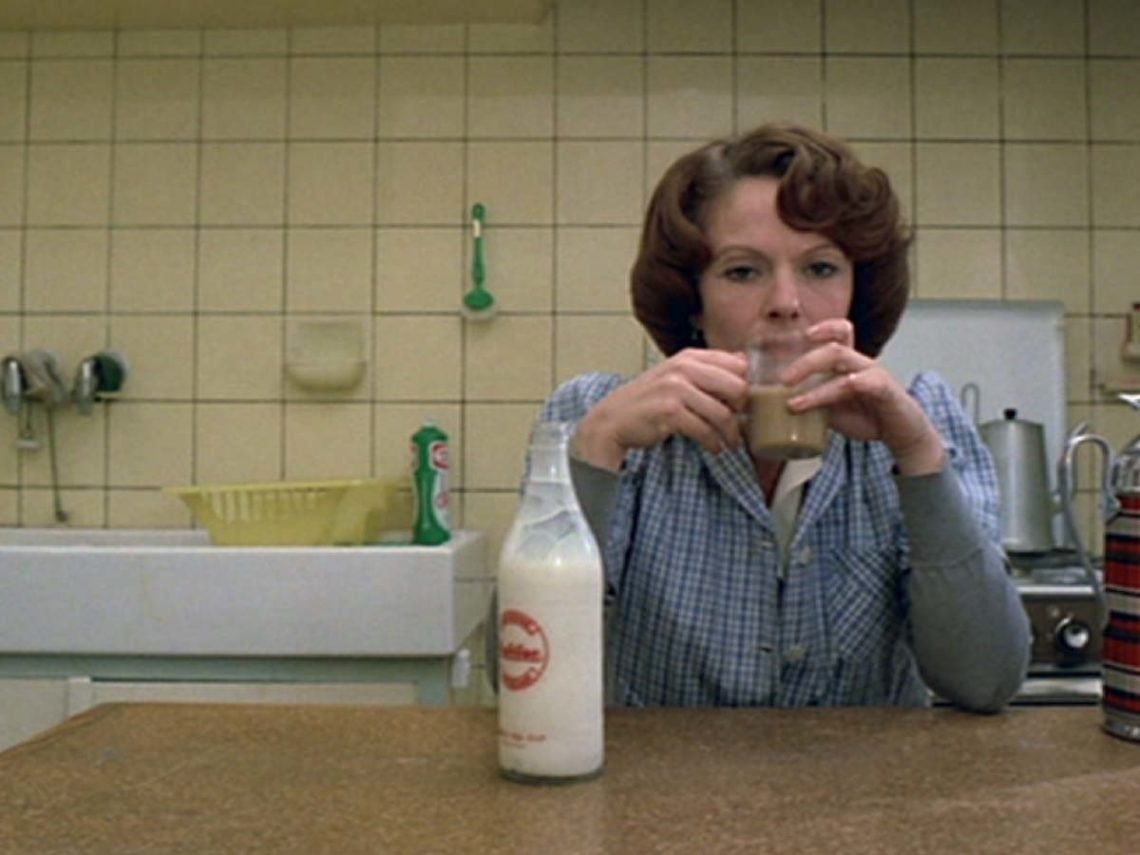
Jeanne Dielman 23, quai du Commerce, 1080 Bruxelles (Chantal Akerman, 1975)
Chantal Akerman’s compelling film Jeanne Dielman 23, quai du Commerce, 1080 Bruxelles explores the horrors of domesticity and feeling trapped simply because of one’s gender. The film is almost three and a half hours long, with little happening besides Jeanne engaging in the monotonous acts expected of her as a woman and as a mother. She peels potatoes and washes dishes, which Akerman forces us to sit through in real time.
For those with a penchant for horror, it feels as though this is one long lead-up to something far less mundane, although it’s hard to decipher just what this might be. In the end, something horror-esque does happen as the film draws to a close, proving that sometimes, the pressures of performing and living under strict patriarchal rule can become too much.
Irréversible (Gaspar Noé, 2002)
Easily one of the most shocking movies on this list, even Gaspar Noé’s Irréversible does not stand as a horror movie despite being arguably one of the most horrifying movies of all time. Taking place in reverse chronological order, Noe’s film tells of the revenge taken by two men against the man who assaulted and raped one of their girlfriends.
The extended rape scene itself is perhaps one of the most disturbing moments in cinema history, captured with shocking realism, but the rest of the film is equally as terrifying, particularly considering the kind of disorienting camerawork that is used. Thematically, Irréversible is an important non-horror horror movie, for it examines the inevitable violence when justice is sought out.
Requiem for a Dream (Darren Aronofsky, 2000)
Based on Hubert Selby Jr.’s 1978 novel of the same name, Darren Aronofsky’s Requiem for a Dream explores the nature of addiction, whether to narcotic drugs, entertainment, or even abstract ideas like fame, happiness, and love itself. However, there’s a deep horror that lies beneath the surface of the film that leaves a lasting impression on its audience.
Emotional and psychological horror is rife in Requiem for a Dream, whether in the hallucinations and delusions of Ellen Burstyn’s Sara Goldfarb or the awful and depraved lengths the film’s young heroin addicts will go to for their next hit. Aronofsky’s film is a claustrophobic and tragic viewing experience that mirrors the physical and mental deterioration of its characters.
