


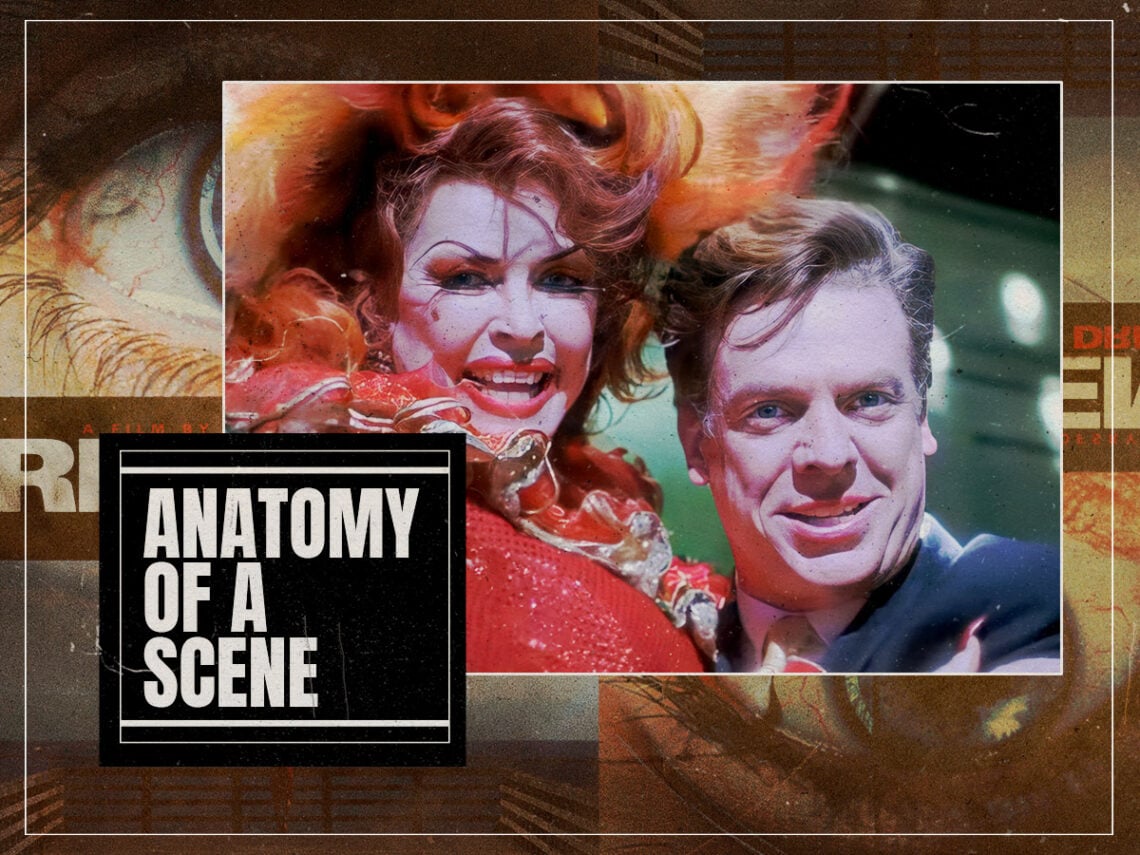
Anatomy of a Scene: Dissecting the ‘Requiem for a Dream’ reality TV sequence

Darren Aronofsky‘s Requiem for a Dream remains as uncomfortable a watch as ever, with the story painting the harrowing portrait of its central characters helplessly succumbing to their addictions and the emptiness it creates all around them.
Ellen Burstyn landed an Academy Award nomination in the ‘Best Actress’ category for her heartbreaking performance as Sara Goldfarb, the mother of Jared Leto’s Harry. Their parallel stories serve as the catalyst for everything that unfolds around them, but despite her misgivings over her son’s substance issues, she proves equally susceptible.
After receiving a call claiming she’s been invited to her favourite game show hosted by Christopher McDonald’s Tappy Tibbons, Sara embarks on a crash diet ahead of her impending small-screen debut in an attempt to fit into the red dress she’d worn to Harry’s graduation. After being prescribed amphetamines to lend an assist, she quickly develops a dependency and becomes hooked, which manifests itself through hallucinations.
Things reach a head when the lines between reality and psychosis blur right in her living room, where Sara is confronted by the televised version of herself, representing the ideal version of who she wants to be when she stands under the spotlights. This Sara is rendered with the fuzzy glow of an analogue signal, though, before Tappy appears, and they both begin openly mocking her.
The drug-addled fantasy deepens when the living room itself begins being peeled back to meld with a studio environment, leaving Sara increasingly panic-stricken and hysterical as her wildest dreams are realised right in front of her eyes as a waking nightmare.
When she first sits down, the word “WINNER” repeatedly flashes across the screen in vivid colours and is captured in extreme closeup, conveying the irony of her situation. Her reactions further establish that her grasp on sanity is further beginning to slip as she moves through the emotional spectrum from delight and glee to abject terror as her addiction to the diet pills begins to infect her every waking moment, to the extent that she can’t even watch her favourite TV show in peace.
The filter placed on the television version of Sara and Tappy – which is the way she sees them – is Aronofsky establishing that she’s fully aware that what’s happening isn’t real. This creates an increasing sense of chaos that grows ever more off-putting as the camerawork moves faster, edges closer, and utilises rapid edits to ramp up the overwhelmingly tense feeling of escalation and hopelessness.
Sara being shot from high angles renders her as the subjugated party, even in her own mind. At the same time, her ideal TV self and Tappy being shot from below illuminate her addiction to the diet pills – which initially began on account of her desire to look her best on the show – have fully taken over and started dominating every fibre of her existence.
The “feed me Sara” chants from the gathered masses and a demonic refrigerator are far from subtle but nonetheless evocative of just how far down the rabbit hole she’s slipped. Within the context of the character and her participation in the movie’s overarching themes, this is the exact moment in Requiem for a Dream that marks Sara’s point of no return.
