


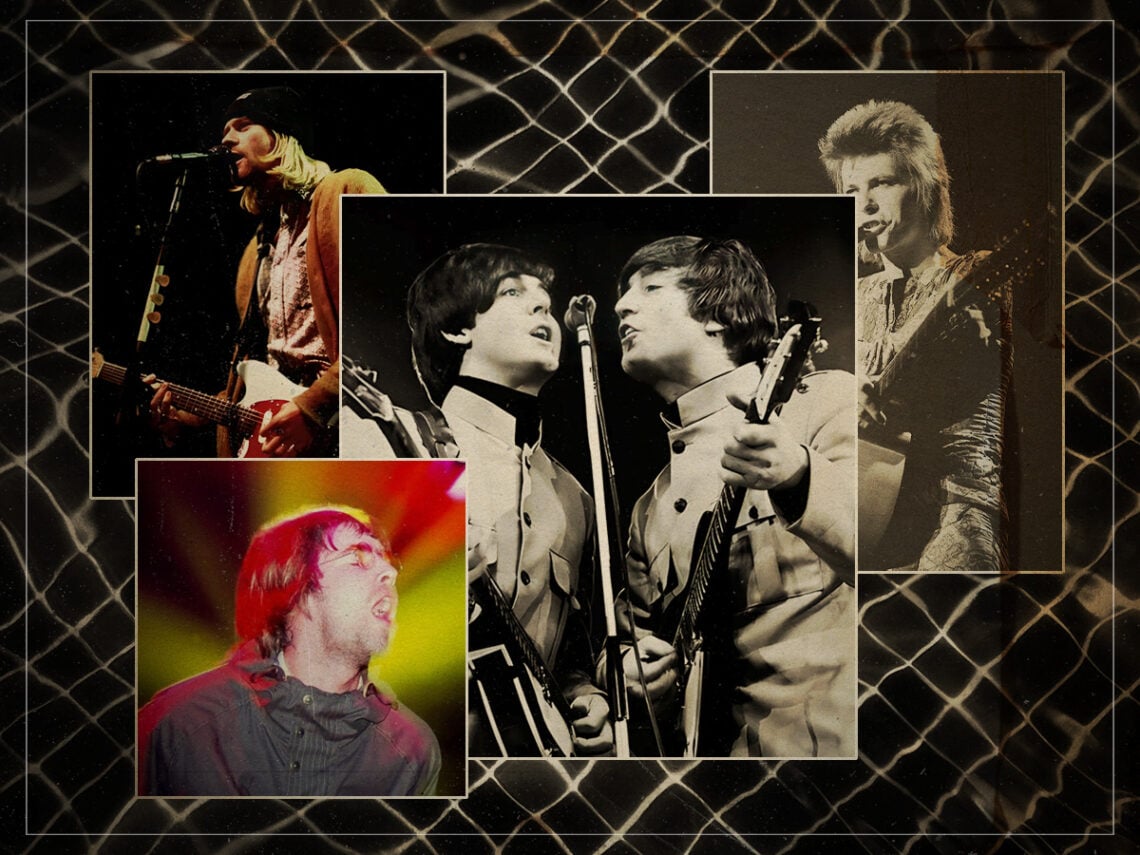
10 artists that changed with one show

For any rock and roll outfit, change is a gradual process. No one can claim to play the same way that they did when they were 16 after years in the business, and anyone who has been around the block a couple of times knows the ins and outs of their sound before they even enter the studio. Although many bands like Pearl Jam have earned their stripes on the live stage, there are often moments where everything stops on a dime, and they become a different group altogether.
That doesn’t necessarily mean for good or bad, though. Some of the biggest shows ever made have become spectacles that have lasted for generations, but the importance comes from what happened after the show, either because of something that happened backstage prior to everything or the humiliation that someone went through to get to that moment where everything starts blowing up.
That change can be revolutionary the first time someone hears it, but when looking back on rock history, the stage is also where some bands have gone to die. Compared to the other rock legends who have tried their hand at making a fantastic show for their fans, some of the greatest shows can either get derailed by bad behaviour or leave permanent damage on everyone’s psyche once they walk off the stage.
Considering the all-out war that happened between the band and the audience onstage some of these nights, the only thing that mattered was how everyone saw their favourite act going forward. The world seemed to be going one way before the show had started, but when those house lights went down, and a hush fell over the crowd, what they witnessed was never going to be done the same way again.
10 artists that changed with one show
The Troubadour – Elton John

The entire story of a rock and roll never plays out like it does in the movies. Every single person may have looked on in awe at the way that Rami Malek’s Freddie Mercury devoured Wembley Stadium in Bohemian Rhapsody, but while the actual show was beyond compare, there were definitely details added in for dramatic effect to make it seem more gargantuan. While Elton John had a similar sensation in Rocketman, his gigs at the Troubadour in LA weren’t that far off from reality.
Granted, John didn’t start levitating like Taron Egerton did in the film, but the feeling in the room that night was like seeing a vision of the next great singer-songwriter. The massive looks that he would have later in life were far more toned down at this stage, but listening to tracks like ‘Country Comfort’ made everyone realise that they were dealing with someone far greater than the typical Jams Taylor. He was looking to tell Bernie Taupin’s stories with the kind of musical manpower of a classical composer.
The stadiums had yet to come, but this was the first kick in the ass that he needed to find his footing in America and become the star attraction whose melodies could please just about anybody. Not bad for a kid who had only arrived in America a few months before and had little to no airplay anywhere.
The Concert for Bangladesh – George Harrison

The Beatles’ main goal was always to make the world a better place. Even though a lot of rock and roll is based around anger and lashing out against the troubles of the world, the Fab Four’s reminder that all we needed was love was the mantra that the most optimistic rock and rollers hold onto to this day. But that love is also worth protecting, and while George Harrison had become a guitarist and spiritual guru, he was about to add humanitarian to his list of qualifications as well.
Despite being one of the most decorated men in the music industry, The Concert for Bangladesh was what Harrison should be remembered for the most. In an effort to save those in Bangladesh suffering from starvation at the request of Ravi Shankar, Harrison organised one of the biggest concerts of all time, reuniting with Ringo Starr as well as getting performances out of everyone from Billy Preston to Leon Russell to the first-ever performance from Bob Dylan in years.
Dylan may have offered pertinent songs like ‘A Hard Rain’s A-Gonna Fall’, and Preston may have been the most engaging stage presence of the day, but what Harrison walked away with was a need to give back to the world. He had been one of the biggest names in music for years, but he knew that if he should say something, he might as well use his position to help those in need.
Radio City Music Hall – Foo Fighters

Not many bands can claim to have broken up onstage. That’s normally saved for the backstage brawls and the moments when a musician storms out after one too many bad gigs. Those kinds of incidents deserve their own list, but Foo Fighters might be the only band to have had a band lineup change take place in real-time in front of millions of people in the middle of New York.
Granted, Dave Grohl was finalising many parts of the lineup by the time they started touring for The Colour and the Shape. Everyone was grateful to have the record done, but Pat Smear knew that he couldn’t put up with yet another tour of playing the same songs time and time again. So when he resigned from the group, Grohl was going to introduce the new guy in glorious fashion, bringing in Franz Stahl from his band Scream halfway through their performance at Radio City Music Hall.
To his credit, Smear couldn’t have been more gracious about the situation, either, warmly welcoming Stahl into the band after tearing through ‘Monkey Wrench’ and leaving the group for years before finally deciding to come back in the 2010s. After all, Foo Fighters had become more about family than anything else towards the end of the 2000s, and that meant tying up a lot of loose ends and rediscovering that love for making music.
Miami – The Doors

It should come as a surprise to no one that The Doors were known for their controversy. As much as people loved the idea of listening to ‘Light My Fire’ on the radio, there was no real plan for what Jim Morrison was going to do every time he got up onstage to sing. Sometimes he would be drunk off his ass, and sometimes he would be trying to mess with people for the hell of it, but at the show in Miami, he figured he’d do both at the same time and got the biggest shock to his system.
After calling the crowd a bunch of mindless slaves listening to his band, Morrison eventually offered to expose himself before people were brought in to subdue him. He had already adopted the moniker ‘the Lizard King’, so this wasn’t an uncommon assumption for many people to come to, but the minute that the frontman started facing serious jail time was when things started to seriously go downhill.
He now found out his actions had consequences, and for the next few years, he would spend Morrison Hotel and LA Woman getting in tune with the blues before bowing out and moving to Paris where he would pass away. Morrison had enough gas in the tank to be a proper musician, but that kind of reckless abandon and anarchy that came from a lot of Doors shows seemed to be snuffed out the minute the handcuffs were slapped on.
Woodstock 1994 – Green Day

Green Day never claimed to be the voice of a generation by any stretch of the imagination. That was reserved for people like Nirvana, and by the time they started gaining momentum off of Dookie, people were far more concerned with their songs about masturbation than whether or not they had something integral to say about society at large. And when Woodstock 1994 hit, everyone got a taste of what those loveable goofballs were all about the minute that the rain started pouring down.
The festival was never going to let bad weather disturb their vision of peace and love, but Green Day had other ideas when they had mud pelted at them. Any band has to take those projectile objects in stride, but Billie Joe Armstrong was not going to spend an entire show being pelted, eventually deciding to throw parts of it back and even catching one piece of the ground to take a bite out of it.
While no mom would have approved of this kind of performance, it did its job by showing everyone the kind of band that the pop-punk trio were all along. They may have been goofy and got into some lude subject matter every now and again, but they were a musical machine that wasn’t afraid to fight for what they believed in.
The Whiskey A-Go-Go – Oasis

Every band has that one turning point where they either sink or swim. Many people can spend their entire lives trying to do that in the studio, but when there is that one moment where everything can go right, anyone can hunker down and put in the work before becoming the biggest band in the world. Oasis were up for that challenge in the early 1990s, but the minute that they discovered the wonders of crystal meth, it went from being a malevolent dictatorship to Noel Gallagher’s band.
Noel had already been responsible for writing the songs, but the minute everyone stumbled into the Whiskey A-Go-Go high off their asses, ‘The Chief’ knew it was time for a change. Not even bothering to yell at the band, he disappeared immediately after the gig, only leaving behind a few traces before people found out that he went up to San Francisco to lay low with a fan he had met a few gigs prior.
Even though What’s the Story Morning Glory hadn’t even begun yet, everyone remembered that the energy was incredibly different when he went back to meet the rest of the band, knowing that he was someone to be feared as much as respected when working on their music. Anyone can mistake Noel for being nothing but a cheeky bastard whenever he turned up in interviews, but if this was how he reacted, everyone knew he had a vision that went far beyond being a decent rock and roll band.
Hammersmith Odeon – David Bowie

For David Bowie, inspiration never really died. Although there are many different ways that he could have kept one facet of his identity for an entire career, it didn’t take him long before he would get bored and move on to something completely different when he felt like it. And while most fans are forever grateful that he grew out of his time as a vaudeville crooner, most weren’t ready to say goodbye to the alien that fell to Earth so quickly after his Hammersmith Odeon performance.
It felt like the ending of the tour for any average concertgoer, but as Bowie announced the final songs of the night, he left behind some fatal words, remarking that it would be the last song that the band would ever play together. Although it went down perfectly with the glam rock crowd, Bowie was merely talking about the next phase of his career, eventually reinventing himself as Aladdin Sane and adopting a more Americanised version of what he was supposed to be in the public eye.
Fans might have been heartbroken to see the snow-white-tanned alien retreat from the public eye, but they would have to get used to that feeling. Ziggy wouldn’t be sticking around, nor would Aladdin, nor would ‘The Thin White Duke’, because all of them were merely costumes for Bowie to put on and hang up the minute that he grew tired of them.
OK Hotel – Nirvana

For anyone outside of the Seattle area, there was no accurate way to describe how Nirvana took over the world. The idea of some of the most normal-looking kids breaking through the glam-metal scene sounded impossible, but once Kurt Cobain came out with his rebellious tunes, everyone else found a confidante who they could put all their musical trust in. And while that always needs to be gradual, never before had a band turn from indie stars to legends within the span of a single song.
While Cobain introduced a new song that night entitled ‘Smells Like Teen Spirit’ in a goofy way, the footage from the night makes the whole crowd feel different. Most people were coming to hear a local band playing some tunes, but watching the audience is like witnessing a wild animal having a visceral reaction to something, as if the music is compelling them to mosh in a completely different way than they were used to.
That’s because ‘Smells Like Teen Spirit’ was about something more than rock and roll. Glam metal had scrubbed everything clean, and this made everyone remember back to those times when rock and roll felt important for the culture. Maybe they had never felt that feeling on their own, or maybe the old guard of rock and rollers had forgotten what it felt like to have everything flipped on its head.
Candlestick Park – The Beatles

No band has elicited such an immediate reaction as The Beatles did when they played on the Ed Sulivan Show. The entire country came to a standstill when those moptops were shaking their hair in black and white, so when they came to any city during that tour, the reaction wasn’t all that different from seeing a sea of piranhas attacking a ham. But for the four people at the centre of it, there came a point where they really needed a break from everything going on around them.
By 1966, none of the Fab Four liked the idea of touring anymore, and listening back to a lot of the live mixes, it was clear that they couldn’t have cared less if they were hitting wrong notes and playing a bit recklessly. After having to also go through the headache of John Lennon’s ‘bigger than Jesus’ comments, the last date of their tour at Candlestick Park felt a lot more final than usual.
Since they had already been learning how to play the studio in many respects, they figured it was officially time to retire from live dates, instead focusing on releasing records for their fans and expanding what the album format could look like on Sgt Peppers and Abbey Road. The live show might help keep them fresh whenever they went into the studio, but they had reached the point where the technology of the live stage couldn’t handle the dreams they wanted to make in the studio.
Roskilde – Pearl Jam

Rock and roll should be about having fun whenever a show starts. Even though there have been many times when things can get dangerous during shows, there isn’t a soul that arrives at a concert that doesn’t think about having a great time and telling all of their friends about what happened when they get back home. Pearl Jam was more than happy to give that experience to people, but Eddie Vedder remembered that the band left a bit of their innocence onstage when they played Roskilde in 2000.
Since the barriers weren’t handled properly, nine members of the crowd got crushed to death as the massive audience started getting out of control. Although Stone Gossard had been around death since the days of Mother Love Bone, he remembered that the entire night made them question what they were supposed to be doing. It was tough enough trying to handle fame, but what does one do when they find out the power of their music can turn fatal?
It wasn’t an easy decision for them to even get up onstage again, but Vedder remembered the term “what?” becoming a major part of their vocabulary going forward. All great art should be about experimentation and having no limits on where things can go, but when someone loses their life because of what you’re creating, anyone would make sure that they’re taking proper care of what they’re putting out.

Never Miss A Beat
The Far Out Beatles Newsletter
All the latest stories about The Beatles from the independent voice of culture.
Straight to your inbox.