


10 artists whose careers were changed by 9/11

Every generation has those moments that seem to stop the clocks and change the entire course of the future. One day, things seemed to be going great, and whether it was one world event, new technology rearing its head, or just the new year coming into view, artists all over the world knew things weren’t going to be the same afterwards. The 1960s had JFK, and the 1980s had the infamous Challenger explosion, but nothing could have prepared people for what happened on 9/11.
Even for those outside of the US, seeing two major landmarks of New York being torn down by a terrorist attack left a melancholy in the air that no one could really describe. Whether it affected you or not, everyone could agree that it was tense back then, and as an oncoming war got underway, the only way that artists felt to channel their emotions was through their songs.
While not every band on this list was directly impacted by the attacks, each of their subsequent projects gave in-depth looks into how the world saw that terrible day and the possible hope to get better through the darkness. However, we have to experience the melancholy first, and each artist doesn’t hold back when talking about the real pain that came from living through that tragic event.
Then again, not every one of these artists came through with projects that had timestamps of 2001 thrust upon them. This was about their careers going forward and whether they reshaped themselves along the way or stayed the course. This was the moment when things started to take a more pointed turn.
10 artists whose careers were changed by 9/11
10. Rage Against the Machine
Part of the beauty behind Rage Against the Machine’s lyrics was about how much they subverted traditional norms. No one went to a loud rock song to get a history lesson or be told political rhetoric, but the minute that Zack de la Rocha stepped up to the microphone, everyone lingered on whatever he had to say on singles like ‘Bulls on Parade’. That kind of music is always needed in troubled times, but it also made them public enemy number one for the censors.
As soon as radio mogul Clear Channel put out a list of songs that should be banned in the wake of 9/11, Rage Against the Machine got more than just a slap on the wrist. In no uncertain terms, radio stations were encouraged to ban the group outright, citing every single one of their songs as potentially insensitive in times of trouble.
While the group had been long since defunct at that point, fighting against censorship did factor into their material going forward. Because for all of the subsequent reunions that went on in the coming years, refusing to cower to whatever ‘Music Industry Big Brother’ told them to do is one of the best uses of the phrase, ‘Fuck you, I won’t do what you tell me’.
9. Eminem
For years, Eminem was just known as the obnoxious rapper who played out of the bedroom of many a little brother. And why not? The Slim Shady persona was perfect for the kid who didn’t know how to express his anger properly, and even if he used a lot of vulgar language, he was still a better outlet for aggression than what the man himself talked about doing in his songs. After something so grotesque actually started happening, something changed in Eminem, and he had an axe to grind with America the minute that he kicked off The Eminem Show.
Since his last album took fans through the darkest places of his innermost thoughts, tracks like ‘White America’ started painting a picture of what was really on Mr Mathers’s mind. He knew that George Bush would be leading the country into a war that they didn’t want, and every time he stepped up to the mic on the next few records, he was just as likely to talk about the problems with the greater world than just what he saw in front of him.
Even when looking back on Encore or Relapse, people would still hear some mean-spirited jabs at Christopher Reeves, but they would also listen to different lessons and inspirational tunes written by the same guy who sang about going on a revenge fantasy against his cheating ex-wife. It’s not the greatest fit, but when the rapper who gives the least fucks is getting up on the soapbox, you know it’s serious.
8. Twisted Sister
Any time that a tragedy of this magnitude happens, all people want to do is help. Sure, there are bound to be people who try to give their all for the cause, but in the wake of the attacks, many artists used their platform to raise money however they could and play whatever shows it took to get people to donate money. And for a genre that seemed to be dead for far too long, Twisted Sister resurrected their hair metal glory days by coming back together to play the benefit show, NY Steel.
While the group had been effectively dead in the water ever since the 1980s, it didn’t take any of them long to agree to do reunion shows. But there was a bit of a catch. For the first time in their history, the band known for having the most outrageous stage presence in rock and roll would be going onstage without their trademark glamorous facepaint and outfits on.
And for all the people of New York, it didn’t matter one bit, especially when frontman Dee Snider took to the stage with a shirt emblazoned with the words ‘Fuck Osama’ on it. Hair metal was far from having a revival or anything, but the minute that fans heard them back together, they knew that the extremists had picked the wrong city to mess with.
7. Anthrax
All metal bands were meant to be more than a little bit scary to the general public. No one is exactly following in the footsteps of acts like Black Sabbath with the goal of beating around the bush and talking about the facts of life, and it’s also no big shocker that most of the greatest metal anthems of all time centre around everything from violence to war. But when a band’s name got taken away from them for the first time, Anthrax had to take a cold look in the mirror to see what they were going to do next.
Since guitarist Scott Ian got the name from a disease that he had learned about in biology class when he was a kid, the subsequent anthrax scares in the wake of the attacks led to many people calling their name into question. But Ian was always a man of the people, and he wasn’t going to let a bunch of concerned parents get in the way of him representing what his version of the word stood for.
So when Anthrax took to benefit circuit for the first time since the attacks, every member stood at the lip of the stage with matching white boiler suits on, each of them spelling out the sentence ‘WE’RE NOT CHANGING OUR NAME’. Yes, Anthrax was on everyone’s mind for an entirely different reason now, but if they had tried to change everything on a whim, that meant that the attacks scared them into obedience.
6. The Chicks
Looking back on the country music industry circa 2002, it’s like night and day compared to the pre-9/11 world. There were still a lot of artists willing to represent their country, but a lot of it ended up getting wrapped up in the pro-war stance that only managed to get uglier and uglier as the years went on. And when The Chicks dared to say they had a problem with it, they got one of the most unjustifiable backlashes of the last 20 years.
You have to remember that before 9/11, The Chicks were among the biggest success stories in Nashville, with songs like ‘Wide Open Spaces’ and their gorgeous cover of ‘Landslide’ getting prime time on the charts. As soon as the Iraq War began, Natalie Maines accidentally ended their careers when she implied that President Bush may not have been making the right decision to go to war so quickly.
She was more than welcome to speak her mind, but for the entire country industry, this was a deal-breaker no one could recover from, leading to them being blackballed and never seeing the top end of the charts again. There was a lot of patriotism going around after the ‘War on Terror’ started, but isn’t part of American patriotism about being able to practice the right to free speech?
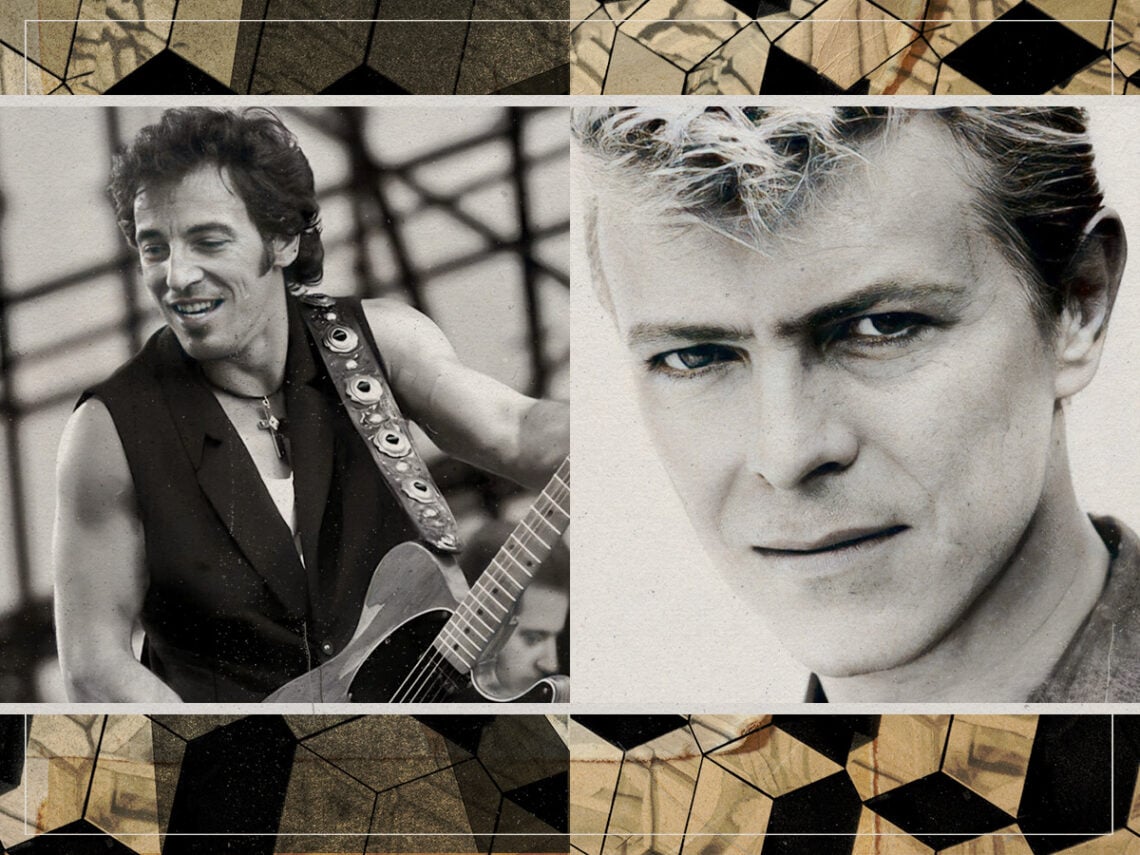
5. David Bowie
By the end of the 1990s, David Bowie seemed to adopt New York as his new home outside of England. After all, the greatest creatives of the world had settled there in the past, so why have a musical martian among their ranks as well? But while Bowie did have an album ready to go around the time of the attacks, Heathen ended up having the aftermath of 9/11 thrust upon it without Bowie realising.
By most fans’ standards, it’s still a fairly solid Bowie record, complete with the same artsy swagger that he had cultivated for the past few decades. When listening to many of the lyrics, people started to ask questions about what was on ‘The Starman’s mind when he was writing, especially considering some lines surrounding looking for bodies crawling through the rubble.
Bowie did have reason to represent the city he loved so much, but Heathen was a case of getting horribly tainted after the fact. The album was ready to go well before that horrific day even started, but for anyone living in a post-9/11 world, it was always going to be difficult trying to return to this record.
4. Eagles
For most rock fans, it doesn’t get more American than the Eagles. Outside of maybe Bruce Springsteen and Tom Petty, no one had made a better case for American music than Glenn Frey and Don Henley, going so far as to blend country, rock, soul, and pretty much anything else under their creative umbrella. Even though the group had no plans of recording a fleshed-out album, ‘Hole in the World’ was their way of gently nudging themselves back into the public consciousness again.
While a one-off single in tribute to the fallen was one thing, Henley was profoundly impacted by what happened that dark day. As a parent, he started to have concerns about what the future would look like when his kids were older, and listening to Long Road Out of Eden, half of the track-listing is a bold exploration of that concept.
Sure, there are still the traditional love songs and heartache tracks that many would come to expect, but everything from ‘Frail Grasp on the Big Picture’ to the title track has its mind on the lingering questions surrounding a day that dark, including Frey ending things off on a somewhat ominous note on ‘It’s Your World Now’. The Eagles were bound to fly once again sooner or later, but most would have wished that their final album came together under less melancholy circumstances.
3. My Chemical Romance
The music industry doesn’t just stop because of one day. No matter how many lives were lost on 9/11, people were still trying as hard as they could to make their dreams a reality before seeing those two planes crash in the middle of New York. One such dreamer was Gerard Way, and when he saw something that destructive in front of him, he knew that he wanted to create something that could bring about an equal amount of positivity back into the world.
After working in the world of cartoons, Way’s decision to form a band resulted in the early incarnation of My Chemical Romance. While their debut record still harbours many of the same tropes as emo and post-hardcore outfits, ‘Skylines and Turnstiles’ really got the ball rolling for the group, with Way writing the lyrics to directly tie into what went down that day.
And when looking at the way their career shaped up afterwards, their best material was later defined by that same kind of sadness, whether that was struggling with mental health or sculpting the ideal concept album of a man slowly withering away on The Black Parade. It was still very cynical and maybe even a bit macabre in places, but sometimes people need to see the dark side of life to appreciate the light.
2. Bruce Springsteen
Out of every artist affected by 9/11, no one was going to take it harder than native New Yorkers. The entire premise of their city was about prosperity, and to see two of the biggest landmarks be gone in an instant was never going to be an easy hurdle to get over. Bruce Springsteen may have just been a hapless kid from Jersey, but as evidenced by The Rising, he turned on a dime the minute he realised how precious life was.
The last few Springsteen albums had seen him going in a more introspective direction, and while The Ghost of Tom Joad was far from his biggest success, it still showed him inching closer to more personal affairs. Once he learned about the families connected to every victim in those towers, ‘The Boss’ changed his style to the point of reportage, learning everything he could about certain fans that perished and immortalising them in tunes like ‘You’re Missing’ or ‘My City of Ruins’.
More than anything, an album like The Rising pointed towards where Springsteen would be going next. He had already begun making inroads into classic rock territory, but being able to band people together to support a good cause is the kind of feat that used to only be reserved for the likes of Bob Dylan and Woody Guthrie.
1. Green Day
Punk rock has never really been about going along with the status quo. Anyone can just go along with the program, and part of the reason why Sex Pistols worked so well was how much of a retort they were to what the giants of rock stood for. Green Day were already inching towards mature territory on Warning, but in the wake of 9/11, they had a much more defined target to aim for.
As the war began, Billie Joe Armstrong ended up scrapping the group’s original vision for an album, Cigarettes and Valentines, to work on a response record to the world he saw. Despite being the darling of every rock station around that time, American Idiot is still one of the most biting snapshots of what 2000s America looked like, taking the lion’s share of both the frustration and the raw emotion behind those years and shoehorning them into ‘Boulevard of Broken Dreams’ and the title track.
And while the band may not have intended it to have such pressing connotations, ‘Wake Me Up When September Ends’ hit a lot closer to home than a song that was originally just about Armstrong’s relationship with his father. Punk had to evolve in some way past the traditional pop-punk genre, but in one fell swoop, Green Day turned up their voice and gave rock and roll a rebellious figure once again.
