


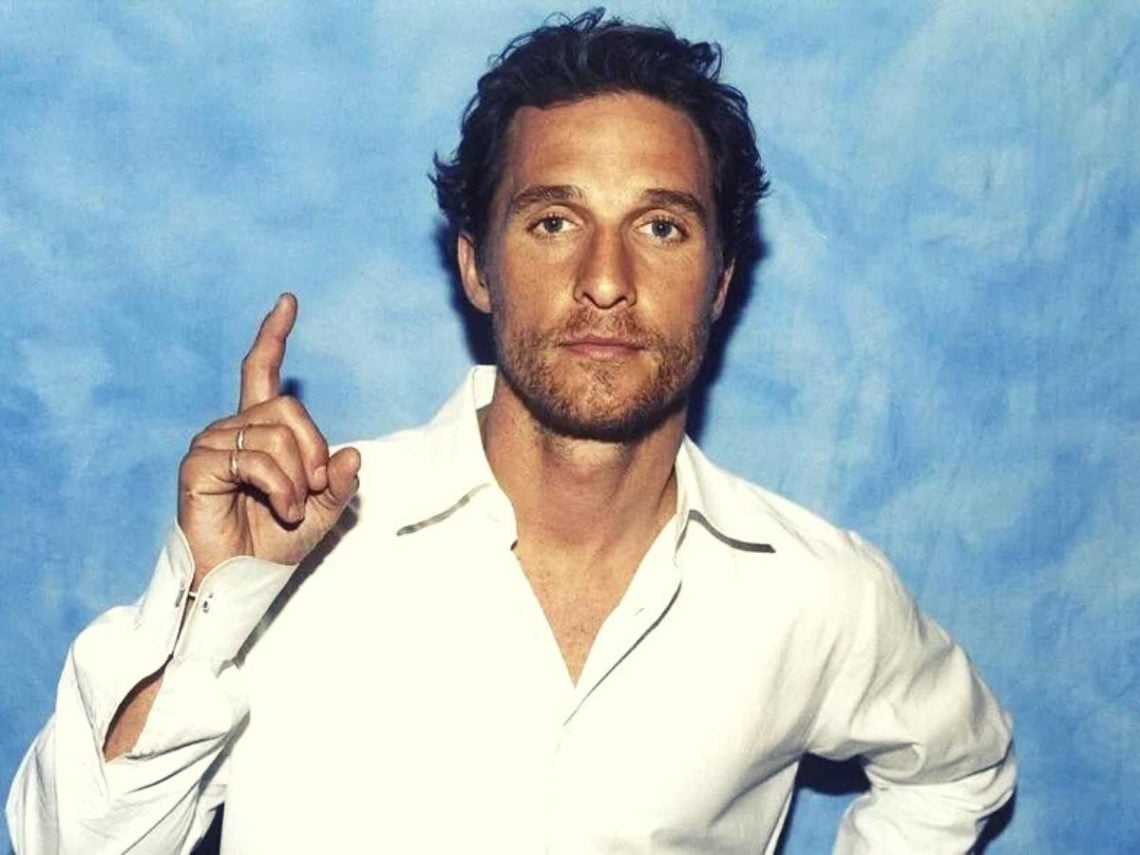
10 actors who saved their careers with one movie

You might have been encouraged in your youth to follow your dreams, float towards the allure of the glittering lights of Hollywood and pursue a career in acting. But, what your annoyingly encouraging parents didn’t tell you is that showbiz is a nasty beast, and to get to the same level as the likes of Robert Pattinson, Adam Driver, and Cate Blanchett takes years of toil, sacrifice and determination.
For all our younger readers, I hope this gleans a sense of reality onto your dreamlike view of the world, and for everyone else, we are sorry for reaffirming this sobering fact. Whilst getting to the top of the acting game is hard enough, retaining your spot at the height of Hollywood might be even harder, with countless stars having gone through the industry cycle before being spat out the other side.
But, enough of the depressing reality of it all, let’s take a look at the ten actors who were able to save their careers from ruin with one singular performance. That’s right, we’re looking at the likes of Matthew McConaughey, who have experienced career renaissances, turning their fortunes around by pursuing an entirely different genre or dedicating themselves to a more serious dramatic role.
Take a look at our list below, which includes the likes of Sandra Bullock, Channing Tatum and Liam Neeson.
10 actors who saved their careers:
Sandra Bullock – The Blind Side (John Lee Hancock, 2009)
Now, don’t get us wrong, we know that the American Hollywood superstar Sandra Bullock was an icon long before 2009, but it’s certainly true that John Lee Hancock’s Blind Side changed her fortunes forever. Taking somewhat aimless roles at the dawn of the new millennium, it wasn’t clear what route Bullock was trying to pursue, appearing in throwaway rom-coms and forgettable dramas.
But, the release of The Blind Side in 2009 demonstrated to studios that she was still capable of not just box office success, with the film raking in $309.2million from a measly budget, but also of critical adoration, winning the Oscar for ‘Best Leading Actress’ that very same year.
Robert Downey Jr – Iron Man (Jon Favreau, 2008)
When you think of the early Marvel Cinematic Universe, it’s highly likely that the first person you think of is Robert Downey Jr’s Iron Man, a character that became the figurehead of the multi-billion dollar franchise in the 2010s. Despite having released the likes of Hulk and The Fantastic Four before 2008, it wasn’t until Iron Man that Marvel truly realised the box office behemoth they had on their hands.
A snappy wisecracker himself, Downey Jr was perfect for the titular role, saving a career that had previously been spent doing seemingly random dramas, leading to no obvious future trajectory.
Hugh Grant – Paddington 2 (Paul King, 2017)
Back in the 1990s and early 2000s, Hugh Grant was so typecast that he was parodied across British comedy for years, with his awkward sensibilities being easy to satirise. Excelling in the movies of Richard Curtis, such as 1999’s Notting Hill and 2003’s Love Actually, Grant found it incredibly difficult to shake this Brit-pop rom-com persona until the release of Paul King’s Paddington 2 in 2017.
Also seen as something of a British institution, the Paddington series was the perfect place for Grant to thrive, taking on a new comedy persona which quickly became a hit with audiences and critics. Now, he’s revamped his career, starring in such films as Dungeons & Dragons: Honour Among Thieves and Wonka, where he plays an Oompa Loompa.
Michael Keaton – Birdman (Alejandro González Iñárritu, 2014)
Back in the 1980s and 1990s, it would be hard to believe that the American actor Michael Keaton would ever be out of work, but once the new millennium turned, the actor’s luck began to run out. Years later, however, the Mexican filmmaker Alejandro González Iñárritu saved his career, turning his previous Batman role on its head with the release of 2014’s Birdman.
Indeed, the plot for the 2014 ‘Best Picture’ winner well mirrored Keaton’s career thus far, telling the story of a washed-up superhero actor trying to make it big in the industry once more. Ever since, Keaton has become a key fixture of the silver screen, starring in Steven Spielberg’s Spotlight and Aaron Sorkin’s The Trial of the Chicago 7.
Matthew McConaughey – Killer Joe (William Friedkin, 2011)
The whole idea of an actor turning their career around was popularised by Matthew McConaughey, whose rise to industry success from the pits of Hollywood was donned the McConaissance. Previously known as an actor who strictly spent his time in the romantic comedy realms of cinema, McConaughey’s fortunes turned in the early 2010s when he took on a number of high-profile collaborations.
Many people attribute his success to his Oscar-winning turn in 2013’s Dallas Buyers Club, but the McConaissance was in motion long before this, in fact, we’d attribute William Friedkin’s underrated 2011 crime flick to the actor’s 180-degree turn.
Liam Neeson – Taken (Pierre Morel, 2008)
These days, the Irish actor Liam Neeson is considered to be one of the most beloved action heroes of modern cinema, as well as a truly versatile star capable of solid drama and comedic performances. It was his role in the 2008 movie Taken that would change his fortunes, however, opening the door for the actor to take on an entirely new branch of acting, ditching bland throwaway dramas for high-concept action films.
Although Taken wasn’t much of a hit with critics, it was huge with audiences, earning $226.8million from a pretty modest budget, thrusting Neeson into the action limelight, where he hasn’t looked back since.
Leslie Nielsen – Airplane! (David Zucker, Jim Abrahams, Jerry Zucker, 1980)
Off the cuff, if we name the greatest on-screen comedians of all time, Leslie Nielsen would undoubtedly be rubbing shoulders with the likes of Robin Williams, Gene Wilder and Jim Carrey. But, this was only the case following his role in the 1980 comedy classic Airplane!, in fact, it was the intention of directors David Zucker, Jim Abrahams and Jerry Zucker to employ a cast whose talents resided in the drama department in order to allow for a more accurate satire on the disaster movie sub-genre.
With his dead-pan wit and remarkable comic timing, Nielsen became an unlikely star of the show, going on to appear in other comedy classics such as The Naked Gun trilogy, Wrongfully Accused and Creepshow.
Robert Pattinson – Cosmopolis (David Cronenberg, 2012)
Just like Matthew McConaughey’s McConaissance, British actor Robert Pattinson has also enjoyed a pretty eclectic career that took a significant switch halfway through. Back in 2008, he became the face of the Twilight franchise, a young-adult series that told the story of a vampire who falls in love with a normal American girl, where he starred alongside Kristen Stewart and Taylor Lautner.
Four movies later and it appeared as though Pattinson was stuck in a cycle of franchise filmmaking until David Cronenberg came calling with 2012’s Cosmopolis, a film that would forever elevate his identity as a performer, leading to further collaborations with the Safdie brothers, James Gray, Claire Denis and Robert Eggers in the following decade.
Channing Tatum – 21 Jump Street (Phil Lord, Chris Miller, 2012)
Many actors on this list have transitioned to the comedy genre, and Channing Tatum is no different, having rebranded his ‘pretty boy’ image for the heights of Hollywood humour. Having barely interacted with the comedy genre before 2012, Tatum collaborated with burgeoning directors Phil Lord and Chris Miller, starting alongside Jonah Hill in the cop-comedy-caper 21 Jump Street.
A massive success that reminded audiences of the joy of big-budget studio comedies, Tatum’s clear knack for the genre would lead to further success in such movies as 2013’s This Is the End and 2016’s Hail, Caesar!, adding comedy chops to his impressive résumé.
Michelle Yeoh – Everything, Everywhere All at Once (Daniel Kwan, Daniel Scheinert, 2022)
Michelle Yeoh has long been a staple of modern cinema, thriving as a stunt artist and action star in the 1980s and 1990s before she broke into the Hollywood mainstream at the end of the 20th century. But, after she appeared in the James Bond flick Tomorrow Never Dies in 1997, and the Ang Lee Oscar-winner Crouching Tiger, Hidden Dragon, her career decreased in speed, taking minor obscure roles until two decades later.
The A24 sci-movie Everything, Everywhere All at Once was a game changer in more ways than one, resurrecting the career of Yeoh with a ‘Best Leading Actress’ win at the Academy Awards, opening the door to countless new projects.
