


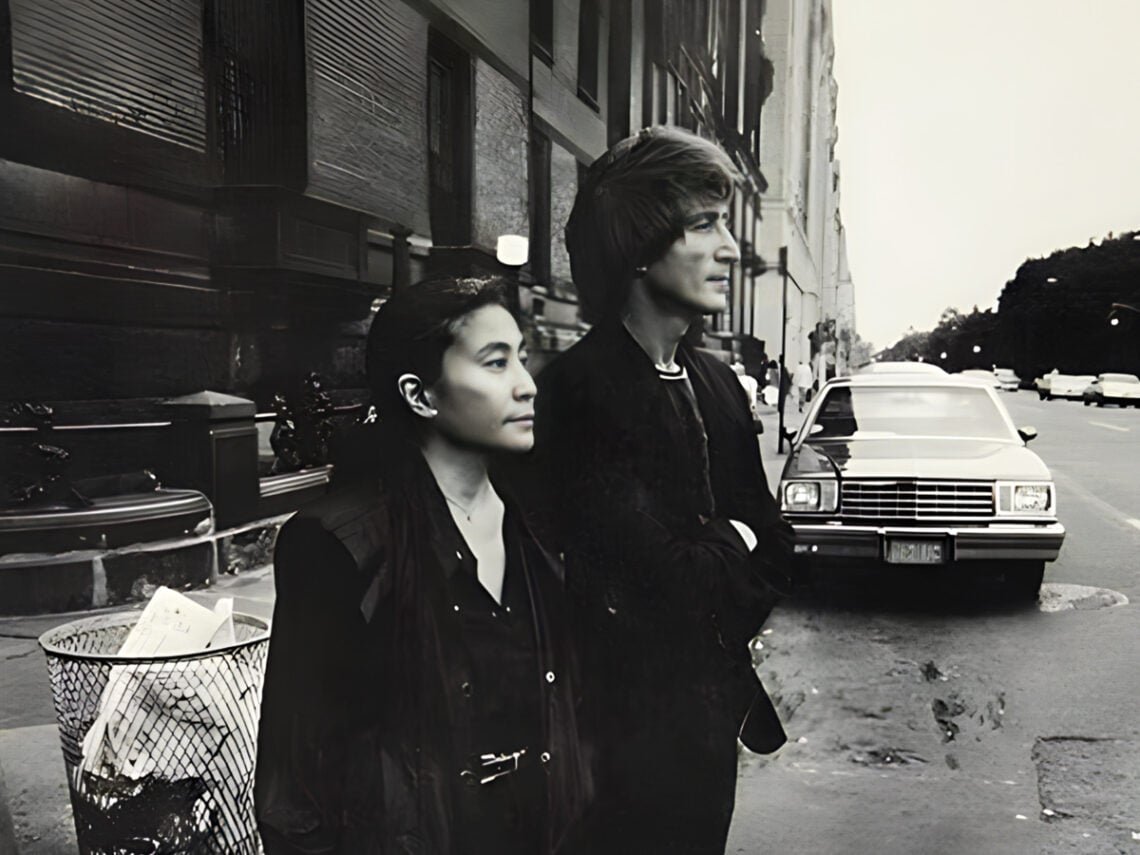
Yoko Ono was told John Lennon was “in danger” before his death

In a new book, Elliot Mintz, the former spokesperson and confidant of John Lennon and Yoko Ono, has claimed that the latter told him her husband was “in danger” before his assassination.
On December 8th, 1980, Lennon was murdered by Mark David Chapman, three weeks after he and Ono’s collaborative album Double Fantasy arrived, marking a return from a five-year musical hiatus for the Liverpudlian.
As they arrived outside their home after a session at the Record Plant, Lennon and Ono exited their limousine and walked through the archway of their apartment building, The Dakota. There, Chapman shot Lennon twice in the back and twice in the shoulder at close range. Lennon was rushed to hospital by the police and was then pronounced dead on arrival.
In his new book, We All Shine On: John, Yoko and Me, Mintz recalls the fallout from the tragedy and offers insight into how it affected Ono and her and Lennon’s young son, Sean, as well as the former Beatle’s eldest son, Julian.
At one point, in an extract published in The Times, he remembers Ono battling dangers in the outside world and perils inside her inner sanctum, with trusted friends such as Fred Seaman betraying her after Lennon’s death. Seaman allegedly stole private papers from their offices and residences, including five personal journals as part of a scheme to write a tell-all book.
Due to such betrayals, Mintz claims that Ono became suspicious of most people around her. One day, they came close to a serious argument, as he implored her to let him conduct a radio interview with her and Sean to dispel some of the outlandish rumours swirling about the Lennon family. She responded that she would check with “my advisers” – a team of tarot readers and numerologists.
Although Mintz had never expressed scepticism about Ono’s beliefs, this time, he questioned their efficacy. “Yoko, let me ask you something,” he said. “If these advisers are as good as you believe they are, why is it that none of them saw what was going to happen to John? Why was there no warning?”
“Elliot,” she responded, “how do you know I wasn’t warned? Did you ever ask me if there were warnings?”
“Okay,” Mintz continued, “I’ll ask you: Did any of your advisers warn you about John being in danger?” “Yes,” she replied. “I was told he was in danger in New York and that he should be removed immediately. That’s why I sent him to Bermuda over the summer … But I couldn’t keep him away forever. He had to come back at some point.”
Despite being speechless, Ono’s reasoning was typical of the countercultural life she and her late husband led. “Look, Elliot,” Ono explained, “you know how John felt about his own safety. We talked about this at our kitchen table when your friend [the actor Sal Mineo] was killed. John said, ‘If they’re going to get you, they’re going to get you.’ It didn’t matter what my advisers told me. He didn’t believe in bodyguards, he wouldn’t put up with them. He wanted to be free.”
What were Mark David Chapman’s motivations for murdering Lennon?
Mark David Chapman’s main problem with John Lennon centred on the notorious comment that The Beatles were “more popular than Jesus” that he made in 1966 when the Fab Four were the biggest band on the planet.
During a severe mental episode, the 25-year-old, who had recently lost his job as a security guard in Hawaii, became obsessed with J.D. Salinger’s 1951 novel, The Catcher in the Rye. He wanted to live his life according to the ideals of the main character, Holden Caulfield. This anger at the world compelled Chapman, a former fan of The Beatles, to develop a murderous vendetta against Lennon. Although it was initially triggered by the Jesus comment, it festered as the years wore on.
“I would listen to this music, and I would get angry at him for saying [in the song ‘God’] that he didn’t believe in God, that he just believed in him and Yoko, and that he didn’t believe in the Beatles. This was another thing that angered me, even though this record had been done at least ten years previously,” he said, per Jack Jones’ Let Me Take You Down.
He continued: “I just wanted to scream out loud, ‘Who does he think he is, saying these things about God and heaven and the Beatles?’ Saying that he doesn’t believe in Jesus and things like that. At that point, my mind was going through a total blackness of anger and rage. So I brought the Lennon book home into this The Catcher in the Rye milieu where my mindset is Holden Caulfield and anti-phoniness.”

Never Miss A Beat
The Far Out Music Newsletter
All the latest music news from the independent voice of culture.
Straight to your inbox.