


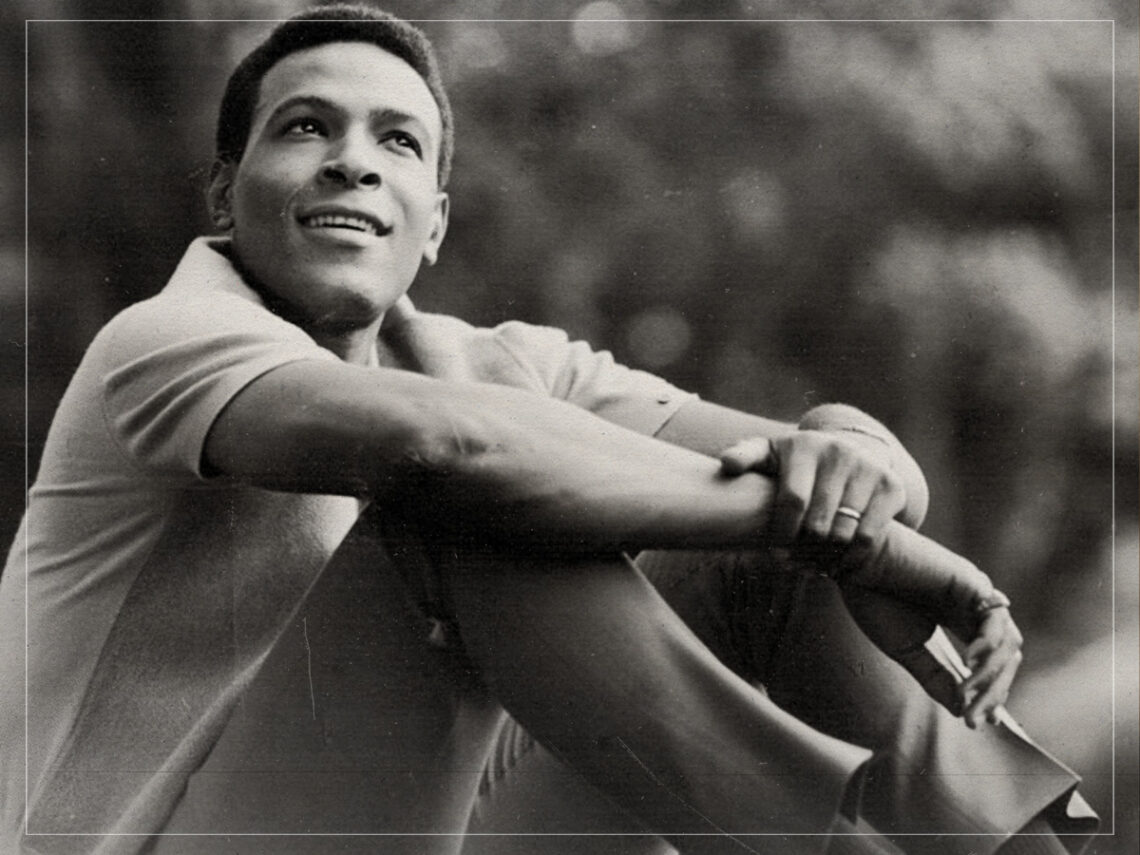
“I was afraid”: the worst decision Marvin Gaye ever made

For a man whose discography dealt in soulful euphoria for many years, Marvin Gaye’s life story is peppered with tragedy and adversity. Inevitably, that reputation was compounded in 1984, when Gaye was shot dead by his own father, but his difficulties in life began far earlier.
A far cry from the Motown stardom he would eventually strike upon, Gaye was born and raised in a housing project in Washington DC, living in overcrowded, poverty-stricken conditions and experiencing a lifetime of conflict in his childhood home, resulting from the tumultuous and dysfunctional relationship between his parents. From a very young age, music was a means of escape for Gaye, who began singing in his local church at the age of just four.
Inevitably, though, that tough childhood, spurred on by the seemingly endless beatings inflicted upon the promising young vocalist by his father, risked sending the future Motown hero down a very different path. As he entered his adolescence, Gaye began hanging around on street corners, falling in with a destructive crowd of similarly disadvantaged youths. Had he continued down that path, his life could easily have been one of petty crime and prison time, but the immediate alternative wasn’t much better, either.
Per a 1974 interview in Rolling Stone, it was – once again – Gaye’s father, Marvin Gay Sr that dictated what his son should be doing with his life. “I was afraid,” the patriarch of the Gay family admitted. “I’m a worrier, and I thought he could get in with juvenile delinquents. I said, ‘Marvin, either get a job or go into the service.’”
It was the latter option that Gaye went for, joining the Air Force at the age of 17 and quickly finding himself at odds with the military way of life. Even at that age, the performer desired a kind of freedom and creativity that the Air Force aimed to squeeze out of him by fire or force. Unsurprisingly, then, he did not enjoy his brief period in the forces.
“It was the worst thing I’ve ever done,” the vocalist later declared. “One of the real horrors of my life. I had gone insane. That’s what they told me because I was ready to go home, and they said I couldn’t because I was in the service.”
Eventually, though, Gaye managed to earn a general discharge after he reportedly feigned mental illness. “Airman Gay cannot adjust to regimentation nor authority,” the singer’s sergeant declared in Gaye’s exit review.
Upon his release, Gaye immediately set his sights on the musical realm, refusing to go back to those street corners in Washington DC. Working alongside the likes of Bo Diddley and coming close to a career at the legendary Chess Records, it was Motown Records that eventually provided the vocalist with a home in 1960.
Although Gaye ran into the same problems with authority at Motown as he had done during his military days, each hit single he struck upon afforded him an increase in creative freedom, leading to a litany of legendary tracks that redefined the landscape of soul vocals, from ‘Take This Heart of Mine’ to the politicised genius of ‘What’s Going On’ and, in turn, the sex god reputation of ‘Let’s Get It On’.
While Gaye was successfully able to escape his military days, he always maintained a deep regret about joining the Air Force. Perhaps, deep down, he always knew that if his music career had failed, he would either be back to those DC street corners or back working for the military, where his distrust of authority would never wash.
