


Women saved Glastonbury 2023, now it is time for change

In many ways, Glastonbury Festival is a microcosm of the music industry, possessing the power to bring the world’s most coveted stars to Worthy Farm. No artist is too big for the festival, giving the organisers the scope to craft any lineup they choose. The iconic event is guaranteed to gather masses of attendees no matter the lineup because of its legendary legacy, with tickets selling out instantly before festival-goers even know who will perform.
Therefore, Glastonbury yields immense power, which could be used to spotlight artists that aren’t just white men. Yet, keeping faithful to the model of the music industry that it appears to reflect, women are continually sidelined at Glastonbury.
When the lineup was announced a few months before the celebration, it became immediately apparent that Glastonbury, despite its hippie appeal, isn’t as progressive as it makes out to be. Revellers witnessed a male-dominated act headline the main Pyramid Stage every night with Arctic Monkeys, Guns N’ Roses and Elton John. Earlier this year, the festival’s organiser, Emily Eavis, defended the lack of female headliners by referring to the music industry’s “pipeline” problem, completely ignoring the festival’s influential status in this very pipeline.
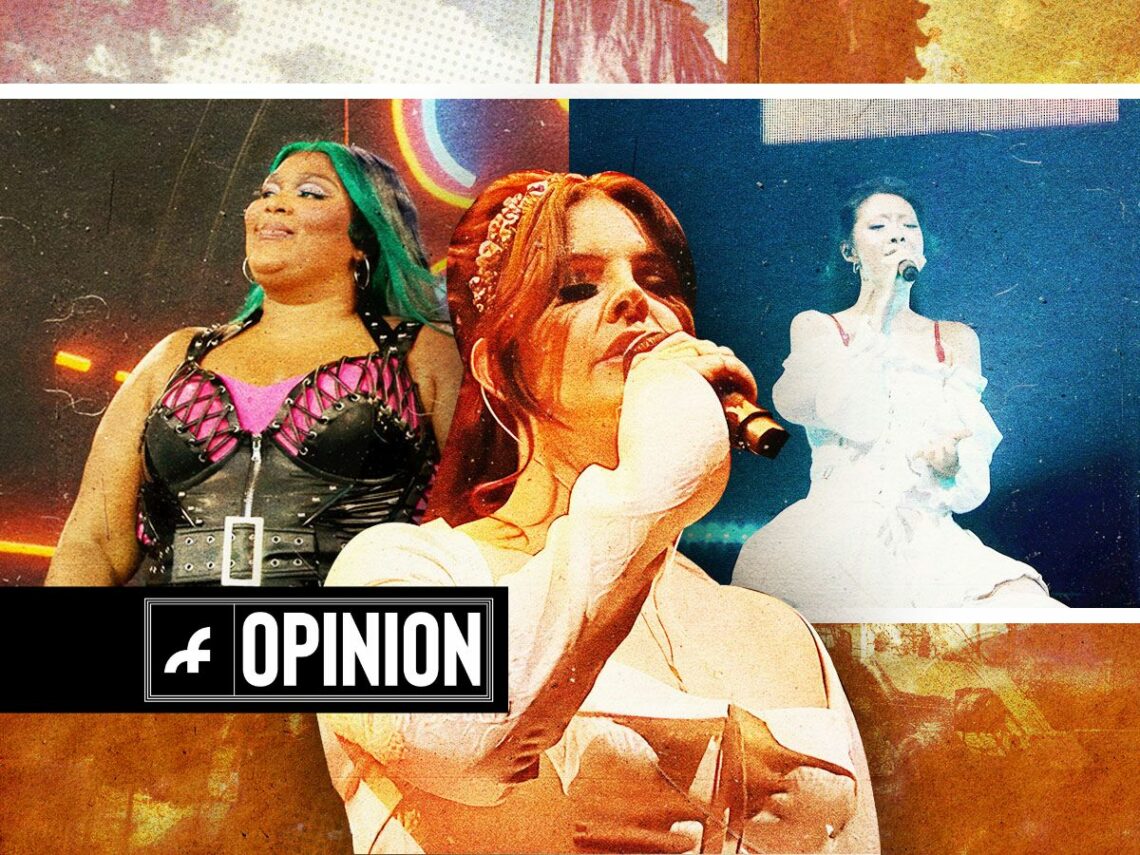
The need for female headliners was made crystal clear when acts like Lana Del Rey and Lizzo drew in mass crowds that superseded that of Guns N’ Roses. Lizzo, the modern pop icon known for her unabashedly fun performances, has continuously drawn thousands of people to her sets, even those who know little about her music. Joined by dancers, Lizzo appeared to have the time of her life as she commanded the Pyramid Stage on an earlier slot, even bringing out her flute, much to the delight of enraptured onlookers. Her music – a celebration of womanhood – couldn’t be more perfect for a festival, inviting a community spirit to wash over the audience.
An hour later, rock veterans Guns N’ Roses took to the same stage for their headline slot, playing a whopping 25-song set which included covers of ‘TV Eye’ by The Stooges, ‘Live and Let Die’ by Wings and ‘Down on the Farm’ by UK Subs. Their performance was proof that mediocre male bands, even those that haven’t been relevant for years, are given far too much status. Guns N’ Roses might be popular, but their music has always veered into cheesy territory, and their lyrics are laden with misogynistic lines. Is this really the type of music that Glastonbury should be championing? Their lengthy set proved their time as ‘legends’ is firmly over, with Axl Rose’s tired voice leaving the performance hard to watch.
It turns out Lizzo’s set brought a bigger crowd than Guns N’ Roses, ultimately proving that she had more than enough sway to headline the festival. Meanwhile, alternative pop legend Lana Del Rey headlined the Other Stage, also drawing in a massive crowd, suggesting she has what it takes to perform on the Pyramid Stage. However, Del Rey’s microphone was switched off due to a late start, leaving her to rush through songs and finish with an acapella crowd singalong for her iconic hit ‘Video Games’. Sadly, the compromising situation prevented Del Rey from proving her brilliance, although she gave a terrific performance to the best of her ability. Her set, albeit short, far succeeded Guns N’ Roses, who managed to make hard rock look incredibly uncool.
Sets from other female-dominated bands or solo acts also proved to be Glastonbury highlights, such as pop powerhouse Carly Rae Jepsen, exciting newcomer Raye, and Rina Sawayama, who used her chance to call out the racist comments made by labelmate Matty Healy. These female artists all provided moments of unity, community and power, all while providing blistering sets to mass crowds.
Glastonbury need to do better. As one of the world’s largest festivals, they possess more than enough control to make structural changes in the music industry. This summer, only 20% of the headline acts at 104 festivals feature women, with this number shrinking to 18% at festivals with over 30,000 attendees. As the UK’s leading festival, Glastonbury could pave the way for other festivals to follow suit by including more female artists at the top of the bill. Instead, they decided to play it safe, believing audiences would rather watch male acts. Yet, the number of people that flocked to see Lizzo, Lana Del Rey and more proves that if you book female artists, crowds will come.
