


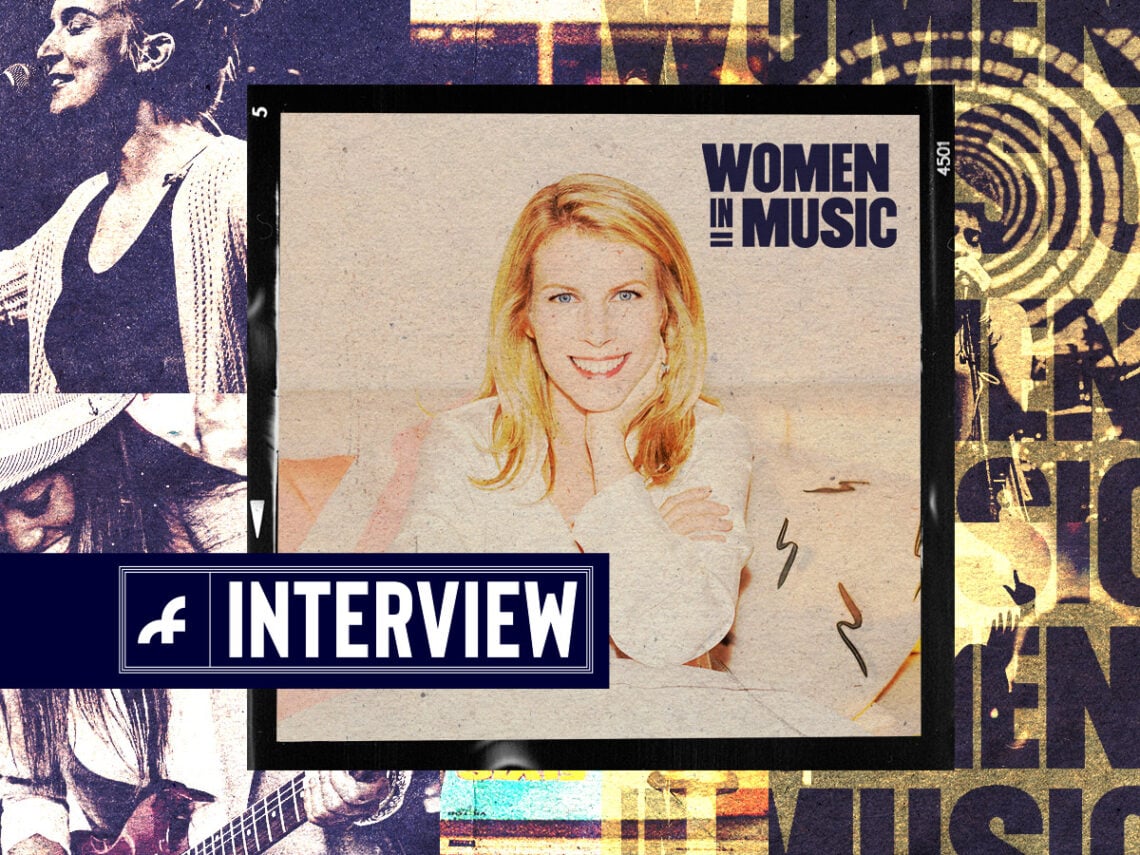
Women in Music: the community spearheading a global movement

Navigating the music industry as a woman comes with an ongoing series of both internal and external struggles. Some are clear as day, while others hide beneath the surface. Beyond some of the most famous singers, like Taylor Swift, the music industry is made up of a multitude of diverse jobs and teams, from marketing to accounting. In truth, the anxiety that accompanies seemingly small tasks or challenges isn’t always a lonesome burden; instead, it’s a shared experience shaped by the weight of years upon years of social conditioning.
There is a disparity in both discourse and opportunity surrounding women in the industry, with many struggling to find networks and communities that support them at any point in their careers. Since the 1980s, however, the Women in Music organisation has been committed to fostering a collective reclamation of women’s voices, transcending barriers even when the odds appear impossible to contend with.
Founded in 1985 in New York City, Women in Music has become a global hub for women of all stages in their careers. In short, the organisation is on a mission to “advance the awareness, equity, diversity, heritage, opportunities, and cultural aspects of women in the musical arts through education, support, empowerment, and recognition”. That sounds, naturally, like a lot of marketing jargon, so I sat down with the company’s president, Nicole Barsalona, to learn more about the fantastic work they’re doing.
At the start of our conversation, Barsalona’s passion is immediately evident. She first joined the company in 2011 after Googling opportunities for women in music: “I found this incredibly supportive network of women who were peers and mentors,” she says, “You know, a lot of the folks that I found we’re kind of similar age, and just kind of in the first five or ten years of their career. And we were able to really lean on one another for each other’s expertise.”
Even though Women in Music started as a small community in New York, now, the organisation spans multiple countries, including Romania, India, and South Africa, with plans to soon reach Tanzania and Nigeria. As Barsalona recalls, however, the first time they realised the project could extend beyond New York was when members of the board started to move outwards towards places like Los Angeles. “We started springing up chapters in different places,” she says. “And now we have close to 30 chapters all around the world.”
For someone who is unfamiliar with the work that Women in Music do, ultimately, it’s about opportunity and education. “The core of what we do is educational,” Barsalona says. “We’ve grown to a point where we’re able to do in-person programming in our different chapter markets, which is exciting.” This includes summits made of panel seminars alongside virtual programming, which started as a result of the pandemic in 2020.
On top of this, they also run a mentorship program for artists, managers, publicists, and others within the music industry. For those wanting to get a foot into the industry, they also run an internship programme for those who have no prior experience. For those who need additional support, they’re soon launching a safe space initiative, which Barsalona calls a “pilot programme” that ensures they have resources for people who are experiencing harassment, abuse, and discrimination.
The challenges that women faced back in the 1980s have shifted somewhat when looking at the issues present in today’s climate. However, the crux of it has always remained the same: “In an industry that has historically been male-dominated, there’s such a barrier to entry for music,” Barsalona says. “For women, there’s the thinking that you have to be 100% qualified for something before you apply, whereas men are told they can apply to things that they don’t feel like they actually have full qualifications for.”

She continued: “Music is so diverse, and so it’s an industry with diverse needs. But for a lot of women, it’s impossible to get a foot in the door. In Texas, once, I saw a panel that was called ‘Moms in Music’. It blew my mind because it was the first time [I saw something like that]. I saw a lot of women in senior positions, but I never saw them with families. And I thought, ‘wow, this is actually attainable’.”
Barsalona cites radio as one of the biggest barriers for women in music – with country music dominating some of the biggest channels across the United States, the genre still appears fundamentally conservative, with many outlets playing mostly male artists. Alongside that, women often face difficulties when it comes to progression because a lot of workplaces lack the infrastructure, support, or necessary policies that help women with external challenges like having a family.
Women in Music recently launched a fresh new batch of ambassadors to supercharge their story, each with their own unique experiences and areas of expertise. “[The ambassadors’ programme] really seeks to engage women whose own work mirrors our mission and values,” Barsalona says.
“Long-term, it also exists to represent people at that level,” she adds. “An artist like Rapsody could talk about what it meant to be a woman of colour in the business, and Faryal Khan-Thompson, who’s led a lot of international distribution teams, who is also involved in a lot of the moms in music stuff that we do.”
The beauty of all of it is that Women in Music doesn’t seem to be slowing down any time soon. Barsalona tells me that their upcoming plans are a testament to how quickly the movement is growing, which speaks volumes about how quickly the industry is progressing towards an equal playing field. When asked about the queer community and trans women in particular, Barsalona confirms that Women in Music is an inclusive community, open to anyone that wants to join.
It’s fantastic to know that there are all of these amazing women out there doing incredible work; the industry has long been missing an organisation that not only welcomes women from all walks of life but actively supports and nurtures them at each stage of their careers.
