


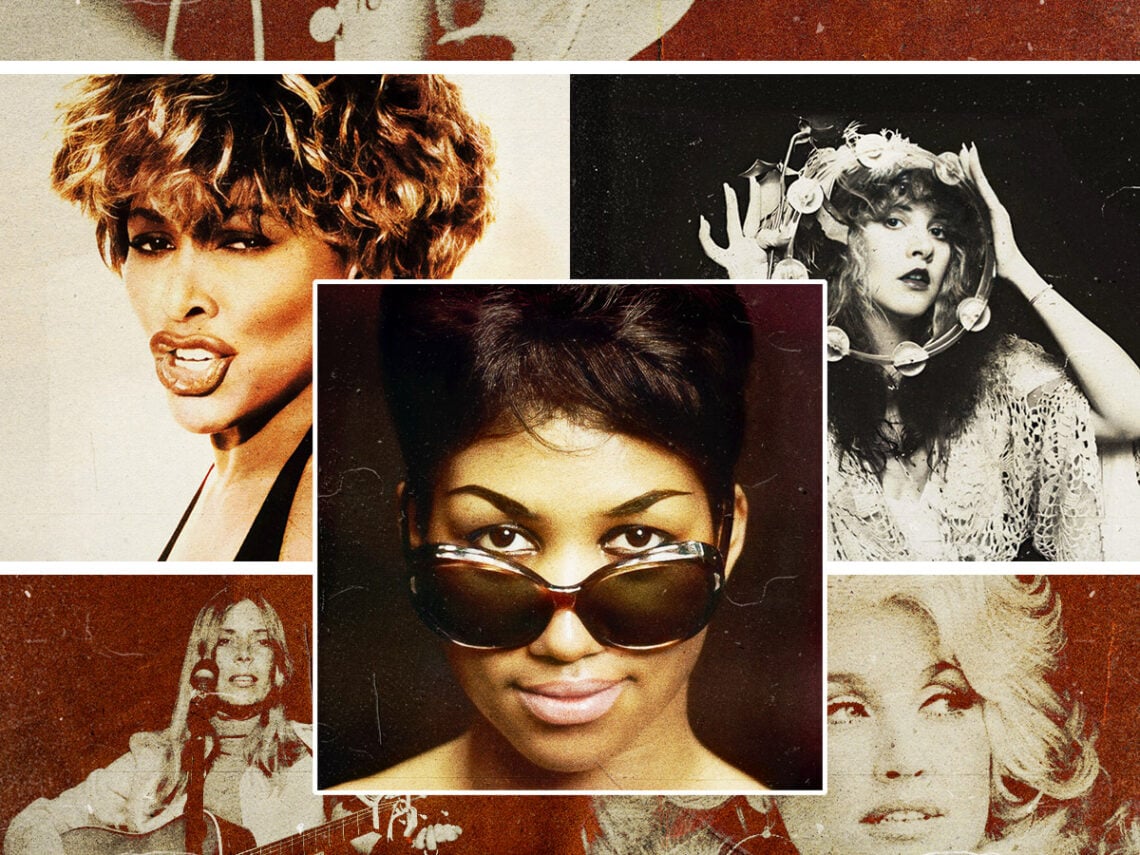
10 iconic women who made music history

The music industry stands as a testament to the extraordinary power of women, with towering figures like Taylor Swift producing record-breaking albums and visionary boardroom executives shattering glass ceilings.
However, this inclusivity and recognition have been hard-won, for the industry was once far less hospitable to women recording artists. In the early 20th century, venues often barred women from performing, while discrimination lurked on the road, on airwaves, and within the corridors of record labels, perpetuated by male artists and executives.
Even in the present day, the persistent spectre of misogyny seeps through the industry’s cracks, manifesting in unequal pay, objectification, tokenism, underrepresentation, ageism, and the distressing reality of harassment. While male artists are often lauded for their enduring talent and maturity, their female counterparts encounter a disheartening double standard, facing unnecessary scrutiny over their appearances and perceived lack of youth. Meanwhile, the focus on male musicians’ skills often overshadows the invasive spotlight on the personal lives of female artists, revealing the deep-rooted gender biases that still taint the music industry.
Even musical icons as revered as Dolly Parton have been reduced to mere physical caricatures, whilst the extraordinary achievements of talents like Stevie Nicks are sometimes set aside in favour of an undue focus on her personal relationships.
Those who exist as industry pariahs, like Kate Bush, become deemed “weird” at the time of peak fame, while male counterparts such as the likes of David Bowie become celebrated as “innovators”. Even more tragically, the invaluable work of black artists often faced the cruel fate of shorter shelf lives and the unfair downplay of their outstanding contributions to breaking down societal boundaries. Aretha Franklin had a profound impact on the Civil Rights Movement in the 1960s, but whenever someone mentions the musical scenes of the ‘60s, why do our minds jump to The Beatles first?
Nonetheless, the work of women in the music industry has transcended societal fringes to become the pulsating heart of the very fabric: in a historically male-dominated world, we have been gifted with remarkable talents and indomitable forces that not only ignited transformative change but also shattered conventional narratives, compelling us to rewrite history ourselves.
Here’s a handful of some of these powerhouses who have redefined what it truly means to be a woman in music today.
10 women who made music history:
Aretha Franklin
The ‘Queen of Soul’, Aretha Franklin became a conqueror of minds during one of the most fundamentally difficult times in black history. As a victim of double marginalisation, being both black and a woman, the very cracks at the edges of her upbringing lit within her a fire that would be there until the day she died.
Using her beautiful music as a powerful tool, Franklin dedicated her life to the Civil Rights and Women’s Rights Movement, with her songs ‘Respect’ and ‘Natural Woman’, which became the anthems of both. She also provided money and covered payrolls of civil rights groups, along with performing at many high-profile protests and benefit concerts.
She then became the first woman to be inducted into the Rock and Roll Hall of Fame in 1987 – according to the Rock & Roll Hall of Fame website, she was “an artist of passion, sophistication and command, whose recordings remain anthems that defined soul music”. Everything that Franklin did became a significant part of women’s rights and contributed to the opportunities presented to them in the music industry.
With many women now dominating music charts, much of this can be traced back to the work done by the Queen of Soul.
Diana Ross
Diana Ross rose to fame as the lead vocalist of the legendary Motown group The Supremes before embarking on a successful solo career. Ross is often referred to as the ‘Queen of Motown’ and is one of the most iconic and influential female artists in music history.
As the frontwoman of The Supremes, Ross achieved unprecedented success as one of the first female African-American singing groups to achieve mainstream popularity. The Supremes became one of Motown’s most successful acts, setting a precedent for women artists of colour in the music industry.
Ross’s transition from The Supremes to a solo career demonstrated her versatility and appeal beyond the confines of a group. At the time of the split, she seemed to know her worth so much so that she would make it known, but her bosses and the team at the time didn’t like that and called her a “brat”. But Ross looks back at her time as a part of the group more bittersweetly, acknowledging the legacy of The Supremes but feeling heartbroken at effectively being pushed out of the band.
Regardless, her solo success as a pop and R&B artist paved the way for other women artists to explore diverse musical styles and cross over to different genres.
Dolly Parton
As one of the most celebrated and beloved figures in country music, Dolly Parton has made some of the most significant contributions to the genre in all of history.
Parton rose to prominence in the male-dominated country music industry during the late ‘60s and early 1970s. Her success as a female country artist showed that women could achieve great heights in a genre historically dominated by male performers.
Parton is an exceptionally talented songwriter and has penned numerous hits, including ‘I Will Always Love You’, ‘Jolene’, and ‘Coat of Many Colors’. The former of which was something she has always kept close to her heart, even refusing a cover from Elvis Presley due to publishing rights issues. When his team approached her, they wanted a significant portion of the song’s ownership; as someone who is keen to leave her fortune to her family, Parton declined. It would become clear that this was the right decision years later when Whitney Houston delivered the perfect cover of the beloved hit.
Parton’s rags-to-riches story and humble beginnings have also made her an inspiration, while her determination, talent, and down-to-earth persona have endeared her to generations of fans.
Ella Fitzgerald
Ella Fitzgerald was a trailblazing jazz singer and performer who made significant contributions to women in music during her career.
She broke barriers for women and people of colour during her career and was one of the first black artists to achieve widespread success and recognition in the predominantly white-dominated music industry, particularly during the early and mid-20th century when racial segregation and discrimination were prevalent.
She was also the first woman to ever win a Grammy in 1958, claiming not one but two of the coveted golden phonographs. One was awarded for her iconic album Ella Fitzgerald Sings The Duke Ellington Songbook, and the other for her equally remarkable Ella Fitzgerald Sings The Irving Berlin Songbook.
Her resilience in the face of adversity, exceptional talent, and dedication to her craft paved the way for generations of women musicians to follow their dreams and break down barriers in the world of music.
Joni Mitchell
As one of the most influential artists in the history of pop music, Joni Mitchell is truly a pioneer of songwriting and musical experimentation.
Her songwriting is known for its poetic depth, emotional honesty, and introspective themes. She broke away from traditional song structures and tackled complex subject matters, demonstrating that women could be prolific and daring songwriters.
Her music encompasses a wide range of genres, including folk, rock, jazz, and pop. Throughout her career, Mitchell also maintained artistic control over her music and career decisions. Her autonomy as a female artist set an example for other women in the music industry to assert their creative vision and maintain control over their work.
Mitchell’s challenging of traditional gender norms through her music, lyrics, and persona was groundbreaking and helped pave the way for other women in music to express themselves authentically. She has inspired many of the greats, including Led Zeppelin, but also continues to leave an impact on new artists, including Lana Del Rey and Arlo Parks, the former of which describing her as her hero.
Patsy Cline
Patsy Cline was a true pioneer of the moment and one of the first women artists to achieve mainstream success in the country music genre. Cline’s distinctive voice and versatile style allowed her to transcend traditional boundaries as she incorporated elements of pop and jazz into her music, broadening the appeal of country music to a wider audience.
Nearly a decade after her death, Cline continued to make history, becoming the first woman to ever be inducted into the Country Music Hall of Fame in 1973. This was a well-deserved recognition of the legacy she left behind despite a relatively short career, which contributed to the shaping of country music during the 1950s and beyond.
Her legacy remains instrumental in opening doors for other women artists and inspiring generations of musicians; her work continues to be covered by big names in music, and many still draw direct inspiration from her lyricism to this day.
Sinéad O’Connor
Since her passing, many have been paying tribute to Sinéad O’Connor, along with her talent and her fearlessness when it came to standing up for the things she believed in. O’Connor wasn’t one to subscribe to any gender notions, and in doing so challenged the industry’s inherent expectations when it came to women and what they should look like.
Like a true leader, she often confidently tackled taboo subjects and controversial issues in her music and public statements. Her candidness about her personal struggles with mental health, abuse, and societal injustices encouraged dialogue about these important issues, breaking down stigmas and offering support to others facing similar challenges.
O’Connor was an outspoken advocate for women’s rights and feminism; she used her platform to speak out against sexism, violence against women, and gender inequality, amplifying important conversations surrounding women’s issues.
One of her most iconic moments happened during her performance on Saturday Night Live in 1992, where she tore up a photo of Pope John Paul II, sparking controversy but also shedding light on the issue of sexual abuse within the Catholic Church. Though many ridiculed her at the time, with some (Joe Pesci) even threatening violence, her bold act brought attention to an important issue and eventually started conversations about institutional abuse.
Overall, she stood as a strong figure, using her music and platform to speak out against sexism, violence against women, and gender inequality.
Stevie Nicks
Stevie Nicks, hailed the ‘Queen of Rock ‘n’ Roll’, has achieved tremendous success as both a solo artist and an esteemed member of Fleetwood Mac. With her defiance of traditional gender stereotypes, her fusion of multiple musical genres, and with her signature bohemian fashion style, Nicks has proved that women can be strong, confident, and influential figures in rock music.
Through her music, Nicks has explored themes of empowerment, love, heartbreak, and vulnerability. Her ability to connect emotionally with listeners has allowed women to find strength in their own experiences and feelings.
As a solo artist, Nicks released a string of critically acclaimed and commercially successful albums, including Bella Donna, The Wild Heart, and The Other Side of the Mirror. Her solo career further solidified her status as a trailblazing female artist and showcased her distinctive voice and poetic songwriting style.
Nicks is also the first woman to have been inducted Rock and Roll Hall of Fame twice. Her influence can be heard in the work of numerous contemporary musicians who draw inspiration from her distinctive sound, emotional storytelling, and captivating stage presence.
Tina Turner
The late, great Tina Turner endured a tumultuous early life and overcame challenges in her career, demonstrating that women can triumph in the face of adversity.
Turner’s live performances are legendary, characterised by her high-energy dancing, captivating stage presence, and electrifying vocals. Her performances set new standards for showmanship and inspired generations of performers. As a person, Turner was often talked very highly of, with many praising her honesty, authenticity, and love for laughter.
In 1980, she reinvented herself as a solo artist after leaving her tumultuous marriage and her former musical partnership with Ike Turner. Her reinvention showcased her ability to adapt and evolve in the ever-changing music industry, something that women often find difficult or near-impossible in the unforgiving landscape of the music industry.
Many of Tina Turner’s songs carry empowering themes of independence, strength, and resilience, resonating with audiences and serving as anthems for women navigating their own paths in life.
Whitney Houston
Whitney Houston‘s unparalleled vocal prowess featured an extraordinary range and control that firmly established her as one of the greatest singers in history. Her exceptional talent and unmatched technique elevated the standards for female vocalists, igniting a spark of inspiration in aspiring singers to reach for greatness.
Throughout her career, Houston released several critically acclaimed and commercially successful albums, including Whitney, I’m Your Baby Tonight, and The Bodyguard soundtrack, which included her iconic rendition of ‘I Will Always Love You’. She achieved numerous awards during her career, including multiple Grammy Awards, alongside many received posthumously.
Unsurprisingly, her incredible musical gifts propelled her to become one of the best-selling female artists of all time, a testament to her immense popularity and universal appeal. Additionally, by breaking barriers and paving the way for others, Houston made history as the first African-American woman to receive consistent airtime on MTV, a milestone that left a significant mark on the music industry and opened doors for diverse representation in the years that followed.
