


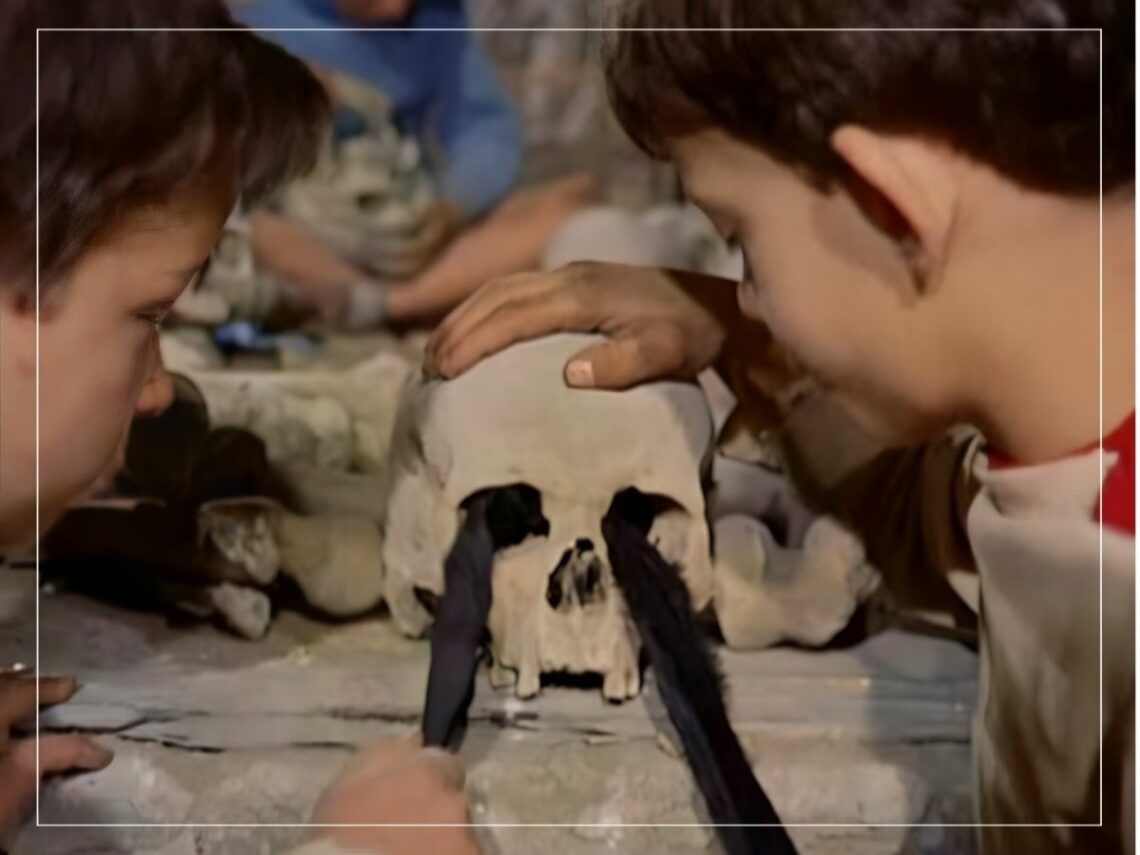
The darkest corner of exploitation cinema: the wild and wacky world of Mondo films

Cinema has always been a medium that’s thrived on pushing boundaries, breaking barriers, and wrestling with taboos, which has, in turn, opened the door for horror to become increasingly gnarly. There are many gore-soaked offshoots, but Mondo films might just be the most provocative by far.
History has become littered with stomach-churning features that stretch gag reflexes to the limit, whether it’s body horror, torture porn, grindhouse, exploitation, or any other of the additional arms on-screen terror that has sprouted over the years. Mondo sought to pinch an even deeper nerve by perpetuating itself as authentic and unfiltered, favouring the pseudo-documentary format to further its agenda.
Many of them traded exclusively in sensationalism, and while there was always a fictional slant to the storylines and characters, there was a habit of splicing in very real footage of dead bodies, dismemberment, and animal slaughter to add an extra veneer to the already-nightmarish aesthetic.
As can no doubt be inferred from the title, the genesis of the movement can be traced back to Gualtiero Jacopetti, Paolo Cavara, and Franco Prosperi’s 1962 effort Mondo Cane. There was no narrative to speak of but rather a string of vignettes showcasing various cultural practices that were intended to shock the viewer above all else. It sold itself as 100% real, but as regularly tended to be the case, there were staged sequences interspersed within.
Existing somewhere between exploitation and documentary – with influences from the ‘exquisite corpse’ method of assembling an unconnected sense of words or images into a loosely connected whole – cinema’s increasing embrace of outlandish practices ensured there was a demographic desperate to see more features cut from a similar cloth.
That’s exactly what they got, too, especially when Mondo Cane became an awards season staple by competing for the Palme d’Or and being shortlisted for an Academy Award in the ‘Best Original Song’ category. Given the content, future Mondo films hardly troubled the Oscars, but it was a headline-grabbing stall to set out nonetheless.
Taking things to increasingly new heights, practitioners of the style toyed with compiling feature-length stories that were made up entirely of authentic footage, always with an attention-grabbing premise. Mondo Inferno, Taboos of the World, and Women of the World relied on sexuality, ritualism, cannibalism, slavery, and questionable eating habits to sell themselves as shocking, but there was always that unsavoury layer of latent racism and misogyny that painted the subjects going about their daily business as off-putting to Western crowds.
But how did Mondo films progress?
As the 1960s gave way to the 1970s, Mondo expanded well beyond its Italian origins to become a global enterprise, with filmmakers plumbing the depths to cobble together their next bout of on-screen insanity. Seedy celebrity scandals, drug abuse, animal cruelty, medical operations, and deformities emerged as the next batch of staples, all while the envelope continued to be pushed.
Mondo films were in need of a fresh coat of paint to stave off disinterest – among those who enjoyed them, anyway – which led to an increase in fiction and a simultaneous uptick in gruesomeness. Although the movies themselves became more overtly theatrical in their execution, real-life footage of murders, suicides, cadavers, autopsies, animal attacks, and executions remained a fixture.
1978’s Faces of Death was one of the most notable offenders, being banned in multiple countries and added to the ‘video nasty’ list in the United Kingdom. Indicative of Mondo’s evolution at large, actor Michael Carr played the character of Francis B. Gröss to provide the connective tissue that mixes genuine scenes of people dying with sequences shot specifically for the movie to burnish its reputation, and it underlined the popularity of the genre by earning $35million on a $450,000 budget despite being outlawed around the world.
As the years progressed, attitudes changed, and mainstream horror continued to succeed by blending vivid gore with stories worth investing in, Mondo started to fight a losing battle against irrelevancy. That’s not to say the format has disappeared completely, but modern society doesn’t exactly cater to films celebrating themselves for containing actual scenes of cruelty, harm, injury, and death outside of a very small niche audience who may not want to admit those proclivities out loud.
That’s to say nothing of the racist and misogynistic tendencies, either, with indigenous people painted as barbaric and unintelligent savages, with entire cultures dehumanised along the way. Mondo no doubt still has its fans, but there arguably isn’t a place for it at the table of 21st-century horror, even if it was a weird and wacky ride that took it from the bottom of the barrel to the top of the pile during its heyday as the most depraved subgenre there is.
