


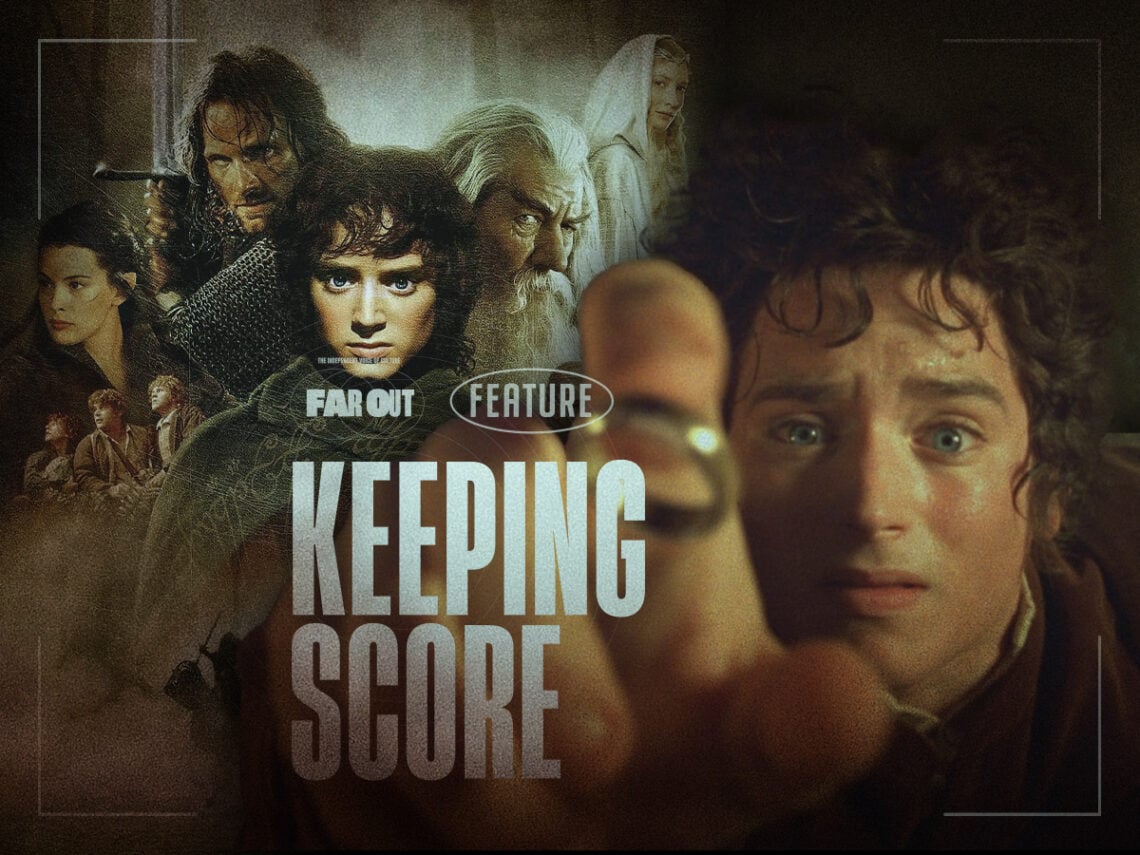
Keeping Score: Why ‘The Lord of the Rings’ most powerful music is its simplest

There are a great many reasons to love Peter Jackson’s The Lord of the Rings films.
From its epic battle sequences to its stirring speeches to the dozens of memes it has produced, there’s a reason why it’s often cited as one of the greatest trilogies of all time. However, one of its strongest assets is easily its music. Howard Shore did a truly tremendous job in matching the grand scale of Jackson’s vision with his immaculate collection of movements, arrangements, and leitmotifs.
Shore’s work is so good, it’s easy to forget that he’s worked on some other great movies too, including Philadelphia, Seven, and David Cronenberg’s The Fly, but the only problem with the Lord of the Rings score is that there are too many iconic pieces to choose from.
We could do a deep dive on ‘The Bridge of Khazad-dûm’, which soundtracks the demise of Gandalf the Grey, or ‘Into the West’, Annie Lennox’s gorgeous end credits song from Return of the King, or even Shore’s personal favourite, ‘The End of All Things’, the music that plays as the One Ring is finally destroyed.
But no, for this article, we’re not choosing any of the soaring war marches or fearsome villain themes. Instead, we’re opting for something that highlights the true message of JRR Tolkien’s literary juggernaut, which is that the simplicity of nature should always triumph over the evil of industry; hence, we turn our heads to the most unassuming, yet important part of Middle-earth, The Shire.
‘Concerning Hobbits’ is a suite of music relating to the Hobbits and their pastoral home, first heard when Gandalf arrives in Hobbiton for Bilbo’s birthday. The piece is characterised by two primary instruments, the fiddle and the tin whistle. It evokes images of green and pleasant lands inhabited by simple folk who live off the soil and have no concerns about the wider world.
In a series that goes to some incredibly dark places, the bright cheerfulness of ‘Concerning Hobbits’ reminds both the characters and audience of what they’re fighting for. When Frodo and Sam lie half-dead on the jagged rocks of Mount Doom, lava cascading around them, they think of The Shire, its beauty, and how they long for home, and that is the beauty of this piece. In a score packed with elaborate symphonies and pulse-racing charges, this elegant, stripped-back homage to rural life offers respite and prevents us from losing sight of the reason our heroes put themselves in mortal danger time and time again.



Of course, there are some who don’t like it. The instruments and themes of ‘Concerning Hobbits’ are inspired heavily by Celtic music, traditionally associated with Scotland and Ireland, which Tolkien scholar David Bratman described as ‘inappropriate’, because the Hobbits are supposed to represent England. While he does have a point, anyone who’s read The Lord of the Rings will tell you that Jackson takes several liberties with his adaptation, and in opting for a broader score, the Hobbits and The Shire now identify with any group of unassumingly brave peoples, instead of just the English.
The works of Tolkien have inspired many great pieces of music, but ‘Concerning Hobbits’ is among those that truly capture his worldview. It is one of many, many hall-of-fame-worthy entries in The Lord of the Rings’ score and an anthem for anyone who has overcome humble beginnings to achieve greatness.
