


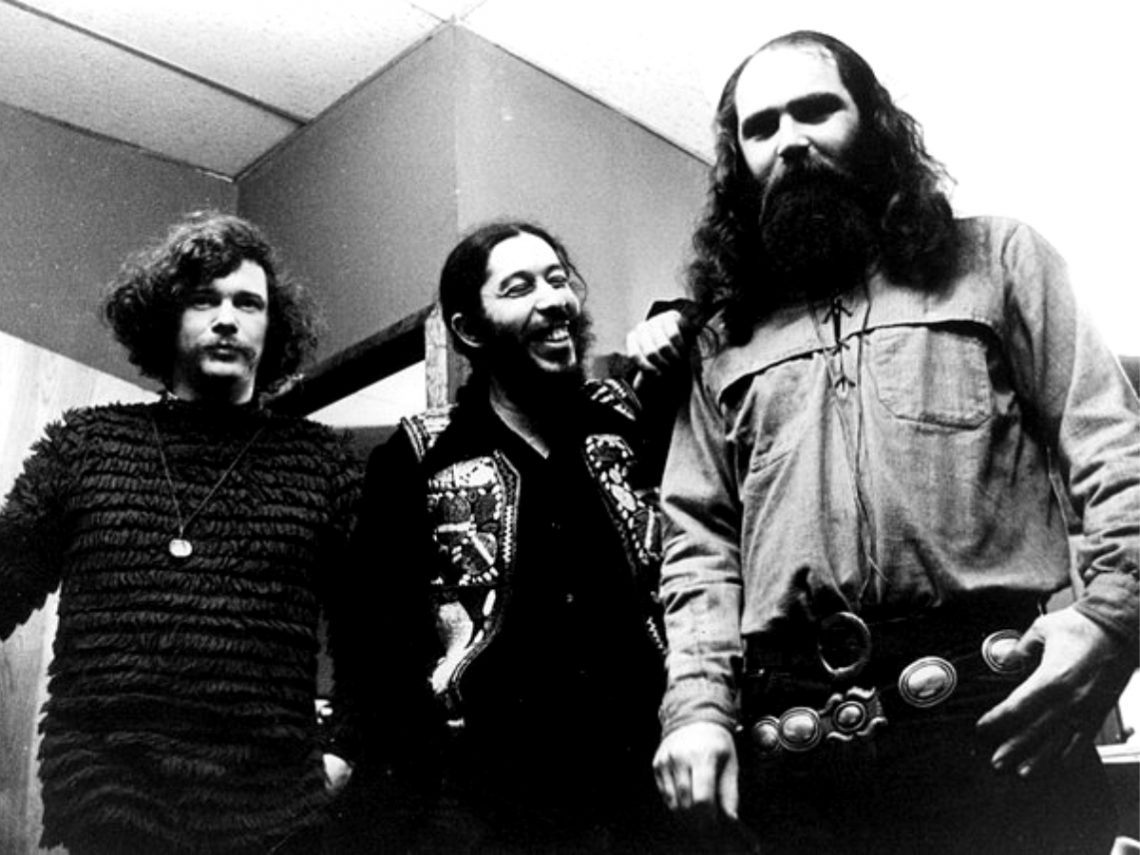
Why The Fugs never intended to be remembered: “We did all this for a joke”

In 1966, Ed Sanders was a 26-year-old, up-and-coming beat poet – a Greenwich Village chum of Allen Ginsberg with a degree in Greek from New York University. What he lacked in rough-and-tumble rock n’ roll chops, though, he more than made up for in rebellious eloquence, using his band The Fugs as a way to get his message through to kids more likely to go to a concert than hang out in a bookshop.
Sanders and Fugs co-founder Naphtali Kupferberg were also trying to inspire more popular rock bands than their own to try and get a bit more high-minded rather than turning a blind eye to issues like the Vietnam War or the Civil Rights Movement.
“Revolutions are such that just a few people can roll back progress,” Sanders told the Guardian after a Fugs show at New York’s Players’ Theatre in ‘66. “It can take you 20 years to get an idea pounded into the skill of a nation… I think we’re having a great effect on some groups in terms of forcing their hand, making them become more aware, making their lyrics and messages more complex and poetic.”
Of course, like many of the leading voices in America’s 1960s counterculture, Ed Sanders and his cohorts also enjoyed painting with a satirical brush, which sometimes made it hard to tell if The Fugs were a “serious” band or an attempt to subvert and criticise what they deemed to be a stupid, posturing art form.
“Remember the programme of The Fugs,” Sanders told the audience at that 1966 concert. “We stand for the four P’s: Peace, Prosperity, Pussy, and Perversion! Now here’s another oldie but goldie, it’s a napalm mantra, it’s ‘Kill For Peace’.”
The Fugs were often correctly described as poets and performance artists rather than musicians, and they generated more headlines for stunts and protests, such as their 1967 attempt to “exorcise” the Pentagon in Washington, DC, than for the quality of their records.
“We had absolutely no sense or belief that there would be any interest in this stuff 30 years later,” Sanders said upon the anniversary re-releases of the first two Fugs albums in the mid-1990s. “On one level, we just did all this for a joke. We decided to have some fun and party, and write some songs. We were poets, and we certainly knew how to write words, but none of us went to Juilliard, and when we made the first record, we didn’t even know how to face microphones.”
In a similar way to other boundary-pushing acts of their era, from the Mothers of Invention to the MC5, it was actually The Fugs’ central, obsessive focus on the here-and-now, rather than any concerns about stuff like legacy, that wound up making them historically relevant and more than a ‘60s footnote.
Their unusual psych-folk-art-punk project also brought together different wings of the counterculture, writers, artists, activists, and musicians in a way few bands had before. Radio hits and big album sales weren’t forthcoming, but The Fugs certainly outlasted and transcended the original “joke”.
