


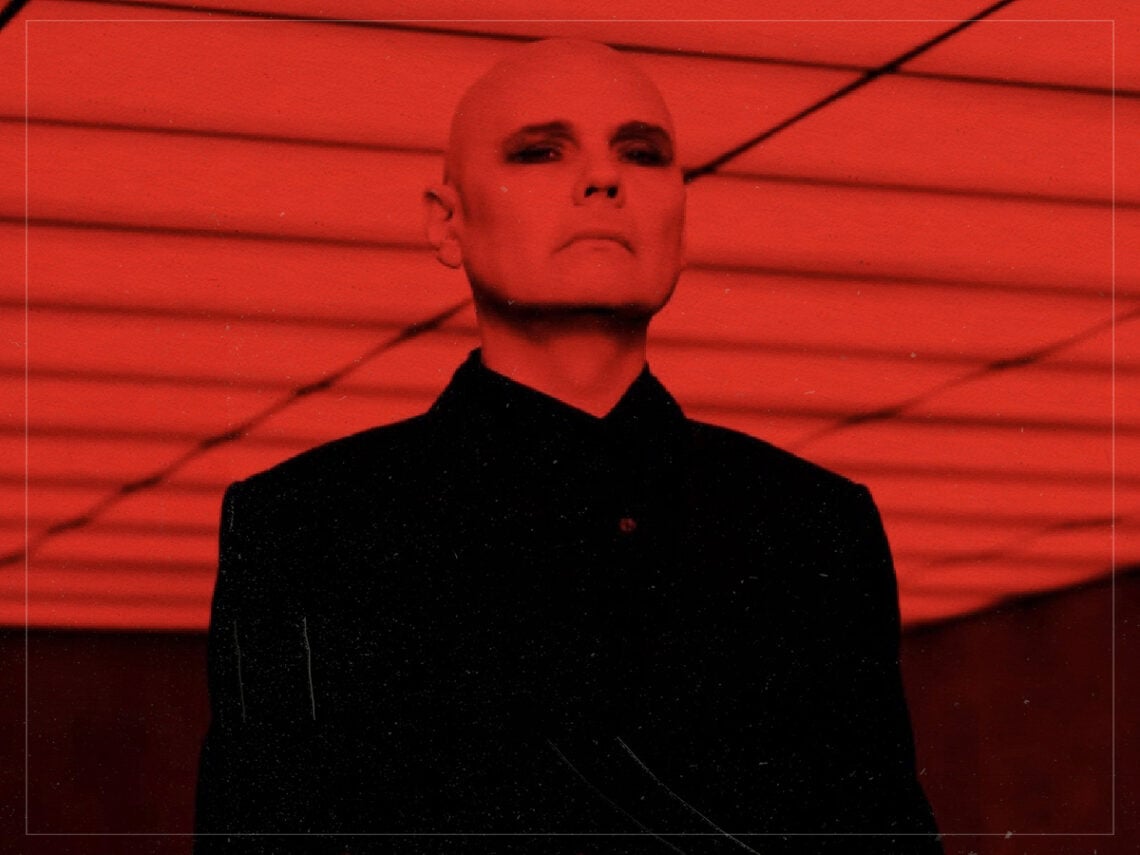
Why modern pop music is satanic, according to Billy Corgan: “Servile to a false image”

Billy Corgan has always been fascinated by the occult.
Listen to The Smashing Pumpkins once, and you might not hear it, because one of their biggest hits, ‘Today’, seems like a perfectly cheery, almost cherubic, guitar song, as if it were written on the bus by a child who is finally going to the prom with the hottest girl in the class, but look a little closer, and the devil is lurking behind a lyrical corner or two.
In the 1995 song, ‘Cupid de Locke’, Corgan sings about a lusty devil, who represents the temptation of love and sin, “See, the Devil may do as the Devil may care / He loves none sweeter as sweeter the dare / Her mouth the mischief he doth seek / Her heart the captive of which he speaks,” Corgan writes of a devil who ensnares and entraps his victims. Just like… Pop stars?
“In many cases, the most Satanic representation in music over the last 20 years has been the popstars,” Corgan explained on his podcast, The Magnificent Others. The singer-songwriter went on, “Because they are knowingly creating a false image, and they are servile to a false image to the point of jacking up their faces and voices, and deluding their audience that they’re someone that they’re not.”
The idea of “false images” as a form of Satanic representation subliminally equates the digital dissemination of music as marketing as something inauthentic, sinful, and dishonest, because really, this is just how the world of music works in 2025; the money lies in branding, and branding lies in sharp, focused, intentional imagery. If you make music, and you want people to hear your music, you have to market your music.
Sure, there are exceptions to this rule: Shoegaze band Julie enjoyed an incredible 2025 despite having no social media or online information available. One pop-star who has created a “false image” but is in no way “servile” to it is Charli XCX, whose Brat phenomenon took over the world. Still, she insists on being her authentic self, opting to dissect her own image-making in online musings that wander into auto-theory.
Corgan continued on: “The audience will reach a point of cognitive dissonance where they know that the person they want to believe in in an idolatrous way isn’t that person, and they force the people to double down on the idolatry, because that’s the only thing they can do.” Just like the devil in ‘Cupid le Locke’, so too does the “satanic” popstar triumph upon a throne of enforced idolatry.
Corgan has a point: Fan culture has a way of bringing out the worst in people. Only recently, a man was jailed for ambushing pop-star Ariana Grande at a Wicked: For Good red carpet. Also, often young fans of pop stars experience their own identity formation concurrently with their favourite artist. Belief in the falsity of the unachievable pop-star image, the engorged, larger-than-life faces Corgan references, engenders a cognitive dissonance between the real and fake. We are always set up to fail if we believe in an idea that was never real to begin with.
Alternatively, he argues, fans of alternative music experience an oppositional parasocial standing, where the rockstar is simply just a person, “warts and all”. As well as his comments forming an astute take on fame and authenticity, this tells us that Corgan has never seen Ed Sheeran turn up to any red carpet.
