


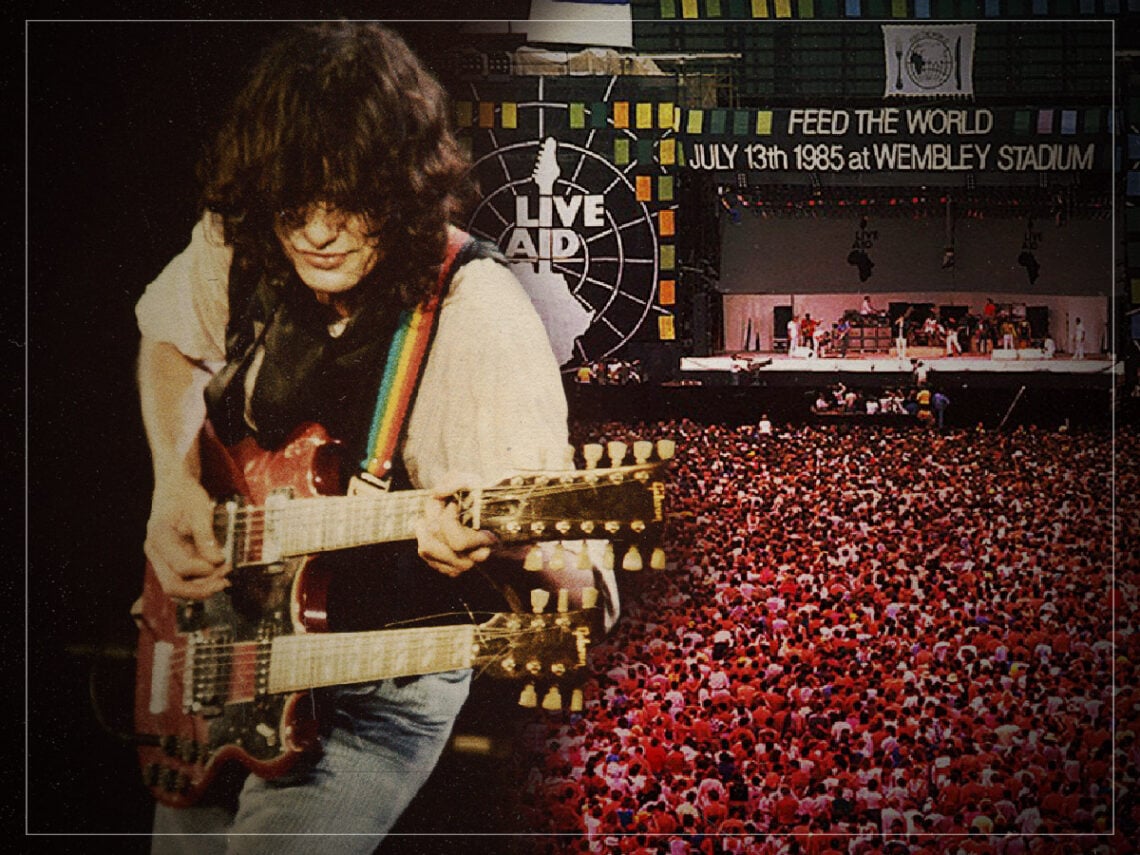
“Chaos”: Why Live Aid was Jimmy Page’s biggest disappointment

Two things can be true at once. It is true and accurate to say that on July 13th, 1985, Live Aid made history with a TV audience of over 1.9billion people tuning into the two-venue charity concert. It is also true and accurate to say that the show was a complete and utter organisational mess, which Led Zeppelin would attest to.
It feels like there was bound to be some chaos at Live Aid, given the scale of the idea. When Bob Geldof had first set out to make a charity single in 1984, calling in his all-star contact list of the era’s biggest names, that was tough enough to try and organise and orchestrate. After he pulled that off, though, he set his sights on higher – on a live show.
Not just one live show, but two. Quickly, the idea spiralled into something huge as Live Aid was decided to be a two-venue, all-day gig split between London and Philadelphia. Then there was the matter of the lineup. Following the success of ‘Do They Know It’s Christmas?’, Geldof and Midge Ure’s contact list was now even shinier.
They had a lineup of stars longer than their arm, including names like Queen, David Bowie, Elton John, Paul McCartney, Madonna, Tom Petty, Bob Dylan, and that’s only scratching the surface. One miraculous addition, though, was Led Zeppelin, billed to play in Philadelphia and hit global television screens at around 8pm.
However, Live Aid came five years after the band had split up following the death of John Bonham. Having made the decision not to continue after the loss of their friend and drummer, it’s not as if Led Zeppelin were in great shape as a band, or were ready to just dust off and hit the stage as bands who are routinely gigging around can.
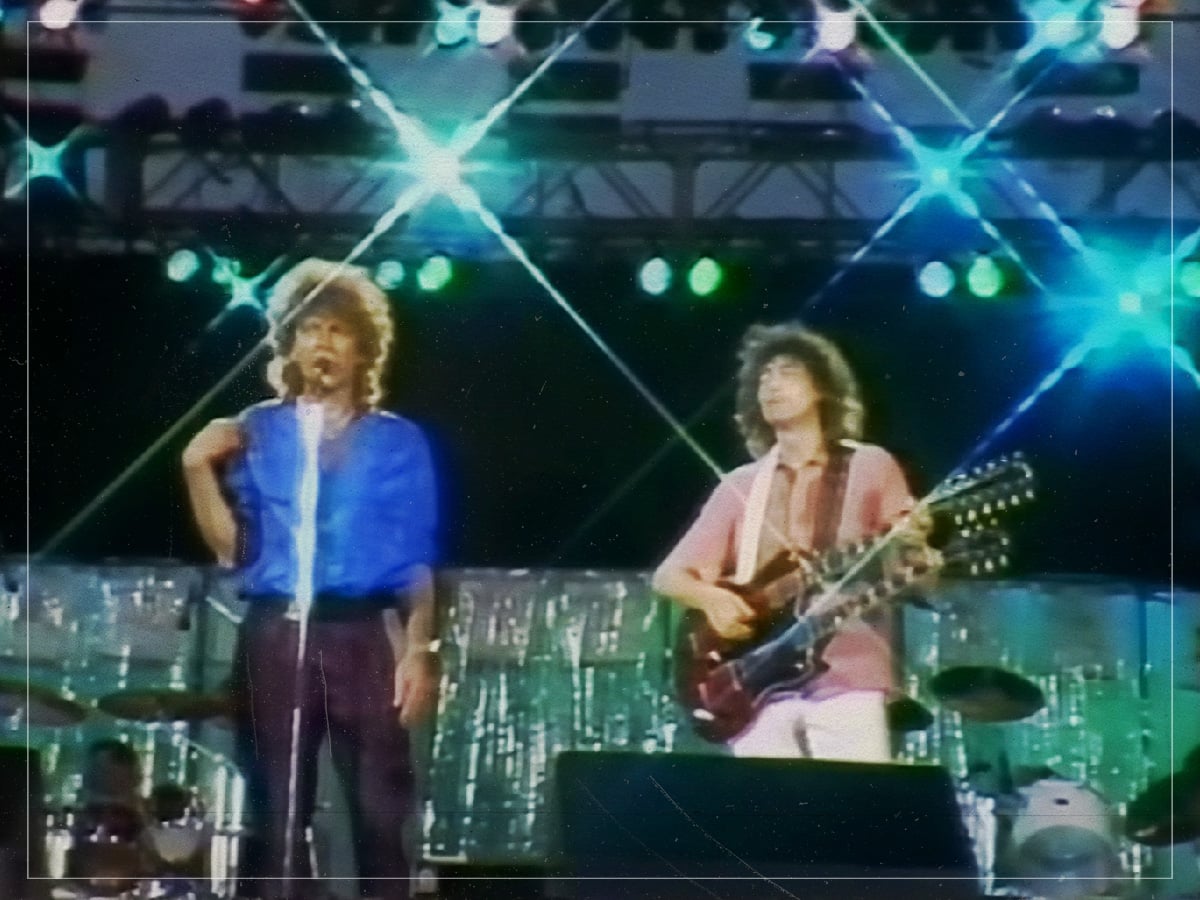
They made the mistake of thinking they were tough, as Jimmy Page admitted, “John Paul Jones, Robert and I learnt a harsh lesson in the ’80s,” explaining, “The band is not just something that falls back into place after a pub lunch.”
The group had to eventually admit that Led Zeppelin needed some time and effort to be able to hit the stage again properly. With so much technicality in their songs, they weren’t tracks that could be fumbled through or figured out live on stage again, as Page said, “I think it’s fair to say that we had a couple of disasters from which we learned valuable lessons.”
One of the biggest disasters, in his eyes at least, was Live Aid. They’d called in Phil Collins to be their drummer for the show, and they seemed to think that it would all just come together without any trial. “We performed in front of a global audience after an hour-and-a-half rehearsal! We assumed the spirit of the event would carry us through, but it didn’t,” he said, before admitting, “It was chaos.”
I went to watch the footage, expecting to say something like “but they weren’t that bad!” But, alas, they were. Plant’s voice sounds strained as if he didn’t warm up properly. Phil Collins is holding the beat down as clearly the one rehearsed and ready figure, desperate to impress these idols, but then that almost throws it off even more, lacking the looseness the rest of them need. Then you have Page roaring in with solos filled with bum notes galore.
The one saving grace, however, is exactly what Page hoped would be a hero – the energy. You can feel the excitement of the event buzzing off them and their crowd, and that can cover up all manner of sins.

Never Miss A Beat
The Far Out Led Zeppelin Newsletter
All the latest stories about Led Zeppelin from the independent voice of culture.
Straight to your inbox.