


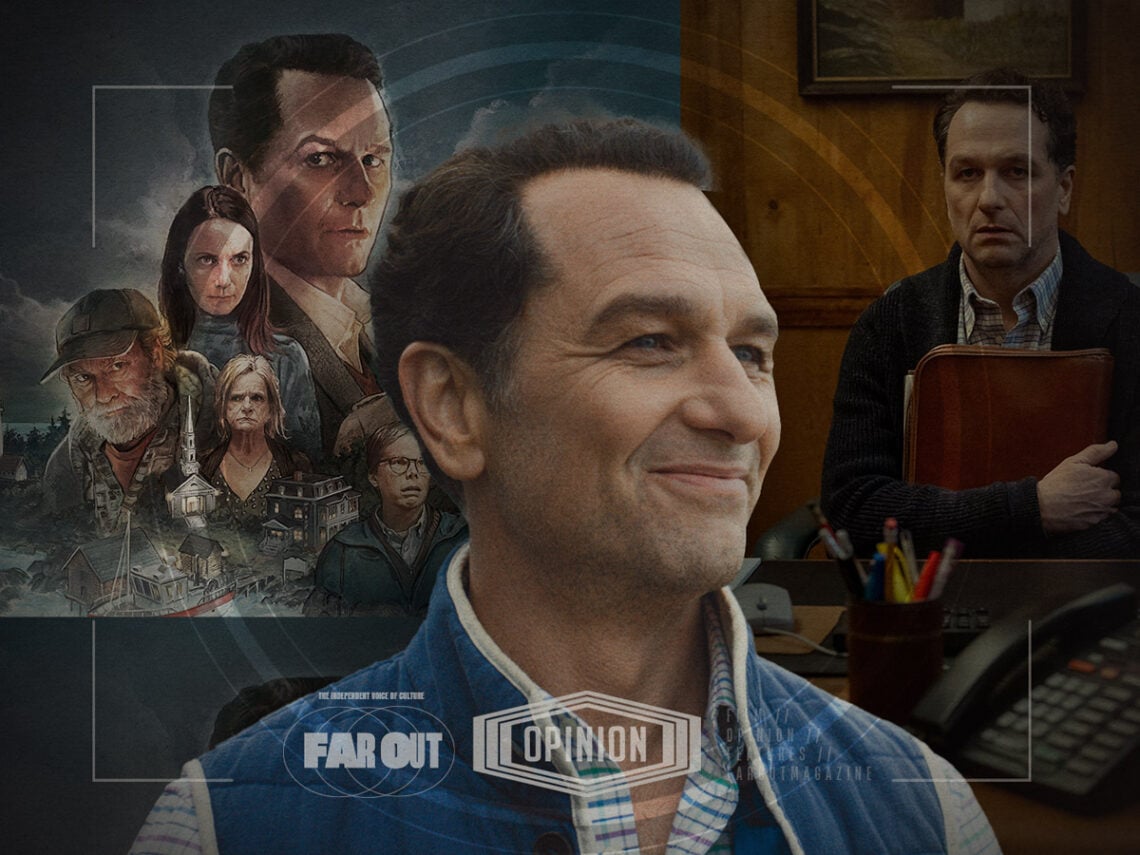
Why is (almost) everyone in ‘Widow’s Bay’ single?

The first season of Apple TV‘s Widow’s Bay ended with an episode that delivered a handful of predictable revelations about the lineage of Richard Warren before landing a few genuine twists about that mysterious chiming church bell. Given the outpouring of love for Katie Dippold’s new show, it’s no surprise that the streamer renewed it for a second season.
Over the course of ten episodes, we watched as Mayor Tom Loftis came to terms with the island’s supernatural curse while trying to turn it into a tourist destination. Meanwhile, locals Patricia and Wyck worked overtime to explain the scope of the danger to him and fend off each new demon as it arose.
What has made the series so endearing is its masterful combination of comedy and horror. Where else would you find a mashup of Stephen King, Parks and Recreation, and Lost, with a setting that sits somewhere between Twin Peaks and Jaws’ Amity Island? It’s full of cosy comedy and nightmarish horror, kooky outsiders and subverted character tropes.
One thing that stands out in all of this glorious madness, however, is that almost all of the inhabitants of Widow’s Bay are single. For starters, Loftis is a widower, having lost his wife shortly after the birth of their son, Evan (Kingston Rumi Southwick). Patricia is the type of character who would normally be reduced to “cat lady” territory, but turns out to be the secret star of the show. Early on, she appears to be attracted to Loftis, but there are no other mentions of her love life. Wyck also seems to be single, though he is still carrying a flame for his high school crush, Gerrie.
Even the peripheral characters seem to be unattached, including Kurt, the innkeeper; Reverend Bryce, the pastor; Dale, who works in the mayor’s office; Ruth, Loftis’s ageing secretary; and Rosemary, who also works in the mayor’s office. Even Patricia’s former high school classmates, who take every opportunity to bully her, seem to be mostly single. The only prominent residents who aren’t are Sheriff Clemmons and his wife Chelle, though it’s notable that they only recently moved to the island and are trying to leave.
Is this pervasive singleness a coincidence? Is it a future plot point? Is it a subliminal message? Perhaps it’s just meant to underscore the outsider status of the islanders. Whatever the purpose, it says a lot about the show and its approach to its genre.
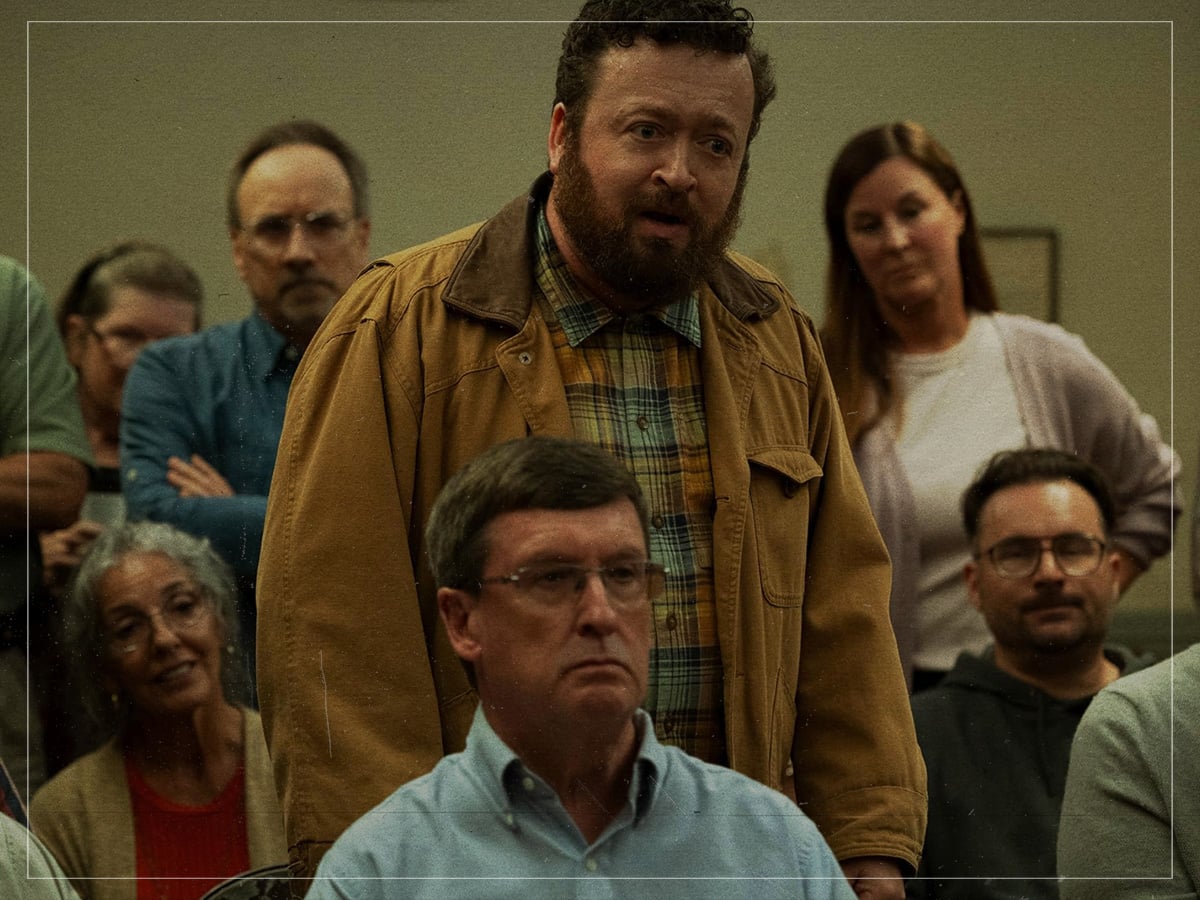
American horror movies and TV series are often set in seemingly idyllic locales with old-fashioned family structures. Theoretically, the disruption of a stereotypically safe, “ordinary” way of life is significantly more unsettling to the average audience member than a horror movie that takes place in, for example, the penthouse suite of a 60-year-old business mogul or, on the other end of the spectrum, a place where violence is already common.
These days, however, nuclear families and white picket fences are no longer the obvious antithesis to horror. In fact, in a post-Gone Girl world in which divorce rates are high, dating is a nightmare, and there seems to be significantly more ink spilt about the contentment of polycules and open marriages than the bliss of heterosexual union, the usual horror movie setup is out of step with reality. In contrast, loner weirdos are not only easier to root for, but also more relatable.
Crucially, Widow’s Bay does not reduce any of its characters to mere comic relief, nor does it highlight their singleness. Patricia is eccentric and awkward, but she is also brave, dogged (her unwillingness to lower that shotgun at the end of episode eight was a series high point), and relentlessly optimistic. We can all relate to her social struggles and aspire to her best qualities, regardless of whether we share her relationship status.
Similarly, Ruth is part elderly oddball and part social gadfly with an impressive gym routine. She isn’t growing old with a husband of 50 years. On the contrary, she has some pretty eyebrow-raising secrets in her past and a calendar full of plans. Her herb gardening and compromised eyesight are just the starting point. The more we learn about her, the stranger and more endearing she becomes.
At this point, it’s worth mentioning that the singleness of all the characters is more in keeping with the other half of the show’s genre mashup – the workplace sitcom. Dippold, who was a writer on Parks and Recreation, knows this territory better than anyone, and it’s possible that the cast of unattached characters has more to do with her sitcom roots than anything else. Partners come and go for characters in workplace comedies, but what always remains is the core group of misfits who have to work together, whether they like it or not.
The ultimate triumph of Widow’s Bay, of course, is that while the horror-related cliffhangers might keep you coming back for each episode, it’s the characters that make it such a joy to watch. Despite drawing from various famous sources for inspiration, the show is uncompromising in the uniqueness of its characters. All too often, romance is used as a stand-in for character development. Without it, Widow’s Bay has created a cast of idiosyncratic outsiders who pass the Bechdel Test with such ease and naturalness that we hardly even realise it.
