


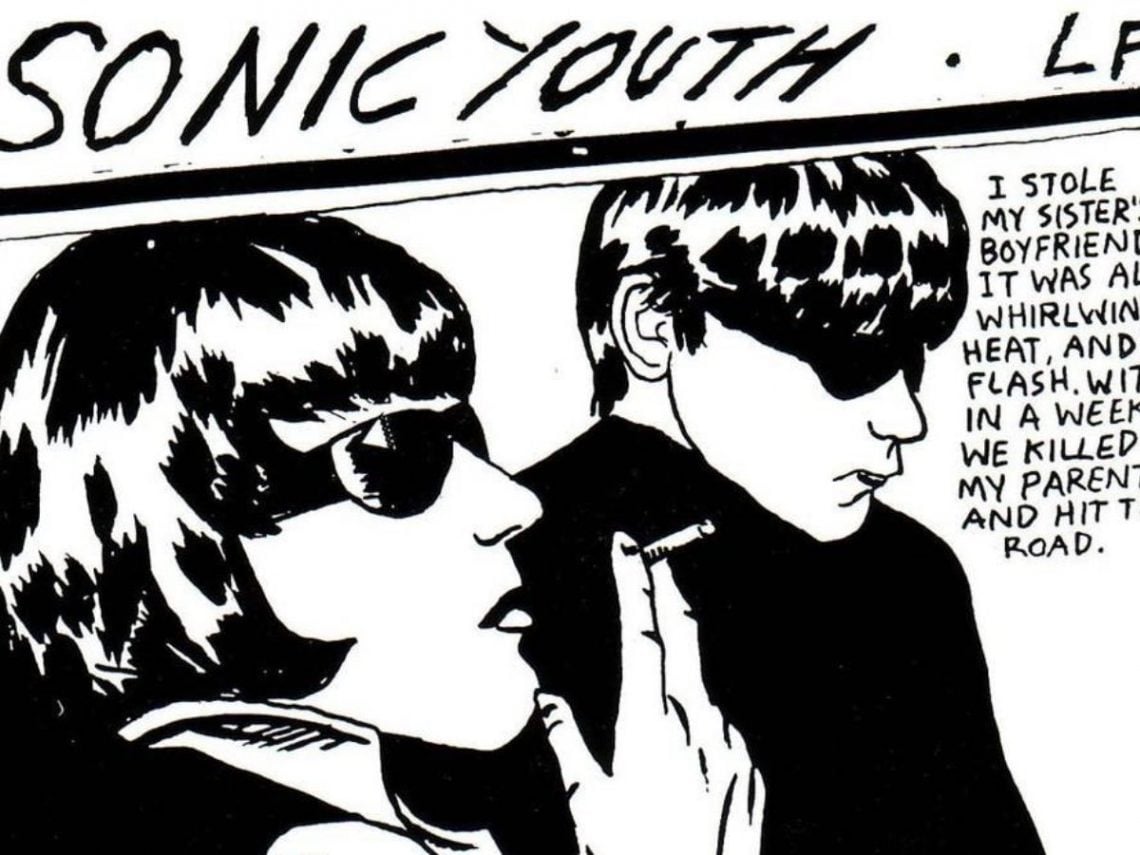
Why did Sonic Youth call an album ‘Goo’?

People act as if the atom bomb that Nirvana set off on pop culture was a complete freak accident that nobody saw coming at all. That one day, the charts were stuffed full of creaking hair-metal and wince-inducing europop, then ‘Smells Like Teen Spirit’ dropped, and grunge took off overnight. While the sheer ubiquity of Cobain’s lot is still so mad that we can’t entirely rule out a Seattle scenester having their heart’s deepest wish granted by a genie, there were a few bands pointing in that direction if you knew where to look. Chief among them were Sonic Youth.
Having spent the entire 1980s redefining what rock guitar was capable of, Thurston Moore and Kim Gordon’s bunch of no-wave mental cases were facing down the 1990s in a position no one was expecting. They were on the cusp of a breakthrough. Granted, it is not quite a mainstream breakthrough, but it is the closest thing to it from a band as resolutely uncommercial as Sonic Youth. 1988’s masterpiece Daydream Nation had caught the attention of tastemakers, the only problem was their record label.
The band was then signed to Enigma, a subsidiary of Capitol Records and EMI. While the label had the backing of a major, they had the distribution skills and connections of an indie, and they couldn’t keep up with the level of demand Daydream Nation was achieving. The record became almost impossible to find in stores, and the band decided to jump ship to an actual major label, with Moore branding Enigma a “cheap-jack Mafioso outfit” in Michael Azerrad’s essential tome Our Band Could Be Your Life.
A bidding war ensued for Sonic Youth, with offers on the table everywhere from Atlantic to A&M. Typically for Sonic Youth, they went where they could achieve full creative control, signing to Geffen Records in a contract worth $300,000, ludicrous money for a band like that at the time. I’m sure the shouts of “sell-out” were loud and insufferable, as they always are, but that anarchic spirit never left them, as the working title for their first record signed to a major label was Blowjob?.
Were Sonic Youth serious about Blowjob?
There are conflicting stories about how serious the band were about that. Some say it was the title of the record until Geffen nixed it, while the band say it was more to gauge the sense of humour of their new boss. One way or another, the record was eventually titled Goo from the album track ‘My Friend Goo’. The song, a lovingly satirical poke at the Gen-X cool kids that made up a large percentage of their fanbase, is based on the 1989 movie Sir Drone, directed by Raymond Pettibon, who also hand-drew the record’s iconic cover art.
The movie concerns a listless group of teenagers trying to form a band in an industrial borough of Los Angeles, one of the central characters of which is a spirited teenage girl named Goo. Kim Gordon made a version of her the central character of ‘My Friend Goo’, one of the many songs on the album that Gordon drove with her increased songwriting output. It’s fitting that a record so informed by Gordon’s uncompromising feminism rubbing up against corporate misogyny would find its name in a representation of one of the very people Gordon’s message was aimed directly at.
