


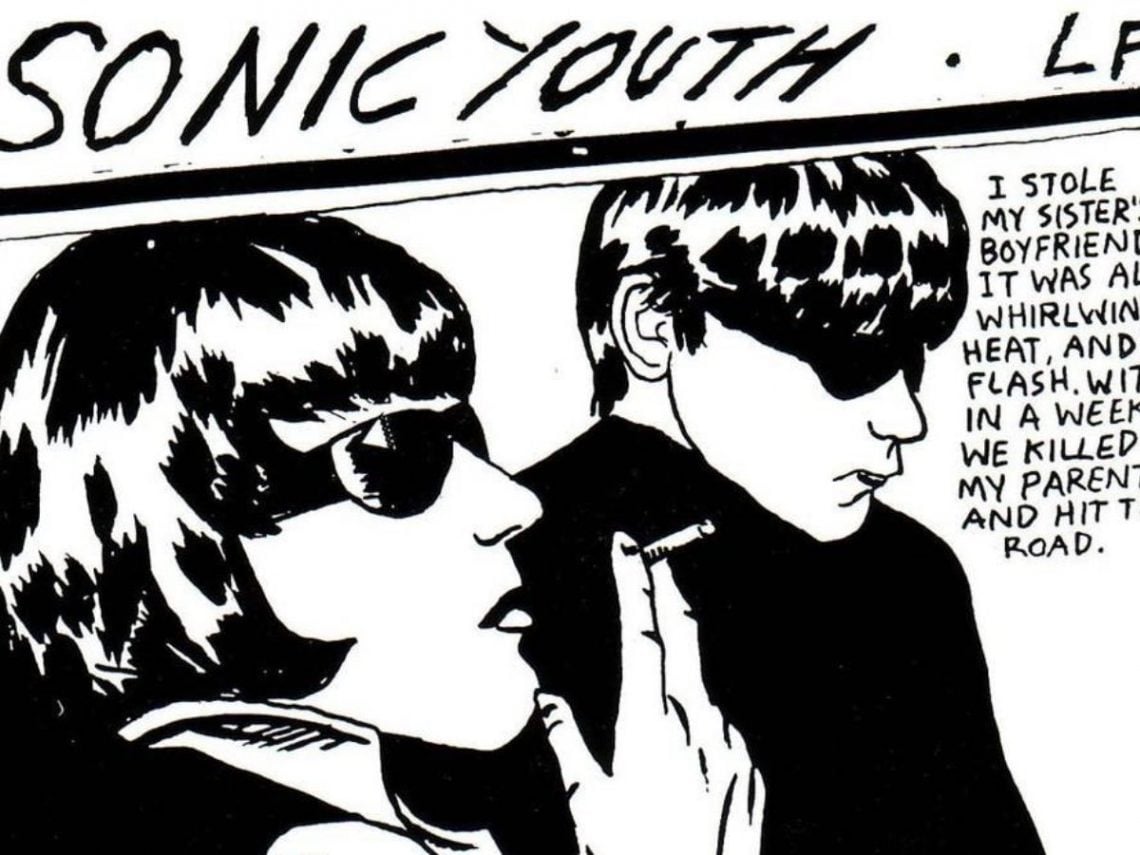
The Cover Uncovered: The dark truth behind Sonic Youth’s ‘Goo’

Emerging from New York’s experimental no-wave scene in the early 1980s, Sonic Youth finally began to attain widespread success with the release of their fifth album, Daydream Nation, in 1988. Experimenting with lengthy instrumental sections, unorthodox guitar tunings, and unconventional song structure, the album paved the way for their next release, Goo.
Acting as the band’s first major label release, Goo combined the band’s trademark innovative instrumentation with more accessible song structures – although very few of the tracks could be considered ‘radio friendly’.
Goo is an incredible album known for hits such as ‘Kool Thing’, featuring Public Enemy’s Chuck D, ‘Dirty Boots’ and ‘Tunic (Song for Karen)’. Yet those that are unfamiliar with Goo’s track listing will most likely know the album’s iconic cover art, arguably one of the most recognisable in alternative rock.
The black-and-white cover depicts an ink line drawing of a man with his arm wrapped around a woman, with a small caption reading, “I stole my sister’s boyfriend. It was all whirlwind heat, and flash. Within a week we killed my parents and hit the road.” Since the album’s release, the artwork can be found on T-shirts, mugs, posters; you name it. Furthermore, the album art’s recognisable status has led to countless comedic parodies and interpretations, with characters from Peep Show, Rick and Morty, and Stranger Things replacing the original faces.
Yet, many people are unaware of the dark history behind the sketch. Raymond Pettibon, the man behind multiple Black Flag album covers, based his drawing on a pre-existing photograph. The couple in the image is Maureen and David Smith, the sister and brother-in-law of Myra Hindley, the notorious Moors murderer. Along with her partner Ian Brady, Hindley killed five children, sexually assaulting four. Much to David Smith’s horror, he witnessed the murder of the couple’s final victim after he was invited to their home. The following day he informed the police, leading to Hindley and Brady’s arrest in 1965.
The image of the sullen-looking Smiths was taken during the 1966 murder trial and published in a newspaper shortly after. According to Pettibon (via Spin), “I had this True Detective magazine, and I saw that picture on the back cover. At the time, I didn’t know it was a depiction of the Moors Murders in England. That didn’t register with me because I wasn’t a true-crime aficionado like I am now. It was pretty much a reasonable facsimile of that magazine’s back cover and the photo of David Smith and Maureen Hindley.” Drummer Steve Shelley added, “I didn’t know about the context of his drawing. […] But when we first saw the original photo, I was blown away.”
Vocalist and guitarist Thurston Moore told Spin, “I had seen the original news photo that Raymond drew from, and I just thought there was something very evocative about this image where you could weave different narratives into it.” The now-iconic image has attracted many fans to the album since its release in 1990. Captivating, mysterious and exciting, Pettibon’s artwork is the perfect choice for Sonic Youth’s thrilling masterpiece.

