


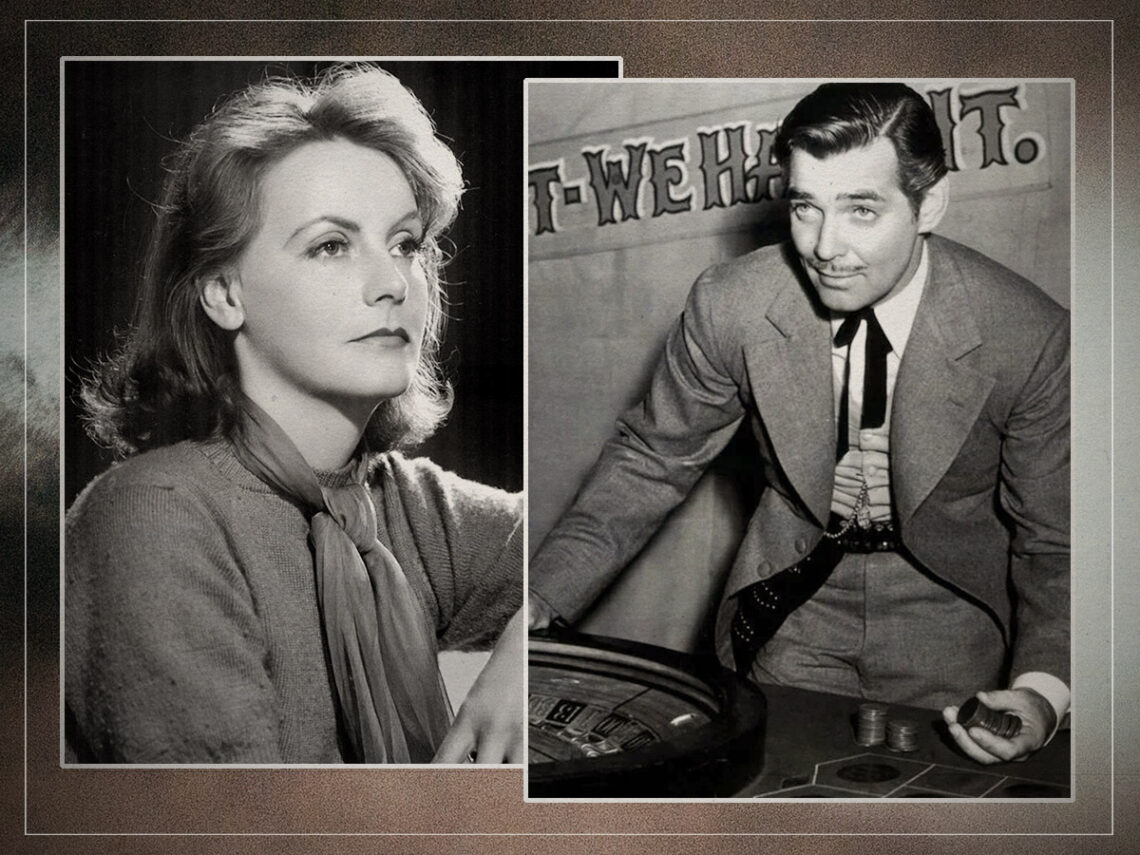
Why did Greta Garbo and Clark Gable hate each other?

The golden era of Hollywood was a time when film, as an art form, reached impressive heights. New genres, like suspenseful thrillers and film noir, emerged while the industry transitioned from silent cinema to sound, introducing audiences to a newfound potential within the medium. As studios set up contracts with their actors, Hollywood soon produced a crop of stars who became celebrities, appearing in countless films, often performing opposite the other biggest stars of the era.
One of these was Greta Garbo, an icon of the period known for playing characters with complex and troubled inner worlds. Starting her career during the silent era in her native Sweden, she could barely speak English, but after Hollywood showed an interest in Garbo, she made her way across the pond and continued acting in silent pictures.
Yet, in the late 1920s, shortly after she’d relocated to America, sound pictures became the newest innovation, and Garbo was forced to learn English. In 1930, she spoke on film for the first time in Anna Christie, and everyone breathed a sigh of relief – she was just as good as a star of the talkies as she was a silent actor. Garbo rose to become a well-known figure in the industry, appearing in films like Romance, Anna Karenina, Camille, and Ninotchka.
Garbo was known as a diva – a term with undeniable sexist undertones, simply because she was a private person with little desire to partake in publicity campaigns. According to Kevin Brownlow, the filmmaker behind Garbo, her stubbornness was well-known. “This girl in her early twenties took on one of the toughest moguls in Hollywood and won. That could make a film in itself.” She wasn’t afraid to negotiate, and the element of androgyny she possessed startled many men. Was she really a diva? Or just a woman who knew what she wanted and ensured that her boundaries were always respected?
When did Greta Garbo and Clark Gable work with each other?
During her career, she worked with another Hollywood icon, Clark Gable, who seemed to see Garbo as the diva type. The pair quickly came to dislike each other, with the actors seemingly harnessing opposing personalities. They appeared in Susan Lenox (Her Fall and Rise) together in 1931, directed by Robert Z Leonard. It was Garbo who requested to work with Gable after enjoying his performance in A Free Soul, but soon, their relationship turned sour.
It seemed as though Gable was not a fan of the fact that Garbo had a larger paycheck than him, and he simply didn’t find her an interesting person. Gable was a much smaller actor at this point, so while he was paid $350 a week, his co-star was given $250,000 for the whole movie.
Meanwhile, Garbo reportedly disliked Gable’s performance in the film, calling him “wooden”, leading her to threaten to quit the movie. Neither party was impressed with the other’s behaviour, even though Gable had initially been excited to work with Garbo, telling a reporter that getting the part was “one of the thrills of my life.”
Evidently, the pair were very different people, with Gable taking her attitude as snobbish, while Garbo just didn’t think that he was the right fit for the character he was playing alongside her.
