


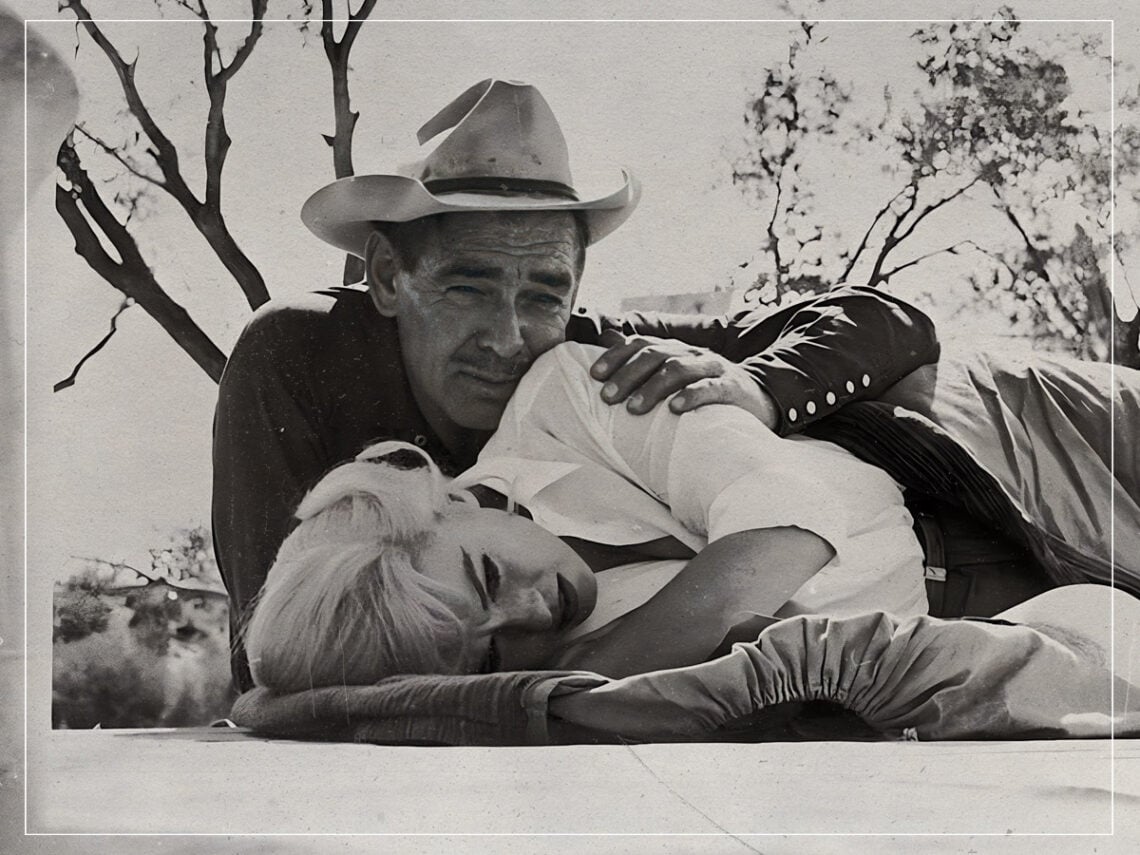
How Clark Gable accidentally became a fashion icon

Make no mistake about it: Clark Gable is a legend. For movies like Mutiny on the Bounty, It Happened One Night and Gone with the Wind, he will be remembered as a dynamo of Hollywood’s Golden Age, the leading man to end all leading men. His turbulent personal life included marriages to five different women. He even contributed part of his name to Superman’s alter ego, Clark Kent, alongside fellow actor Kent Taylor.
As one of the most famous people on planet Earth during his peak, Gable’s style was often imitated. Lord knows how many men grew pencil moustaches to try and look like him. Of course, they all paled in comparison to the Hall of Fame-worthy lip-topper the man himself sported. However, according to an old rumour, his greatest contribution to fashion might have come from something he didn’t wear.
In It Happened One Night, there is a scene where Gable’s character – an out-of-work reporter named Peter Warne – gets ready for bed. When he takes off his dress shirt, he is revealed to be bare-chested underneath. This might seem normal nowadays, but in 1934, the existing fashion was for men to wear a less formal garment under their regular clothes. Gable’s decision to forgo a traditional ‘undershirt’ might seem minor, but apparently, it had far-reaching consequences.
Viewers watching It Happened One Night came to the conclusion that “if Clark Gable doesn’t wear an undershirt, then why should I?” According to reports, sales of the item plummeted as a result of the film, with average Americans deciding that one shirt was enough for them. In the documentary The Hollywood Fashion Machine, actor and host Jacqueline Bisset said the underwear industry was “paralysed” by this decision and, considering how non-existent this trend is today, it never fully recovered.
As with most urban legends, it’s hard to pinpoint how accurate this story really is. Myth-debunking site Snopes classifies it as ‘Undetermined’, citing a lack of clear documentation or anecdotal evidence to support this claim. It also mentions that 1934 was a year badly hit by the Great Depression, so it’s entirely possible that people were only wearing one shirt because it was too expensive to buy two.
“Women didn’t abandon brassieres after seeing Clark Gable romance a braless Jean Harlow in 1932’s Red Dust,” it claims, highlighting other potential examples of cinema affecting fashion. “And men didn’t stop wearing ‘outershirts’ after Marlon Brando popularised the leather jacket and white T-shirt look in 1954’s The Wild One.”
All that being said, it’s not like movie stars don’t have an impact on the way people dress. Alicia Silverstone’s portrayal of Cher Horowitz in Clueless inspired an uptake in plaid clothing in the mid-1990s, helped along by how image-conscious the character was. Fane Dunaway wearing a beret in Bonnie and Clyde helped bring the hat style into the mainstream. There are fewer instances of male stars starting trends, but there is every chance Gable really did help kill the undershirt once and for all.
This wasn’t the only impact It Happened One Night, which was directed by Frank Capra and won Gable a ‘Best Actor’ Oscar, had on popular culture. Most of the first half of the film is set aboard a Greyhound bus, as Warne and his love interest Ellie Andrews (Claudette Colbert) get to know each other. Greyhound bosses were “delighted” at how the film made them look, and it sparked “a surge of public interest in the company,” as well as an uptake in long-distance bus travel as a whole.
