


When Marlon Brando made short work of a legendary director: “He fired me”

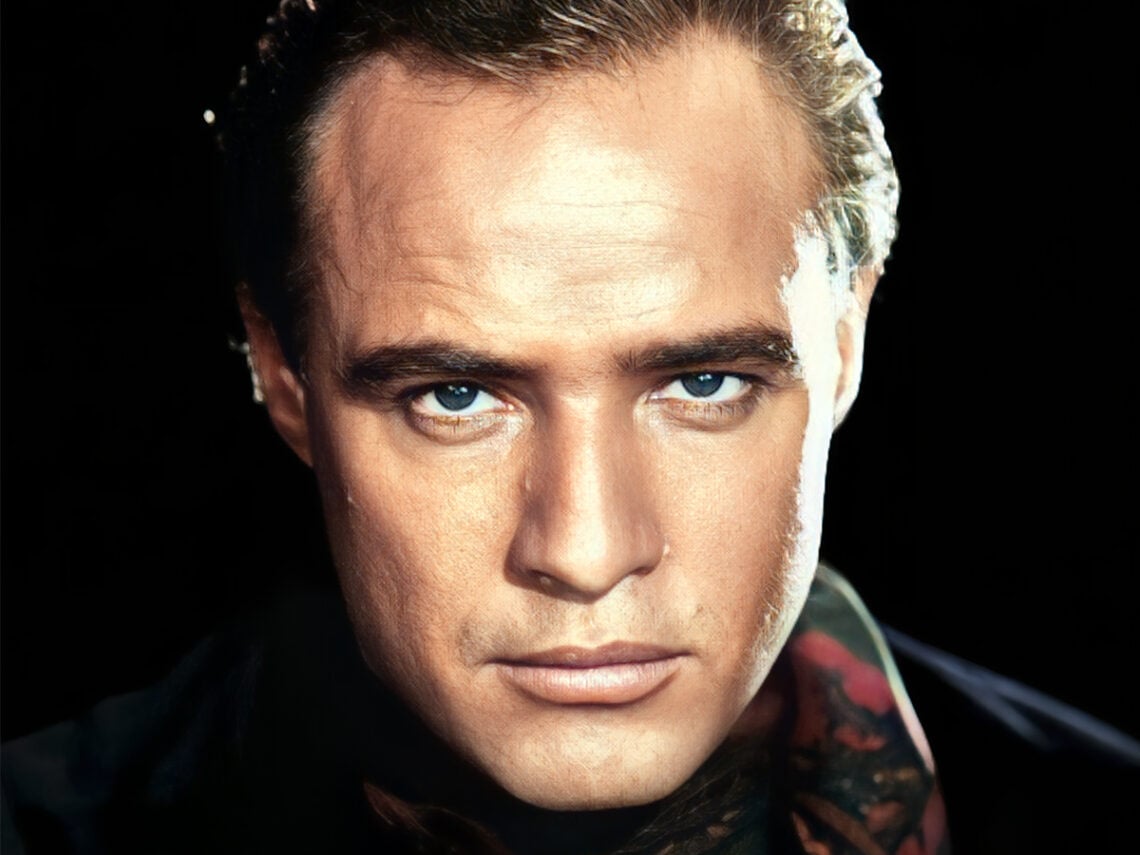
In 1961, Marlon Brando‘s only directorial effort was released to a middling reception from critics and audiences. Its $6million in box office returns were enough to make it one of the year’s biggest hits, but even that wasn’t enough to convince him to go through the crucible of directing again. You see, the production of One-Eyed Jacks was torturous and lengthy, with a succession of writers and directors leaving the project while only Brando remained through it all. In truth, at one point, Brando himself unceremoniously fired a legendary writer/director with whom he had only worked for a few short weeks.
In the late 1950s, producer Frank P Rosenberg read a novel he felt would make a great western motion picture. He sent a copy of Charles Neider’s The Authentic Death of Hendry Jones to The Twilight Zone creator Rod Serling and asked him to turn it into a screenplay. Unfortunately, he wound up disliking Serling’s script, so he approached another young writer in 1957 to take a crack at it.
At that time, Sam Peckinpah was plugging away as a writer in the world of TV westerns. He had written episodes of Gunsmoke, Klondike, and The Rifleman but had yet to pen a feature film screenplay. He took Rosenberg up on his offer, though, and turned in the first draft of his adaptation of Hendry Jones on November 11th, 1957.
Even at this point in his career, long before he became famous for directing hard-edged pictures like The Wild Bunch and Straw Dogs, Peckinpah was a temperamental customer. In 1979, he told Movietone News that he thought his adaptation was “damn good”, but he and Rosenberg still clashed. In fact, he claimed he hurled the script at Rosenberg in his living room, and because it wasn’t bound together, sheets of white paper wound up scattered across the room. Peckinpah smiled, “It was really one of my last great moves.”
According to Peckinpah, it was he who suggested Rosenberg send the script to Brando. To his surprise, the producer obliged, and to his even bigger surprise, Brando optioned it. Suddenly, Peckinpah was working on another script draft with Brando, who was then only a few years removed from his ‘Best Actor’ Oscar win for On the Waterfront.
Unfortunately for Peckinpah, he was now working with a man whose penchant for difficult behaviour would become legendary. As Peckinpah put it, the two combustible men managed to work on the script together for a grand total of “three and a half weeks before he fired me.”
By this point, the film’s director—Stanley Kubrick—had also exited the project. In fact, he walked away only two weeks before shooting was scheduled to begin. Brando volunteered to step into the breach for his directorial debut, and this gave him the power to dismiss Peckinpah, whose work he was unhappy with.
Amazingly, after letting Peckinpah go, Brando would hire and fire another writer, Calder Willingham, before Guy Trosper was brought in for one final pass. Peckinpah would even claim that he was asked to return to the fold amid all the chaos, but by that point, he was already working on his own directorial debut, a 1958 episode of Broken Arrow.
Ultimately, Peckinpah felt quite removed from the film when its title was changed, and it was finally released in ’61. It didn’t resemble the novel in any way, and there was very little of his work in the final cut, too. However, he did grumble, “There’s two scenes of mine in the picture, and I did not receive credit for it.”
Interestingly, despite the film being viewed unfavourably by many critics, its director, and one of its writers, it does have two prestigious fans. Quentin Tarantino counts it as one of his three favourite westerns, and Martin Scorsese was instrumental in getting a 4K restoration of the film – which he dubbed “visually stunning” – released in 2016.
