


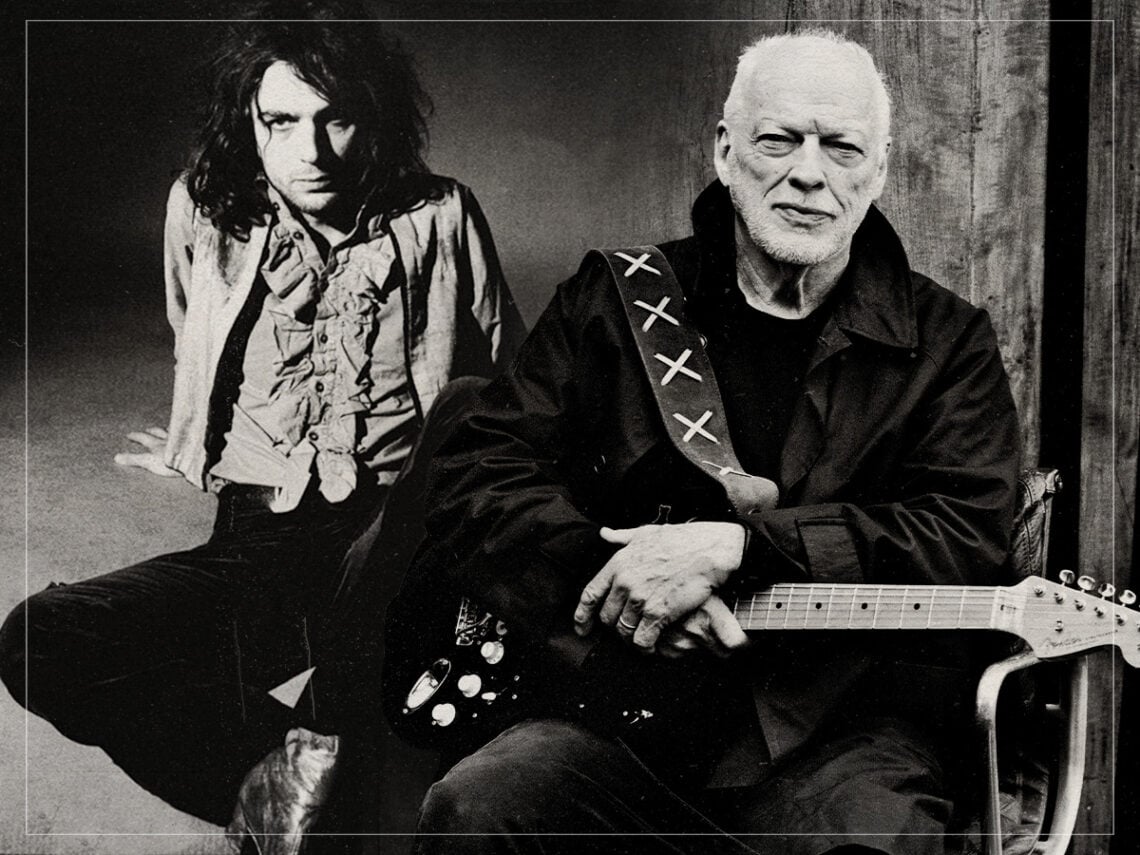
Why David Gilmour never wanted to play like Syd Barrett: “I was a couple of streets ahead of him”

The story of Pink Floyd can be separated into two chapters: with Syd Barrett and without Syd Barrett.
In that first chapter, he was a creative force. Intriguing in his songwriting style, with his stream-of-consciousness lyrics and whimsically psychedelic melodies, he was damn-near perfect for a band trying to lead the revolution of psychedelic music in the late 1960s.
On their 1967 effort Piper At The Gates of Dawn, the band balanced unfiltered experimentation with tracks like ‘Interstellar Overdrive’ with curious pop hooks like ‘See Emily Play’ that made for psychedelic accessibility.
Barrett was at the very heart of that, which was why his descent into drug-induced madness posed as a serious crossroads for the band. At that point, David Gilmour was already in the band, as somewhat of a safety net if things went bad and a supporting player if Barrett would eventually recover, but it was clear the former was the more likely option. But in realising that, the band slowly began to realise that in Gilmour, they didn’t have a replacement; they had an entirely new creative force.
We would come to see that in their iconic 1973 record Dark Side Of The Moon, but with the first post-Syd record, the band were still playing with the echoes of his influence, as Gilmour explained: “By the time Syd left, the ball had definitely stopped rolling. We had to start it all over again. Saucerful of Secrets, the first album without him, was the start back on the road to some kind of return. It was the album we began building from.”
He added, “We continued playing some of his songs because none of us was getting good enough material fast enough to be able to do without them, which also, therefore, meant that I had to fit in with his style to an extent because his songs were so rigidly structured around it… Oh, and by the way, the band, when I joined, never ever said, ‘Play like Syd Barrett…’ that was the very last thing they wanted.”
But the approach of picking up where Barrett left off meant that in those early years, Gilmour’s style was being called into question. Many critics were eager to label it as nothing more than a Barrett knock-off, which cut deep for Gilmour. It cut deep because, like any guitarist, he had a sense of self which his ego was keen to protect, but moreover, the fact that he actually felt as though he taught Barrett a lot of his tricks.
“The facts of the matter are that I was using an echo box years before Syd was,” he recalled. “I also used slide. I also taught Syd quite a lot about guitar. I mean, people saying that I pinched his style, when our backgrounds are so similar, yet we spent a lot of time as teenagers listening to the same music. Our influences are pretty much the same, and I was a couple of streets ahead of him at the time and was teaching him to play Stones riffs every lunchtime for a year at technical college. That kind of thing’s bound to get my back up – especially if you don’t check it.”
While Gilmour didn’t outrightly refute those claims in the following five albums, in 1973 with his and the band’s masterpiece, his place in the pantheon of guitar greats was confirmed, and never again was his style described as a knock-off of anyone.
