


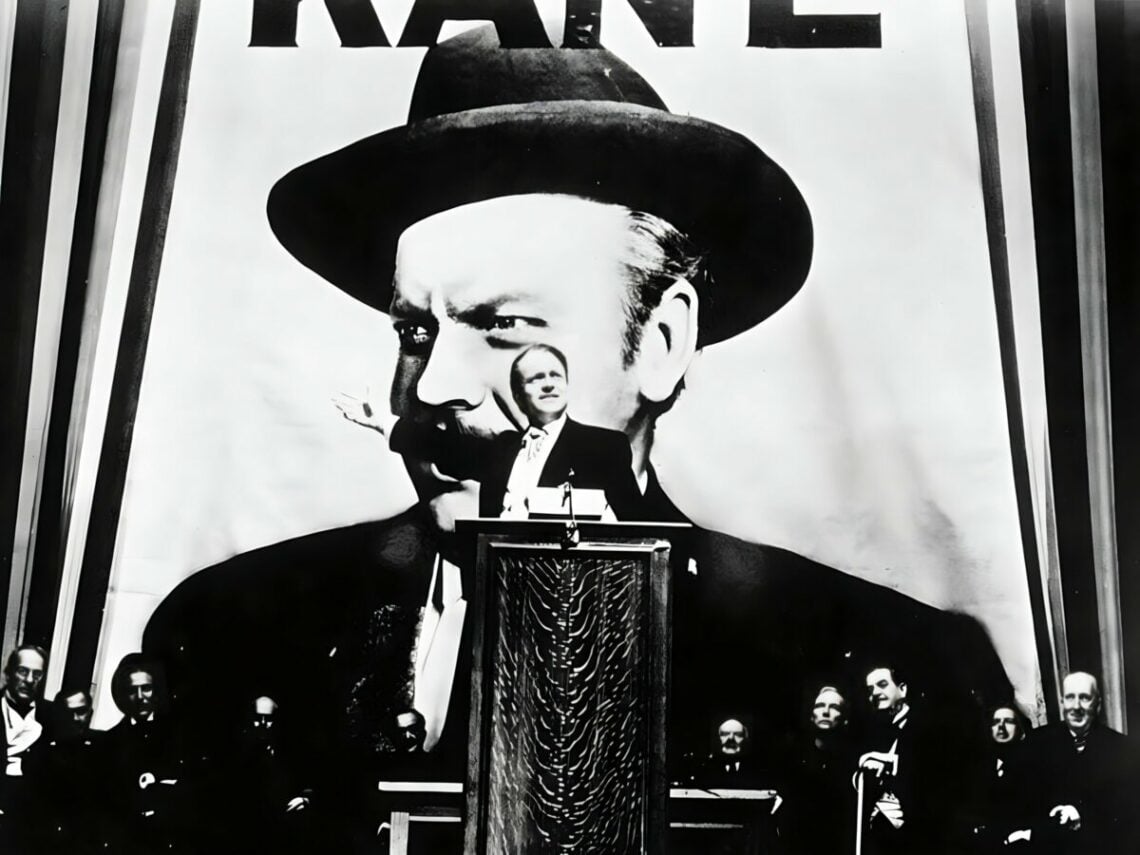
Why ‘Citizen Kane’ was booed at the 1942 Oscars

It’s not often that a directorial debut goes down in history as one of the greatest movies ever made, but Orson Welles probably expected that exact result when he sent Citizen Kane out into the world.
Welles had already gained fame and notoriety by his early 20s after a distinguished stage career was followed by his legendary radio adaptation of The War of the Worlds, leaving him fully aware of his immeasurable talent at such a young age.
Co-writing, producing, directing, and starring in his very first feature film, he was brimming with the confidence bordering on arrogance that would ultimately define the entirety of his time in Hollywood. Of course, he was correct to be so cocky, with Citizen Kane releasing a month after he’d turned 26.
It was far from a box office bonanza, though, barely recouping its budget twice over during its theatrical run before it encountered the wrath of one of the most powerful men on the planet. Welles went to great lengths to ensure William Randolph Hearst’s influence on Charles Foster Kane was kept under wraps, and looking at what happened in the aftermath; it’s easy to see why.
The media magnate banned any newspaper he owned from advertising or reviewing the film, while any mention of the title was outright prohibited. Launching a libellous smear campaign against Welles, Hearst even considered legal action for Citizen Kane, deriving so many of its story beats directly from his own life.
It didn’t prevent the epic drama from becoming an awards season favourite, with nine Academy Award nominations including ‘Best Picture’, ‘Best Director’, ‘Best Actor’, and ‘Best Screenplay’ being handed its way. However, not only did Citizen Kane emerge from the ceremony with a solitary win for the latter category, but it was reportedly booed out of the building every time its name was read out.
The caveat is that the only recorded account of the audience vociferously booing Citizen Kane nine times over during the 14th edition of the Oscars came directly from Welles himself, and he wasn’t even in attendance. That being said, the trades at the time offered further details on why it’s hardly a far-fetched tale.
In the March 1942 edition of Variety, it was suggested that John Ford’s How Green Was My Valley was viewed as the standout candidate based on its director’s status as a firmly established part of the industry hierarchy, and it would ultimately scoop four trophies on the night, pipping Citizen Kane to ‘Best Picture’ and ‘Best Director’ in the process.
It was also intimated that Hearst’s far-reaching influence could have been another key factor, positing that the only reason Welles’ film received so many nods was as a thinly-veiled apology for how he was “treated and maligned by the Hearst papers,” furthering the belief Academy voters found it undeserving of so many nominations.
Intriguingly, Welles’ prickly reputation may have also played a part. Extras were allowed to vote for ‘Best Picture’, ‘Best Song’, and the four top acting prizes at the time, which meant there were literally thousands of people who held a stake in the outcome. Furthering that assessment, it was noted how “it was patent that the mob didn’t like the guy personally,” which may have contributed to both the booing and Citizen Kane‘s poor showing.
