


Why are there no original film score collaborations anymore?

It can often feel like creativity is a value of the past, with countless technological advancements rendering the work of artists as an unnecessary process that can be easily replaced. But a common occurrence we are seeing in the current film industry is that many opportunities are being delegated to the same group of people, with a predictable lineup of actors, directors and composers now dominating each new project and making it almost impossible for emerging creatives to break into the industry.
When creative opportunities are so few and far between, it is incredibly disappointing to see most of the top spots in Hollywood being hoarded by (mostly men) who have been in the business for countless decades. I find myself rolling my eyes when I see another project announced from Ridley Scott or Christopher Nolan that consists of the same A-list actors and features another score from Hans Zimmer or Trent Reznor and Atticus Ross.
However, while this is not new news to any cinephile who keeps a close eye on the comings and goings on in the industry, this recently seems to have extended to the world of film scoring in a more notable way, with a worrying decline in the diversity of composers and an increasingly narrow pool of musicians who are chosen for new projects. Almost every new release features a musical accompaniment from the most domineering composers in Hollywood, with directors opting for safe/predictable choices and making no effort to do something a bit different.
This feels very prevalent when the number of opportunities is shrinking, and the few movies being greenlit are scored by the same group of men, with the world of film composition staying firmly stuck in the past as powerful directors make no effort to diversify a discipline that men so notably dominate. But why has this area fallen so far behind? And why are so few directors branching out with their film scores anymore?
In the past, many independent directors were leaps and bounds ahead of commercial filmmakers in their creative choices. They made bold and risky decisions that weren’t always understood by the masses but led to genuinely creative movies with an array of rich elements that were emboldened by the director’s willingness to try something different. This is particularly notable in the world of film scoring, with many directors becoming infamous for their collaborations with indie bands and hand-selecting an artist to create a unique soundscape for their story.

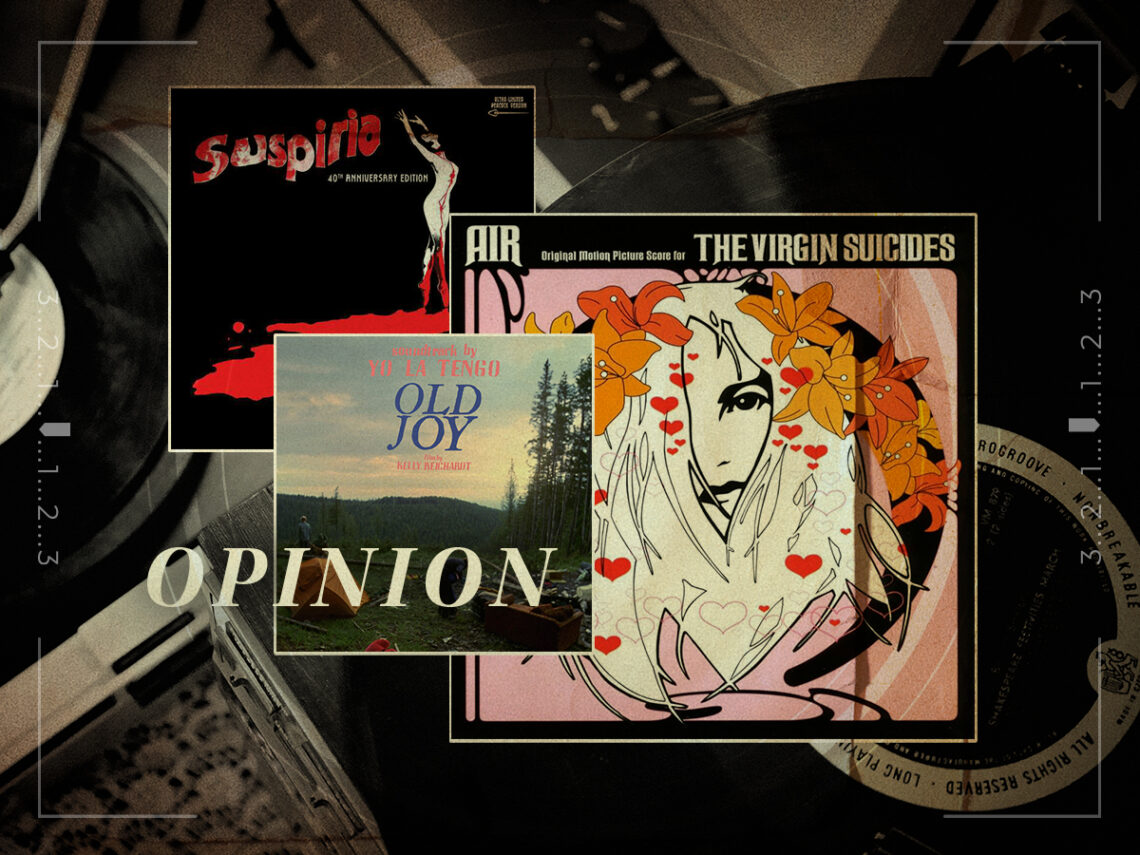
Sofia Coppola famously worked with French space-pop band Air for the score of her 2000 film The Virgin Suicides, creating a beautifully hypnotic and ethereal backdrop to her haunting tale of girlhood and suburban oppression, capturing the stifled dreams of the Lisbon daughters and the projections of femininity that were thrust onto them and eventually, led to their deaths. Kelly Reichardt achieved something similar with her 2006 film Old Joy, collaborating with soft-rock band Yo La Tengo on the score and creating a bittersweet accompaniment to the story of a deteriorating friendship and the fading nostalgia that lies in the absence of genuine connection.
No one can forget the notorious soundscape of Dario Argento’s 1977 film Suspiria, with the Italian rock band Goblin creating that infamously menacing and breathy theme tune to the disturbing tale of the remote ballet school and witchy cult. Claire Denis once worked with Tindersticks for the 1996 movie Nenette and Boni. Henry Selick worked with Bruno Coulais for the gothic yet whimsical sounding Coraline score. The list goes on, and it makes me wonder why so few filmmakers are branching out in this way, with very few recent movies sticking out and choosing to stick with the status quo.
However, part of this is because many directors prefer to work with the same composer throughout their career, with Steven Spielberg always working with John Williams, Paul Thomas Anderson with Johnny Greenwood, Tim Burton with Danny Elfman, Luca Guadagnino with Trent Reznor and Atticus Ross and of course, Christopher Nolan with Hans Zimmer. And alas, these collaborations are all entirely male, with yet another display of Hollywood’s failure to diversify the film business.
While it makes sense for directors to nurture the creative relationships they have and build a rapport with their collaborators, perhaps the lack of creativity and risk we are seeing in the world of film scoring comes from the fact that there are increasingly few opportunities for emerging directors to make movies, with the cinematic landscape being dominated by the above list of people as a result of the industry’s inability to make space for new talent, instead offering funding to the same group of people and the safe bets who will turn over a decent profit. As a result of the industry’s lack of diversity, this then trickles down to the world of film scoring, with each director working with the same composer and leading to a sonically bland and repetitive world that does little to branch out and forge exciting new partnerships, with very few opportunities for new composers and those looking to break the wheel.
Despite the fact that some of these composers are still making great work, their trademarks are obvious from the very first minute of listening to them, with the distinct palette of Hans Zimmer becoming almost unbearably predictable as I brace myself for another project that features his so-called genius. Yes, he’s good at his job, but can you imagine if we had more collaborations like the one between Air and Sofia Coppola? Or Ezra Furman for Sex Education?
There’s no denying the talent and versatility of those who currently dominate the musical realm within Hollywood, but there is much to be said about the stark lack of diversity and perspective entering our ears. As artists, we create things that are influenced by our own personal experiences and feelings, and if the score is arguably one of the most emotionally influential elements of a film, then it feels unfair for our emotional understanding of a story to be filtered through the limited experiences of one group of people.
Without genuinely creative film score collaborations, we are slowly restricting this area of the industry even further and making it borderline impossible to diversify the medium, with the emotional backdrop to most films being controlled by a small group of men and few collaborations that truly utilise the capabilities of the sonic world in cinema.
