


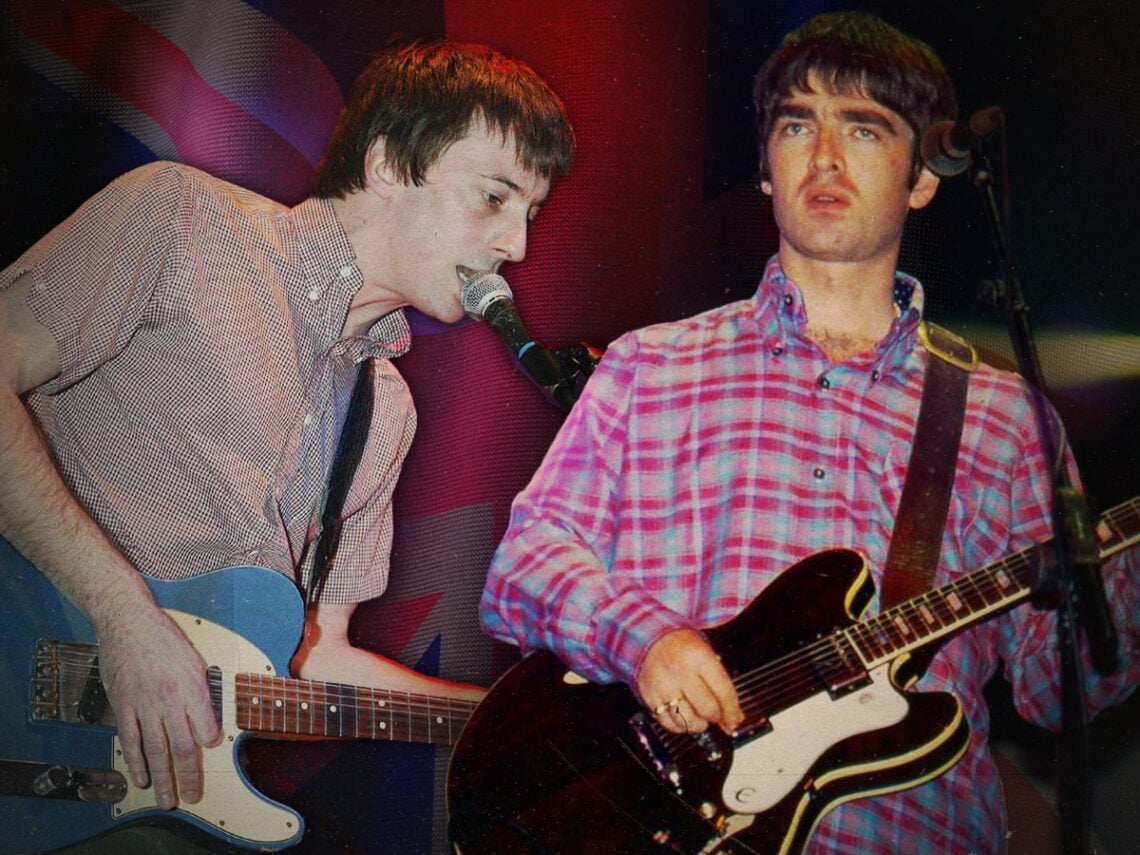
Who was the true guitar hero of Britpop?

We are living in the midst of a Britpop resurgence, as Oasis, Blur, and Pulp capture headlines again, meanwhile, fresh ears discover this life-affirming music for the first time.
I hate to be one of those guys who cram an entire musical movement into the discography of three bands, but for the sake of this article, as we discuss the guitar work that dominated Britpop, that’s exactly what I’ll do. While there were plenty of great bands who helped elevate this style of music and truly make it what we know today, the three pillars that held up this structure were the aforementioned outfits.
The whole movement of Britpop is remembered as being exactly that, a movement. We don’t tend to focus on individual aspects of the music that was released, and instead just enjoy the experience as a whole. It’s interesting, when you think of rock, you think of guitars, when you think of jazz, you think of brass, but when you think of Britpop, you kind of just think of one big party.
While we might not think of the individual aspects of this sound as much as we do with other genres, there is no escaping the fact that Britpop paved the way for some excellent guitar players. The guitar style of different bands was incredibly exciting to listen to, as they delivered riffs, chord sequences and solos which all played into how energetic the genre was as a whole.
Do you think people are still dancing to the likes of ‘Song 2’, ‘Disco 2000’ and ‘Cigarettes and Alcohol’ now because of mediocre guitar music? No, of course not.
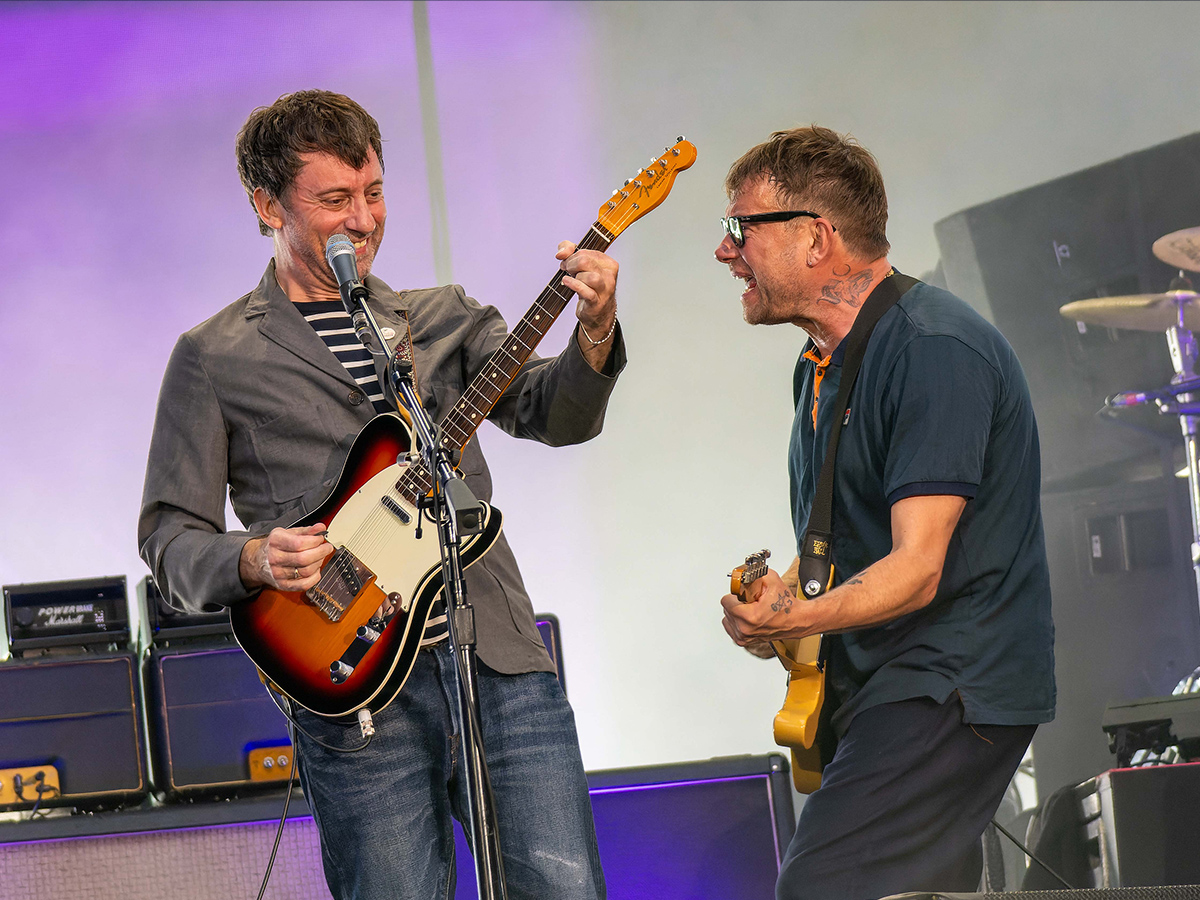
So, out of all of the excellent guitarists from this period, who was the greatest? Opinion will obviously be divided on such a matter, but I have an argument that I hope will get some heads nodding. Out of all of the guitarists who helped make the Britpop movement what it was, the guitar player who created some of the most intricate, innovative and versatile music, which provided the energy people were longing for but also came across as somewhat complex and challenging, was Blur’s Graham Coxon.
Noel Gallagher was great when it came to writing guitar music that felt as though it punched you in the face. When you listen to some of those early Oasis songs, riffs like ‘Supersonic’, ‘Fuckin’ In The Bushes’ and ‘Rock ‘n’ Roll Star’ get people so hyped because that distorted guitar has the ability to capture the hearts of listeners and spin them around. It’s infectious, truly.
Before the Oasis reunion was announced, when both leads seemed to be growing slightly closer with one another, Noel let an uncommon compliment for Liam pass through his lips, and it was about his raw, gritty voice. “I don’t have the same attitude as him,” he said, “My voice is half a Guinness on a Tuesday, it’s all right. Liam’s is ten shots of tequila on a Friday.”
Noel’s not wrong here, but he needs to give himself some credit, as Liam’s voice wouldn’t have anything to reverberate off were it not for those killer guitar lines. That being said, when it comes to writing slower numbers, that innovation lacks slightly, as chords are strummed in more or less the same pattern, they don’t give off a great deal to get excited about.
Pulp give us something slightly different. Yes, they have plenty of songs which also get feet moving and heads nodding, but they don’t have as much of a reliance on the guitar. In a lot of songs, the guitar takes a back seat, acting as a good instrument to linger in the background while not being overwhelming for the listener.
This kind of arrangement is deeply important when it comes to managing a band with a lot of people and a lot going on, as if you don’t have a handle on what should be in the spotlight and what should take a backseat, the song will come out as messy. Of course, on the songs where the guitar does come to the front of the stage a bit more, that guitar sound is complex and a triumph.
The reason I think Graham Coxon is the guitar hero of the movement is that he champions both of these sides of guitar music. On the one hand, you have Blur songs which pack a punch and are the sonic equivalent of those ten tequilas on a Tuesday; however, there are other songs of theirs which are slightly stripped back, showcasing the band’s knowledge when it comes to arranging a song and that veer slightly more towards the complex side of good music. Blur are the most versatile band from the Britpop movement, and the guitar work of Coxon contributes to that a great deal.
What is a guitar hero if not someone who has an apparent mastery over said guitar? And how do you demonstrate such mastery if not by flexing the ability to play it in a range of different ways? Britpop carried a certain energy which was presented in a number of different styles, and the only guitarist who ever truly triumphed within every one of them was Graham Coxon.
