


Who really invented finger-tapping guitar?

Eddie Van Halen wasn’t usually inclined to get into spitball fights with shoegazers anyway, but now that he’s been gone for nearly six years, his old, crusty critics from the punk corner of the rock cafeteria are starting to feel comfortable slagging him off again, perhaps feeling that the “not speaking ill of the dead” period has now mercifully passed.
A few weeks back, Jesus and Mary Chain guitarists Jim and William Reid were the latest to offer up their unsolicited opinion on the legacy of EVH, with William specifically suggesting that Eddie was essentially the embodiment of everything wrong with guitar culture as a whole.
“I think guitar players should never learn scales,” Reid said with a dismissive, deadpan, distinctly Scottish air of disgust. “I think the worst guitar players in the world — like Eddie Van Halen— I can’t stand Eddie Van Halen’s guitar playing. I think he ruined rock guitar all through the ’80s and ’90s, ’cause so many people copied him. I just couldn’t get any of that; playin’ as fast as you fucking can and cramming as many notes in one second as you could. I listen to Peter Hook’s bass riffs, and I think that’s a thousand times better than anything Eddie Van Halen could ever conjure up.”
Brutal as the criticism might be, Reid’s core point isn’t actually that far away from a sentiment Eddie’s own son, Wolfgang Van Halen, made two years ago during an episode of Marc Maron’s WTF podcast. “In a way, Dad kind of ruined the musical landscape,” he said, “Because instead of everybody wanting to find out who they are, they wanted to be that.”

That’s probably the thing that primarily bothered William Reid about Van Halen, too; the aftermath of his success, the copycats, the boring state of soundalike ‘80s hair metal. But when you’re a grizzled UK indie rock hero, the temptation to directly slag off the sacred cows of the mainstream, dead or alive, is usually just too strong to overcome. Never leave an interview with a good insult still in the chamber!
Eddie Van Halen, of course, was not the first rock guitarist to learn his scales, nor did he invent the concepts of technical virtuosity or fancy fretwork. He has often been the poster boy for those things, however, because he excelled at his version of obnoxious guitar wizardry beyond just about everyone else in his generation.
Had Eddie had the chance to respond to the JAMC guys, he probably would have grinned and said something along the same lines as what he told the Pittsburgh Post-Gazette back in 1995: “Hey, I’m just a normal jerk who plays guitar,” he said, laughing at the notion that he was one of those mythical “guitar gods.”
“I play guitar, and this is the way I play it. I might play a little different than other people, but that doesn’t make me any better.”
Eddie Van Halen
Or worse, presumably.
While William Reid described Van Halen as “cramming” boatloads of unnecessary notes into his work, the argument could be made that Eddie’s greatest legitimate innovation on the instrument was simplifying, rather than complicating, the means of playing a solo at a breakneck pace.
This, of course, was the finger tapping technique, brought to worldwide fame in the wake of Van Halen’s 1978 self-titled debut album, and specifically the instrumental track ‘Eruption’, on which Eddie, at 23, announced himself to the world as the new standard bearer of shred.
The sound of the finger tap was dumbfounding enough, but as MTV began showcasing Van Halen videos heavily a few years later, Eddie’s methods were studied from all angles like the Zapruder film, as legions of metalhead kids in their bedrooms tried to unlock the magic of the tap: the way EVH tickled the fretboard of his Strat with his right hand in and around the chord-determining fingers on his left hand, producing a sort of space alien’s jazz trumpet ringing out over the more familiar blues-based skeletal structure of the music. It shouldn’t have worked, but it did… in the correct hands, of course.
The finger tapping was influential enough to earn Eddie Van Halen praise as rock guitar’s most important innovator since Jimi Hendrix, but was he truly the first major artist to incorporate the technique?

There was an old adage in sports, before replay reviews anyway, that the person who instigates a fight is never the one the referee sees. It’s the athlete who retaliates that winds up getting the whistle. The same principle applies here. In the art world, it’s very hard as a fan or critic to have one’s antenna aimed at the right place at the right time to witness a true, first-of-its-kind innovation. It’s far more likely that we’ll stumble upon the next guy, the one who saw that original moment and is now responding to it.
Unsurprisingly, considering the millions of guitar players who’d already walked the earth before Eddie Van Halen played ‘Eruption’, finger tapping had certainly been done before. The world-famous ukulele maestro Roy Smeck, for example, was showing off the same principle back in the 1930s, and by the 1950s and ‘60s, it was not an uncommon thing to see in the jazz world. Emmett Chapman was so fond of the method, in fact, that he designed his own 9-string electric guitar, called the Chapman Stick, which was optimised for the practice.
Even in rock circles, everyone from Harvey Mandel of Canned Heat to Terry Keith of Chicago has been credited with finger tapping in the early ‘70s, with Steve Hackett of Genesis standing out as another well-documented tap adopter.
“I was trying to play a tiny phrase from ‘Toccata And Fugue’ by Bach,” Hackett told Music Radar in 2012. “I was wondering how to do it, because you couldn’t really do it across the strings. I figured that if I could do it on one string, then I’d be using the fretboard like a keyboard. … It was a little unwieldy at first because I couldn’t play it in time. But then I could play it in time, and I started doing it live with Genesis. This was back in 1971, an awfully long time ago. It enabled me to be the fastest gun in the West for about five minutes, until somebody else came along and did it in a whole new way.”
Hackett was obviously slightly less blown away than everyone else when Eddie Van Halen showed up, but he wasn’t bitter about a young guy absorbing influences and adding his own flair.
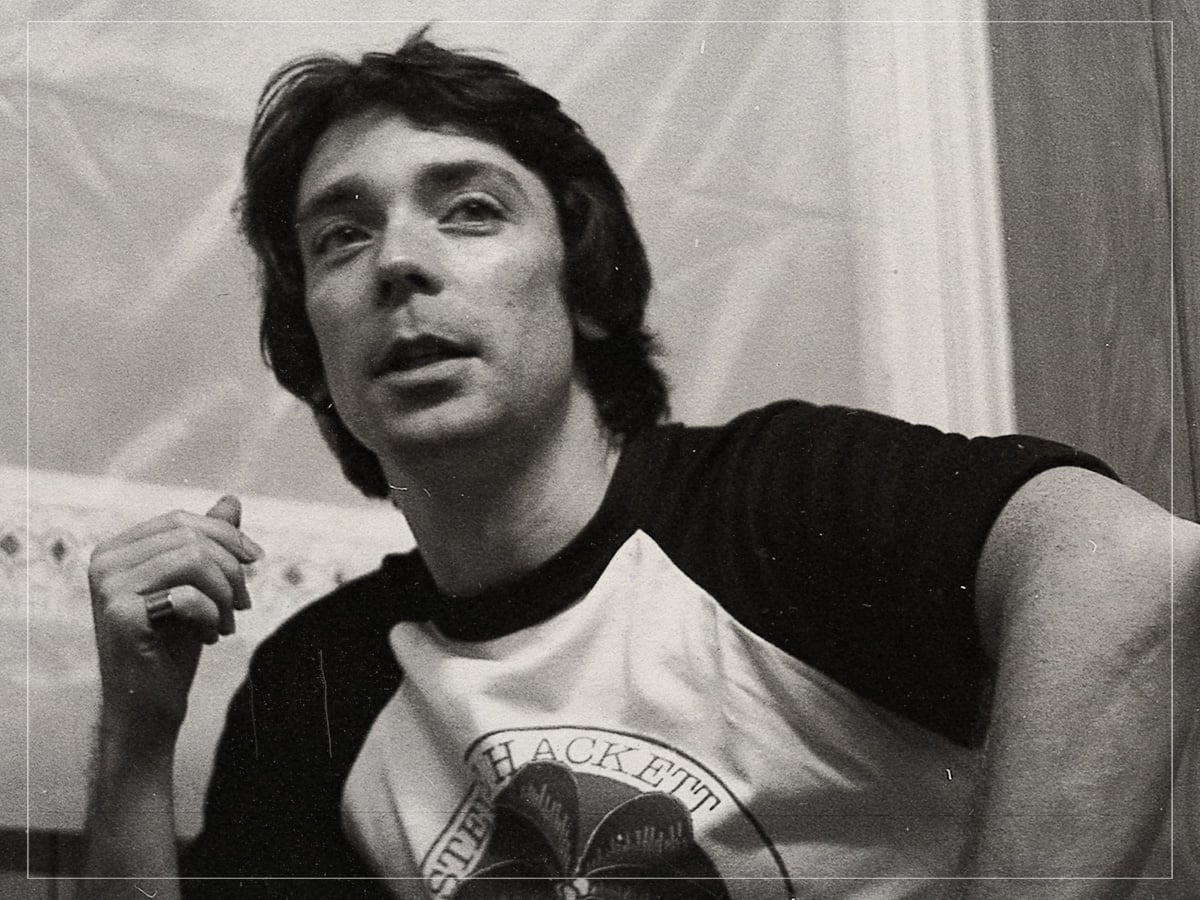
“I love Eddie’s playing and he credited me with an influence; that’s good enough for me,” Hackett told The Metal Voice in 2023. “It’s a prototype tapping, the technique that I did and that he [Van Halen] named.”
Try as they might, no guitarist can completely own and patent a style of playing, and most players are quite understanding that everyone will borrow certain influences from their idols, from one generation to the next. Van Halen was a bit of a unique case, though, as the massive popularity of his band and the singularity of his persona and style did lead to a decade or more of stunted growth, arguably, in the wider hard rock ranks.
“I wouldn’t want to be a kid nowadays learning to play guitar,” Living Colour guitarist Vernon Reid told The Register in 1989. “The competition is frightening. If you can’t play Van Halen’s ‘Eruption’ within your first three months, your career is over.”
As an odd side effect of his totem-like mega stardom, Eddie Van Halen felt increased pressure, as well, unable to rest on his laurels or just enjoy playing for playing’s sake.
“Ed Van Halen is a good friend of mine,” Toto guitarist Steve Lukather said in 1989, “And believe it or not, he is very insecure. Here’s this brilliant guy who feels he can’t rest.”
Basically, from the moment he burst on the scene, EVH found himself not only having to live up to the expectations of his fans but also dealing with the routinely bitter and dismissive attitudes of other guitarists, including guys he’d looked up to. No, that didn’t include any members of The Jesus and Mary Chain, but it did include some fellas from Deep Purple and Aerosmith.
“Some guitarists would just give me the shaft with their eyes— you know, wouldn’t say hello, wouldn’t be nice, nothing,” Eddie told Guitar Player in 1982. “People like Joe Perry or Ritchie Blackmore, who all hate my guts anyway, they wouldn’t go out of their way to help anybody, because they would feel threatened. The more they hate you, the better you are. I mean, no other guitarist is gonna hate you if you’re no good—you’re no threat.
“Hey, the way I look at it, I wish there were more people that were innovative, so I would have somebody to cop licks from. It might sound a little egoed-out, but there are very few guitarists that make me turn my head and go, ‘Whoa! How did he do that?’”
