


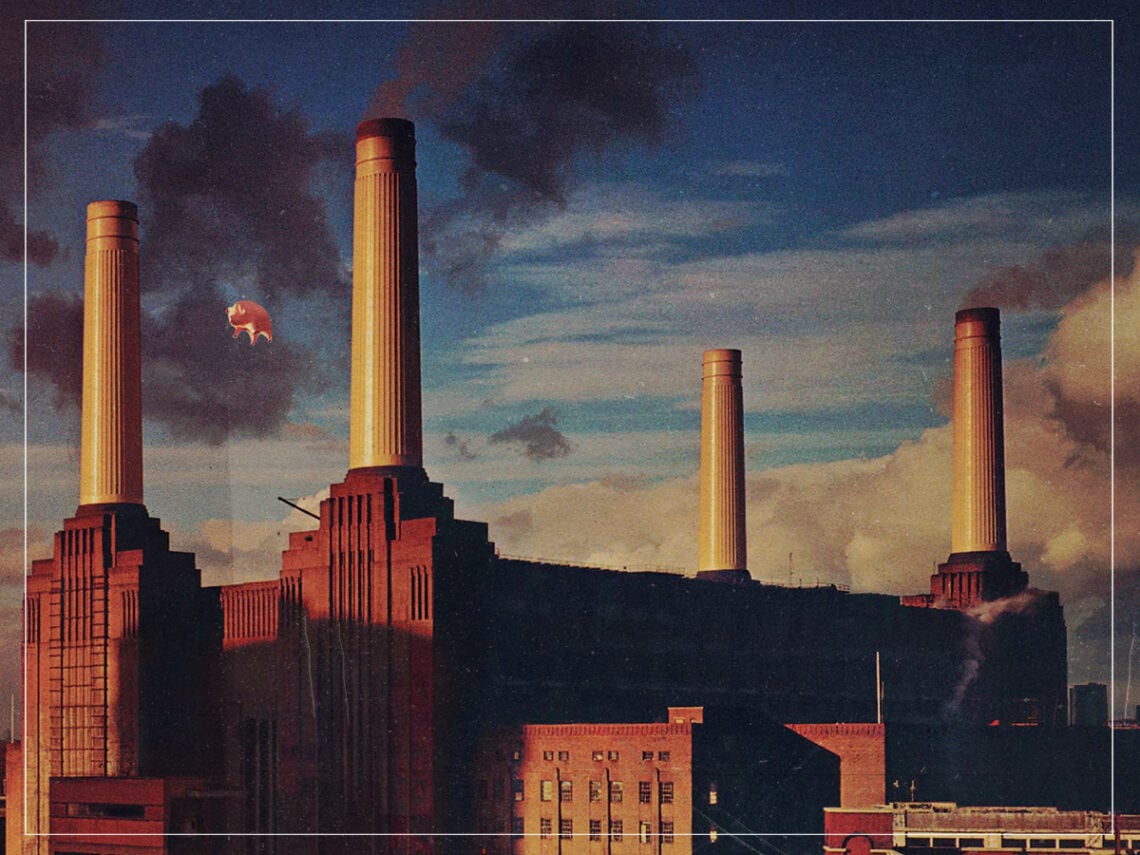
Where is the Pink Floyd ‘Animals’ cover?

For many of us, cover art and album artwork can be just as poignant and memorable as the music itself. These images aren’t just plastered on bedroom walls or printed on T-shirts; they occupy a deeper space within our psyche, becoming inseparable from how we think about our favourite musicians and their work.
Pink Floyd’s cover for their 1977 album Animals is a prime example of iconic album artwork. Captured at the art deco Battersea Power Station in south London, the image presents a stark and bleak scene, with thick, inky plumes of smoke obscuring what might have once been a clear blue sky. However, the most striking detail is the giant inflatable pig, “Algie”, drifting between two of the station’s towering chimneys. This 40-foot inflatable wasn’t a spontaneous addition but a carefully planned part of the shoot, designed to hover dramatically above the power station and become a lasting symbol of the album’s themes.
Built in 1935, Battersea Power Station has played a prominent role in pop culture, appearing in Help! by The Beatles and gracing the album artwork of The Who and Morrissey. At the time of Animals’ release, the station was reportedly supplying over 20% of London’s electricity, a testament to modern energy efficiency of the era, but its prominence soon took on a more symbolic role. It became an emblem of the looming, dystopian shadow cast over contemporary Britain by corporate greed and the unchecked power of big bosses and fat cat bankers.
Based loosely around the concept of George Orwell’s novel Animal Farm, the album explores the more brutalist layers of society in which greedy pigs and vicious dogs rule over placid sheep, a direct metaphor for the richest and most powerful ensuring working class people remain on the lower rungs of the societal ladder; an angry and warranted protest against modern day capitalism.
The track ‘Pigs (Three Different Ones)’ opens with an eerie keyboard intro like some kind of demonic riff from a horror movie. Roger Waters sings of pigs, with their “all tight lips and cold feet” as they keep a vice-like grip on society, while the song ‘Sheep’ portrayed everyday people as inadvertent followers of the regime, “Harmlessly passing your time in the grassland away”. The track begins to take a more vicious turn as the sheep rise up against their oppressors, a moment not too dissimilar from the riots taking place in Brixton the previous summer.

In this case, the Animals cover was designed by Hipgnosis, an English art design group based in the capital who have specialised in creating some of the most famous musical artworks for more than four decades. Their commissions included work for T-Rex, Black Sabbath, Led Zeppelin, AC/DC, Paul McCartney, Wings, Genesis, Electric Light Orchestra and countless more, including their design for the cover of The Dark Side of the Moon.
On a blustery December day, co-founder of Hipgnosis, Storm Thorgerson, arranged for the photoshoot to take place outside the station, bringing Waters’ initial idea to life. Unfortunately, the pig malfunctioned during flight, causing them to return to the shoot the next day. Later that day, the pig’s cable had unexpectedly snapped, causing it to disappear from view at around 30,000 feet like something out of an Only Fools and Horses sketch. With Heathrow only a matter of miles away, chaos naturally ensued. Flights were cancelled, and a real-life manhunt, or pig-hunt, as it were, was underway by specialist RAF fighter pilots. Algie was eventually retrieved, to Waters’ relief.
The album’s inner artwork was equally as dark and unsettling, with 11 monochrome photos laid out in a macabre fashion, with Algie the pig appearing in three of the photos. In black and white, the pig appeared to look more menacing, like the obituary of a Thanksgiving parade float that had tragically met its fate. The artwork is suggestive of the mechanical, industrial wheel that modern Britain was constantly oiling and turning, not only to the point of physical collapse, but to the detriment of regular working people struggling to earn a proper living. Reasonable wages and a more comfortable way of living was out of reach for many people in the UK during the 1970s. It was a dream that didn’t seem all that achievable, more something that could only happen ‘if pigs could fly’.
A pre-curser to The Wall in 1979, Animals can be considered somewhat of a transitional masterpiece. Charting at number two, the album sold well, despite its intense and harrowing subject material. Defined by its finger-pointing nihilism and doom-and-gloom attitude, it remains a classic in the band’s catalogue for its raw honesty, with the meaning of the cover art becoming the subject of worldwide speculation and study.
Fast-forward to today, Battersea Power Station has ironically transformed into a vibrant hub for people to eat, shop and enjoy themselves in a communal setting, a far cry from the drab world Pink Floyd had once held a mirror to. Although 1977 has passed us by, the political and socioeconomic narrative of the album still resonates with listeners today.
