


What is the hidden meaning of ‘Another Brick in the Wall (Part 2)’?

Nothing is ever easy with Pink Floyd. Being a band dreamt up in the weird mind of Syd Barrett pretty much guarantees that.
Although Barrett might have departed in 1968, they carried on the subversion and psychedelic chaos that he had in mind, with songs laced with saucerfuls of little secrets. When Roger Waters took creative control of the group in the 1970s, he turned their strangeness and similes towards a more direct political means. They were no longer just looking to change the world by way of wavy weirdness, but through a firmer political bent.
Waters was growing more frustrated with the world (and angsty in general). He was not prepared to be apathetic to the decline, exclaiming, “As far as my contemporaries, I am monumentally surprised how fucking scared my fellow musicians are to stick their heads out.” This notion informed the final throes of his time in Pink Floyd. He was determined to politicise the band.
Perhaps their most directly political song of all, in fact, is ‘Another Brick In The Wall (Part 2)‘. On the surface, it seems peculiar for a decidedly adult band to be tackling school life in a manner more aligned with the likes of Alice Cooper, who purposefully aimed their music towards the youth, but the surface here can be somewhat misleading.
While the anti-teacher chant at the centre of the catchy track worked a treat – for many, it is the first Pink Floyd song you get into, endeared by its youthful relatability – the intent of this was to capture attention and interest from a younger generation and then foist an important message upon them.
Beyond the catchy chant, it is what you would discover thereafter, once you dive beneath the shouting surface, that Waters was hoping to achieve with it. “You couldn’t find anybody in the world more pro-education than me,” he told Mojo in 2009. “But the education I went through in boys’ grammar school in the ’50s was very controlling and demanded rebellion.”
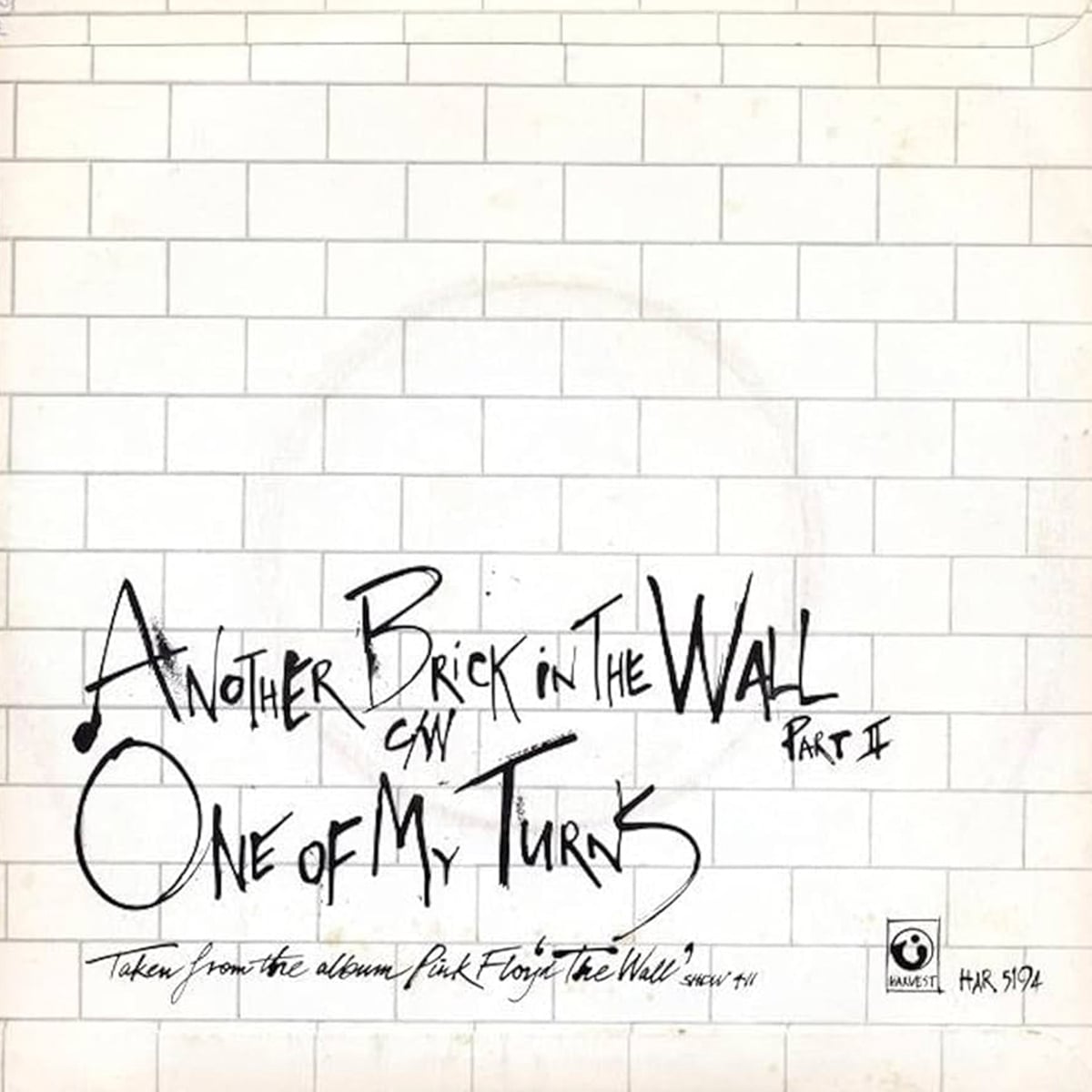
So, his hope was that the message of the song might prompt youngsters to rebel against more than just the authoritarianism of classrooms. As he explained, “The song is meant to be a rebellion against errant government, against people who have power over you, who are wrong.”
As far he was concerned the track was not a naive attack on academia, as some misleading critics would have you believe, it was a call to arms against belligerent control. The song “absolutely demanded that you rebel against that.”
Waters had done that successfully in high school, where his “weak” teachers tried to foist unfairness upon the class. Now, he was hoping the rallying cry of ‘Another Brick In The Wall (Part 2)’ would extend that sentiment beyond schooling.
In the song, teachers are seen as indoctrinating officers of authority, and schools are seen as oppressive systems that dehumanise and mould towards rigid conformity. When looked at in these terms, it’s not hard to see that Waters’ concept was actually breaking down compliance to a brutal society rather than being about using your ruler to slyly fire bogeys into Ms Haverstock’s curly locks.
What was the meaning of The Wall?
The irony is that almost the inverse of what Waters hoped for unfurled in the wake of the quasi-protest song. The track was a commercial triumph, selling more than four million copies and topping the charts in 14 countries. Meanwhile, it failed to inspire any degree of political uprising. It was assimilated into the same oppressive capitalist system it takes a swing at like just another brick in an insurmountable wall.
Furthering this irony is the fact that the bigger the song became, the more its subversive message was diluted. As MTV and mainstream radio presented the track to a younger and more casual listening audience, the ‘Hey teacher’ surface became more notable than the analogy beneath it all.
The intent was to make it accessible in a bid to spread the message far and wide, but as soon as it achieved that status, it was co-opted by what it rebelled against and nullified (with this in mind, it’s easy to see why Waters has been much more politically stern and forthright in his later years).
However, in retrospect, this co-option is where you might find a deeper sense of meaning in the song. It is not without irony that Waters dipped back into the past when coming up with his schooldays framework. In the 1950s, when he was upending lessons, genuine political liberation seemed far more plausible than it did when the track was released in 1979.
So, even within the bold defiance and undeniable stomping grit of the song, there is at least a sense of nostalgia for the days when collective resistance really was toppling walls of oppression, securing the formation of the NHS, and imposing taxation on the rich.
This is where the unending sentiment of The Wall comes into it. The construct that Waters creates is an unending one. The metaphor is an unyielding, unimpeachable, capitalist reality made up of the bricks and mortar of everyone who functions within it.
The lore of the band pretty much finds its end at this point, too, a fittingly poetic dirge, borne from the possibility of weird counterculture, Waters and his cohorts now found themselves disgruntled yet at a creative peak, as fiercely political as they had ever been, and yet unable to swing a subversive sledgehammer in the way that their mere whimsy once achieved just over a decade ago.
