


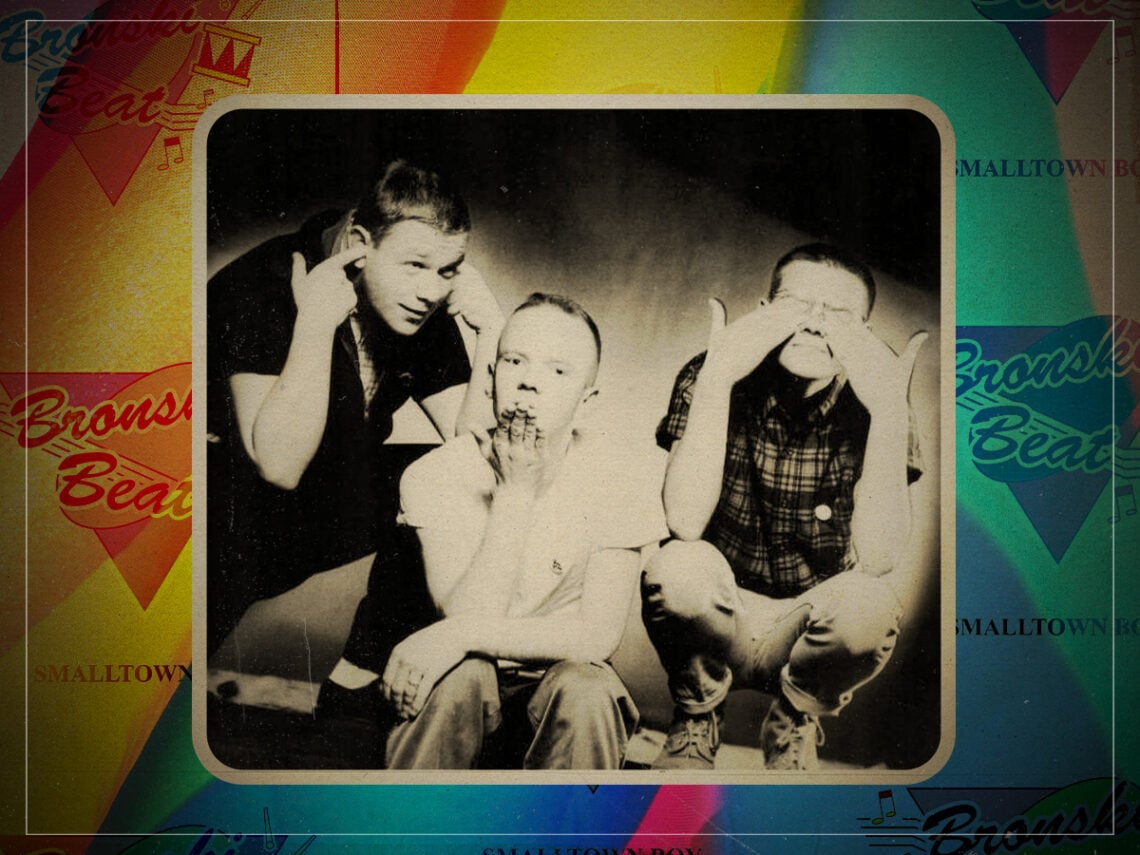
‘Smalltown Boy’: When history was made in a small London club

A couple of years ago, Bronski Beat’s charming pop anthem ‘Smalltown Boy’ turned 40. In those decades, it’s been easy to forget the many wins the LGBTQ+ community has celebrated, overshadowed by the reality of existing in a society that keeps trying to reclaim something it never had the right to in the first place.
By 1984, the year of the song’s release, Britain was hardly the same sort of welcoming place for queer people as it appears to be now. That is, in the legal aspect, with the age of consent for ‘homosexual acts’ remaining at 21, while other European countries had lowered this to 16. Over in Scotland, where Bronski Beat’s Jimmy Somerville is from, homosexuality had only been decriminalised in 1981, three years before ‘Smalltown Boy’ smashed the charts.
At the time, Bronski Beat emerged against all odds, with Steve Bronski, Larry Steinbachek and Somerville meeting in Brixton in 1983 and doing only nine live shows before being signed to London Records. ‘Smalltown Boy’ was their first single from their debut album, the aptly titled The Age of Consent, tackling the semi-autobiographical story of a boy who escapes an abusive household to find safety and belonging in the big city.
As bleak as it seems, though, ‘Smalltown Boy’ is powerful not in its darkness but in its own euphoria, with electronic chimes and a timeless groove that symbolises everything great about queer music culture in 1984. Namely, how tragedy and suffering can be reclaimed as a source of empowerment, morphed into a badge of resilience and self-discovery, existing as a stark reminder of the possibilities of liberation when all hope seems lost.
For many people, that’s the same sort of emotional response the song conjures today, and also another reason why it continues to be worthy of its gay anthem label. Because ever since day one, the song has represented a cultural shift, marked by its dancefloor grooves and joyful tone, and bolstered by the fact that, even in today’s social media-first world, it continues to make waves with the new generation.
Or, as ex-London Records’ Colin Bell told The Guardian, it still “means something”. Bell even went so far as to compare it to a folk song, not because of how it sounds, of course, but because of how much it endures, passed down through the years like a true canon of modern pop culture. Remarkably, he also highlighted that, at one point, the top three British singles in the charts were songs by Frankie Goes to Hollywood, George Michael, and Bronski Beat.
And where these artists and songs thrived was in their own fearlessness, not by accidentally appealing to an entire community of oppressed people, but because they largely embodied that group themselves and weren’t afraid to show it or step up and be that North Star. As Bell also explained, that was “the point of the record”: to bring people together and fight back where it counted.
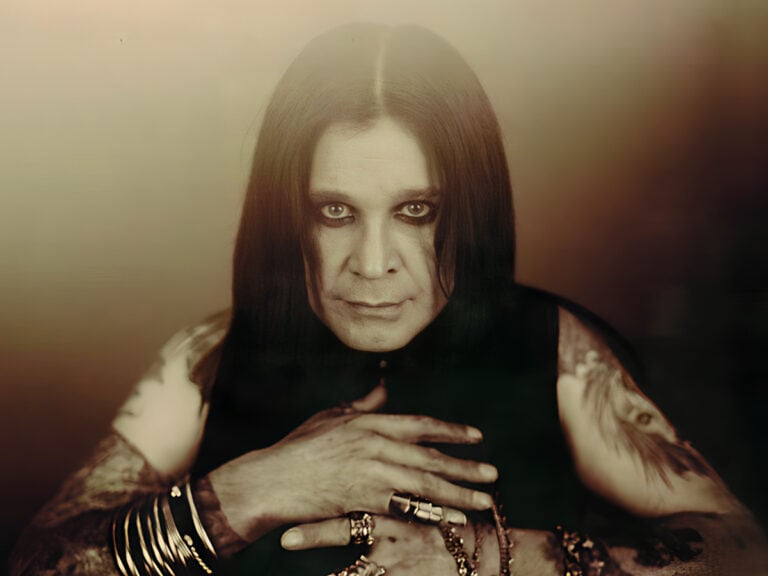
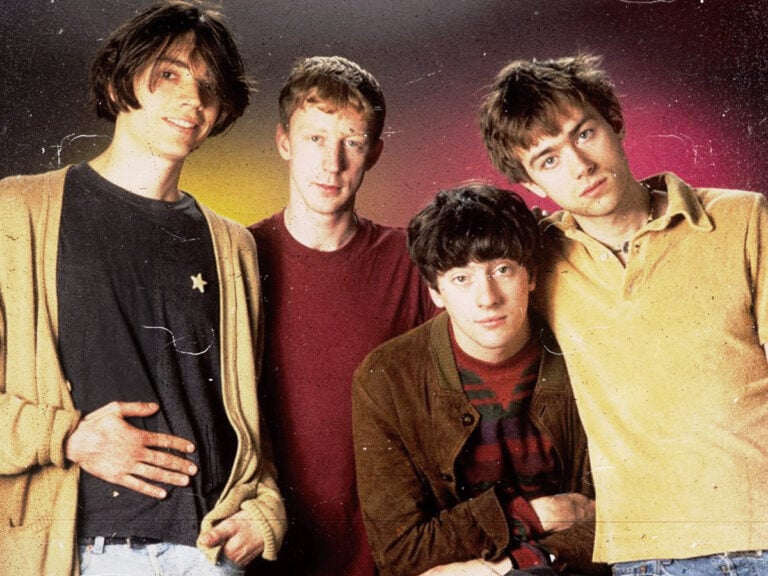
The first time the song was played in a nightclub, it was blasted out to a sea of unsuspecting clubbers at London’s Heaven in 1984. Bell and co had been in the studio earlier that day and decided to head down to the club to play it for the first time, filled with nerves and uncertainty about how it’d be received by the people on the floor.
“Nobody had ever heard it before,” Bell told The Guardian, saying that the first response from the audience was them slowing down a little, trying to figure out what the song was and what it was trying to say. “You could hear them listening to what the record said,” he said.
“The response was extraordinary. So [Heaven DJ Ian Levine] played it again. It is a little bit of history, isn’t it?”
This reaction no doubt marked the start of a historical legacy that ventured beyond the darkness of the song’s origin story. Even as LGBTQ+ rights have improved, or at times when things seem especially troubling, ‘Smalltown Boy’ remains a significant touchpoint for both reflection and celebration, reminding us not to forget to acknowledge both our wins and the figures who made progress possible.
After all, in the years since ‘Smalltown Boy’ was released, homosexuality was declassified as a mental illness, same sex weddings and adoption became legal, and Stonewall was formed with founding member Ian McKellen in response to Margaret Thatcher’s Section 28, which was eventually repealed. More rights to protect LGBTQ+ people in the workplace came into effect, the age of consent was reduced to 16, and trans people were given full legal recognition for their gender.
Even in a time when hatred often appears louder than acceptance, it’s easy to feel like society is regressing. But when we’re equipped with the drive to keep pushing, armed with anthems like ‘Smalltown Boy’, change seems more possible than ever. And with songs like these that keep the energy no matter the time or place, it seems like a sure thing, too.
As Bell put it, “‘Smalltown Boy’ captures your soul [and] gives you a three-minute experience that is life-enhancing.”
