


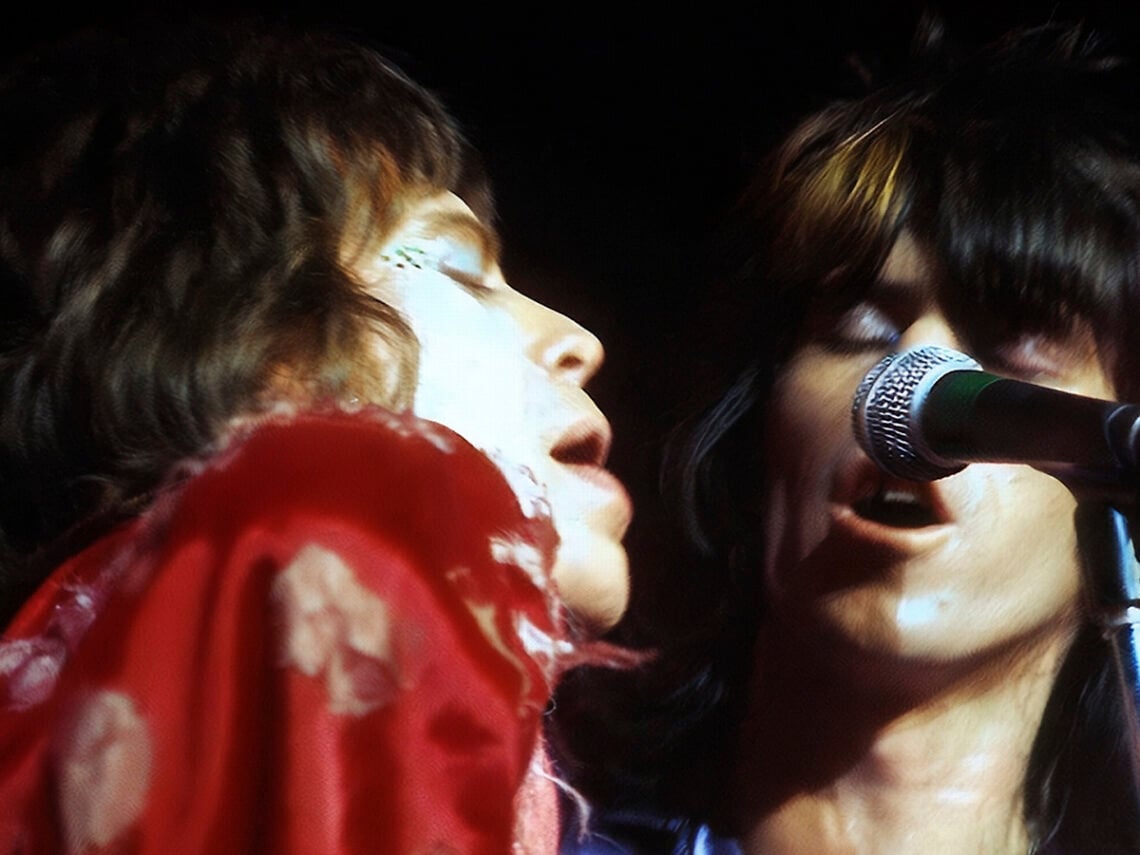
When did Mick Jagger perform solo for the first time?

The year was 1985, and Mick Jagger was in a mood. Not for the first time, you might think, but this particular spate of bad feelings had some pretty seismic repercussions. The great Rolling Stones war of Dirty Work was not too far ahead on the horizon, with Jagger and Keith Richards’ antics up to that point not exactly doing a lot to douse the fire. In fact, they were just fanning the flames.
Of course, this period of ill-fated brawling from one of the world’s biggest rock bands unfortunately coincided with one of the world’s biggest-ever musical events – Live Aid. To this end, The Rolling Stones really should have been a critical name on the bill, but it seems even in the spirit of charity they couldn’t put the guns down for a few minutes to trawl out some old favourites from more peaceful times.
But despite their broiling feud, Jagger and Richards were too savvy – or maybe vain – to fully miss out on the opportunity. This marked a new chapter for Jagger in going it alone, as he took to the Wembley stage not with his bandmates but, for the first time, as a solo artist.
For his part, Richards took the route of backing up Bob Dylan, which turned out not to be his finest performance. But this time apart did nothing to settle the tensions between the pair, and instead only seemed to give them a taste of the good stuff. It was the primary reason Dirty Work was commandeered by Richards the following year, as the luxuries of single life blinded Jagger.
However, one track on the album was a particularly apt – if star-studded – reflection of their circumstances. ‘One Hit (To the Body)’ seems loaded with a fairly pointed sentiment, even if Richards insists those jabs are purely metaphorical. Along with that theme, he and Jagger are seen fighting in the video. Who knew that a secondary use of a guitar could be a weapon? – so much so that they had had to call in reinforcement.
That came in the form of Jimmy Page, who, more in the charitable spirit of Live Aid, had brought Led Zeppelin back together and subsequently provided the guitar solo to the brawling Stones on this track. He was also joined by one Kirsty MacColl, who was swung into action on backing vocals by her husband Steve Lillywhite. All in all, by the sum of their parts, they made it work, even if, by this point, Jagger had made his disinterest more than clear.
Ultimately, by the turn of the next decade, the blaze had come under control, and the Stones set out on tour for the first time in seven years in 1990 to promote Dirty Work’s successor, Steel Wheels. For all the period of the mid-‘80s may have been turbulent, however, in many ways it gave both Jagger and Richards a renewed lease of life in the industry that eventually led them to coming back stronger once they’d made their peace. In a funny way, they might not still be going today if the tensions hadn’t reached almost the point of no return.
