


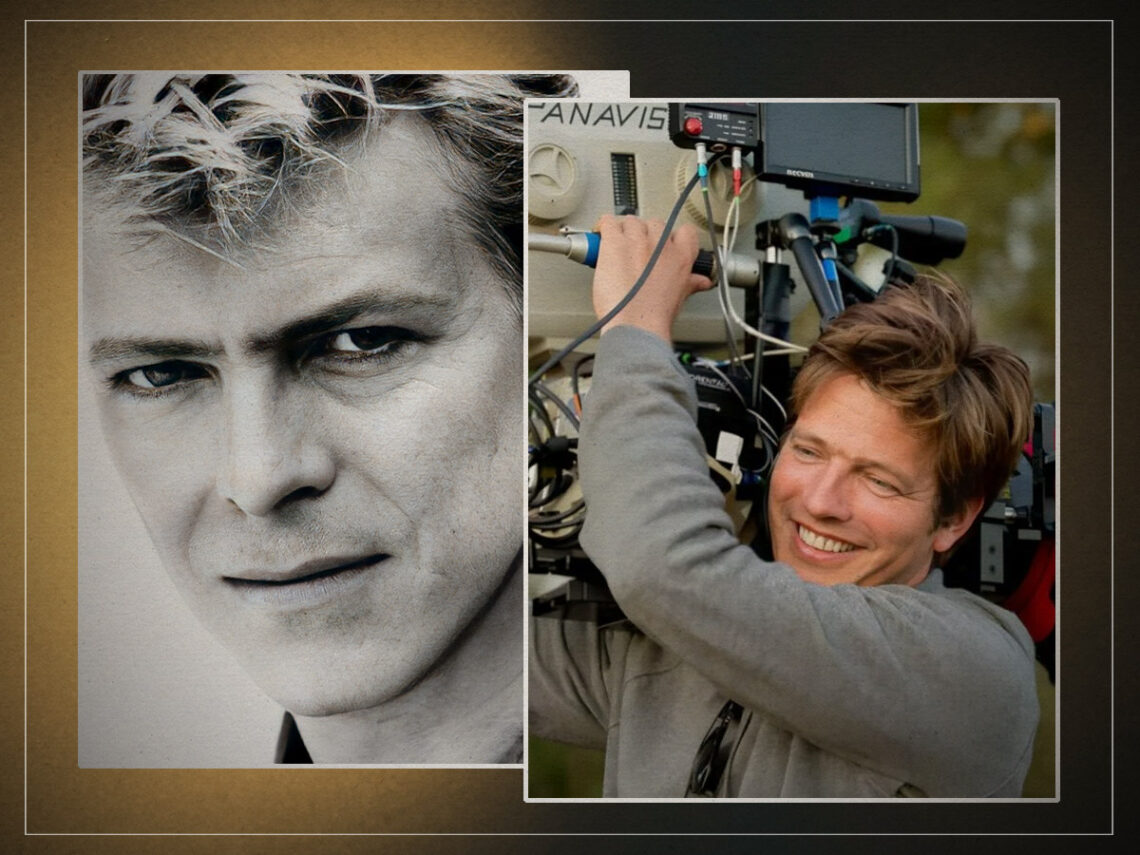
When David Bowie met Thomas Vinterberg: “We come from very similar worlds”

Upon initial appearances, you might not think that Thomas Vinterberg and David Bowie have too much in common—one makes films, the other made music. But there are a surprising number of similarities between them when you scratch the surface of their work, with both being unconventional and revolutionary artists who transformed art forms beyond the binaries of tradition.
Bowie was a rebel musician who defied all the conventions through his eccentric appearance and larger-than-life songs, while Vinterberg was achieving the same in a different way, through his involvement in the beginnings of the Dogme movement. Initiated by Vinterberg and Lars von Trier, the pair pioneered a new way of approaching cinema that was designed to break all the rules by creating new rules that went against current filmmaking practices, joining together in a celebration of chaos and stripped-back storytelling.
Interestingly enough, both Bowie and Vinterberg crossed paths and discussed this very idea, both bonding over their creative philosophies and frustrations with the machinery of the industry as a whole.
During their conversation, which took place in 2002, both artists realised that they had many things in common after sharing their approach to creativity, with Bowie sharing his love for the movement and independent film. The singer had a versatile career that involved his work as a musician and as an actor, starring in films like Labyrinth, Christiane F and The Last Temptation of Christ, giving him a unique insight into both worlds.
When chatting, Vinterberg lamented the fact that filmmaking was then the most conservative art form, with Bowie highlighting their shared experiences by saying, “Same for music. We come from very similar worlds, you know that. There’s a big industry push for both industries”.
Vinterberg responded, “In order to break free from it, we kind of had to stand together and make rules for it. Back to a very naked beginning”, to which Bowie highlighted how this had been his approach to Tin Machine, the band that was formed by the singer in 1988 alongside Reeves Gabrels, Tony Fox Sales and Hunt Sales. The singer explained, “I call that Tin Machine. It’s actually not a dissimilar idea. It came from the same motivation of wanting to strip back and find a new set of rules. I think Dogme does much of the same thing.”
However, when something is recognised as unconventional/different, it usually becomes popular and is copied by many others. Individuality is now a trend that is mimicked by those with no individuality, an idea that Vinterberg echoed by saying, “Dogme is five years old now, and it’s becoming, in Denmark at least, its own convention now. So it’s slowly dying.”
Dogme was one of the most daring and groundbreaking movements in cinema, with many artists who later mirrored the style of both Bowie and Vinterberg, honing in on the heart of their discussion and how what is new will always become old, and how certain radical ideas will eventually become the norm until it is time to reset the lines.
