


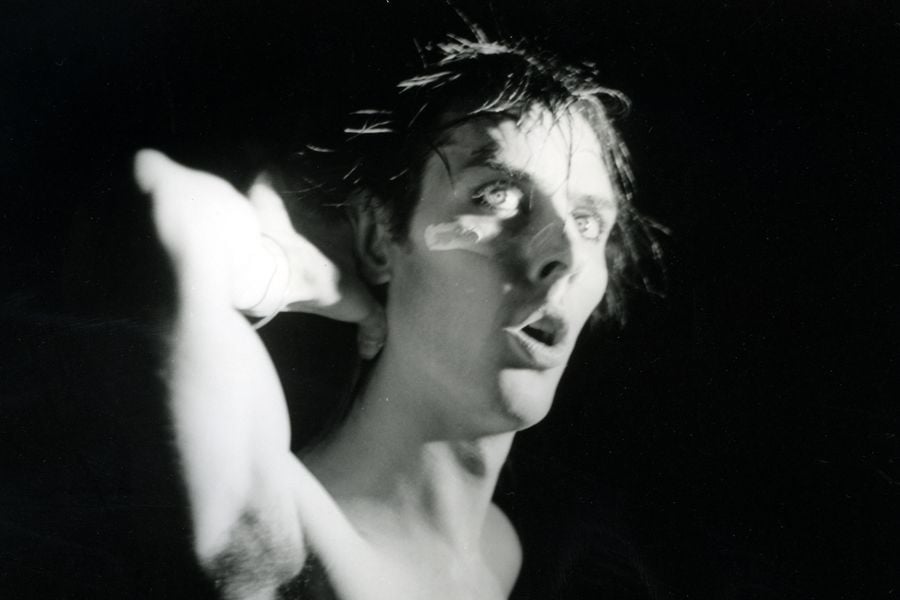
‘A God in an Alcove’: when Bauhaus killed rock ‘n’ roll

Few artists can boast such an essential debut single as Northampton post-punks Bauhaus. Released in 1979 on the independent Small Wonder label, the nine-minute ‘Bela Lugosi’s Dead’, a vampiric nod to Dracula’s most iconic performer, is credited with inventing the entire goth sub-culture as we know it today; a legacy frontman, Peter Murphy is frequently loathe to acknowledge.
Their brooding earnestness and mordant strut could often rub the press the wrong way. While retrospectively acclaimed, contemporary critical reception was dire, Sounds and NME excoriating their 1980 debut LP In the Flat Field as bleak trudges through gloomy pretension. Perhaps just an example of the UK press’ taste for gratuitous, journalistic spite, but Bauhaus were always an infinitely more interesting band than the goth pigeonholing dared recognise.
“I think it became a problem of the fashion we had and we were unbearably rubbish in a genius way sometimes. I walked the walk, I came out and said, ‘I’m stronger than any man and more beautiful than any woman,'” Murphy told Collide Art & Culture Magazine in 2018. “I just owned it. Maybe it was that? We were quiet and didn’t mix with famous people much either.”
The ill will toward the journos and chattering classes reached its apex after future NME editor Steve Sutherland wrote a scathing Melody Maker feature on the band after having spent two days on the road with them, perfectly affable and good-natured throughout. After requesting a second piece, Murphy agreed on condition they “strap him up like St Vincent to a pole at the back of the stage” and whip him throughout. Funnily enough, the follow-up never materialised.
Murphy’s complicated relationship with celebrity adulation and the media circus’ hollow noise was explored early on. A rebuke against “the myth of rock stardom”, ‘A God in an Alcove’ poetically examines the fatal snuffing of deified egocentrism. “That god, that reality, was beautifully trashed,” he told SOMA Magazine in 2002. “The god was killed.”
It’s one of In the Flat Field‘s more cinematic cuts. David J’s dub bass rumbles amid the cavernous expanse, entwined with Daniel Ash’s spidery guitar, all percolating and trickling together in Bauhaus’ uniquely pervading fog. With a strange lyrical twist in tone, Murphy’s prior arcane and gilded references to faded proud idols and their fractured faces soon give way to repeated murmurs of “now I am silly”.
It’s an intriguingly irreverent line that illustrates the vapid foundations of messianic self-obsession without concern for being any cleverer than it needs to be.
The song’s targeting of rock’s hubristic pitfalls nebulously hovered over Murphy’s later solo work. The second off 1989’s Deep, ‘Cuts You Up’ similarly explores the fraught and precarious inner journey one must take to see the bullshit for what it is. “The path of discovery, self-knowledge, wisdom… once you feel you have it,” Murphy concluded. “Then the path will spit you out or off the way and ruin your assumptions of this path. In fact, it is a great, mighty necessity for those spiritual seekers or so-called ‘holy state’ desires when getting arrogant.”
