


Who invented the gothic music genre?

The stereotypical image of a goth—complete with big hair, pale makeup, and black clothing—has become a cultural icon, but the subculture itself is far more complex, having evolved from a diverse array of influences over time. Central to the goth identity is its music, which plays a significant role in defining the aesthetic and ethos of the movement. While many bands may exhibit gothic elements, only a select few are considered truly goth by those who adhere to the subculture. These distinctions are shaped not just by sound but by the mood, themes, and artistic sensibilities that align with goth culture’s deep connection to darkness, melancholy, and introspection.
Following this trail of thought, you might ask a table of friends over a few pints, “What is the common thread between Siouxsie and the Banshees, Type O Negative and Drab Majesty?” The answer would be goth. Yet, it’s a guarantee that if you asked people from the subculture what their thoughts on this would be, it would prompt divided responses, as each of these acts fit into other broader categories, including punk and metal for the first two.
Such a point also clearly outlines just how much of a broad church the gothic subculture and its music is, as what defines something as gothic goes far beyond plainly black garb. In music, it’s also an umbrella term. Still, in its original, post-punk offshoot, it was scratching guitar patterns, driving, often melodic basslines and hypnotic drum beats, which tended to be tom-heavy. Add a captivating frontperson to the mix, with an expressive form of delivery and a penchant for dark themes, romantic, existential, or religious, and you’d get what comes closest to the definition of gothic music.
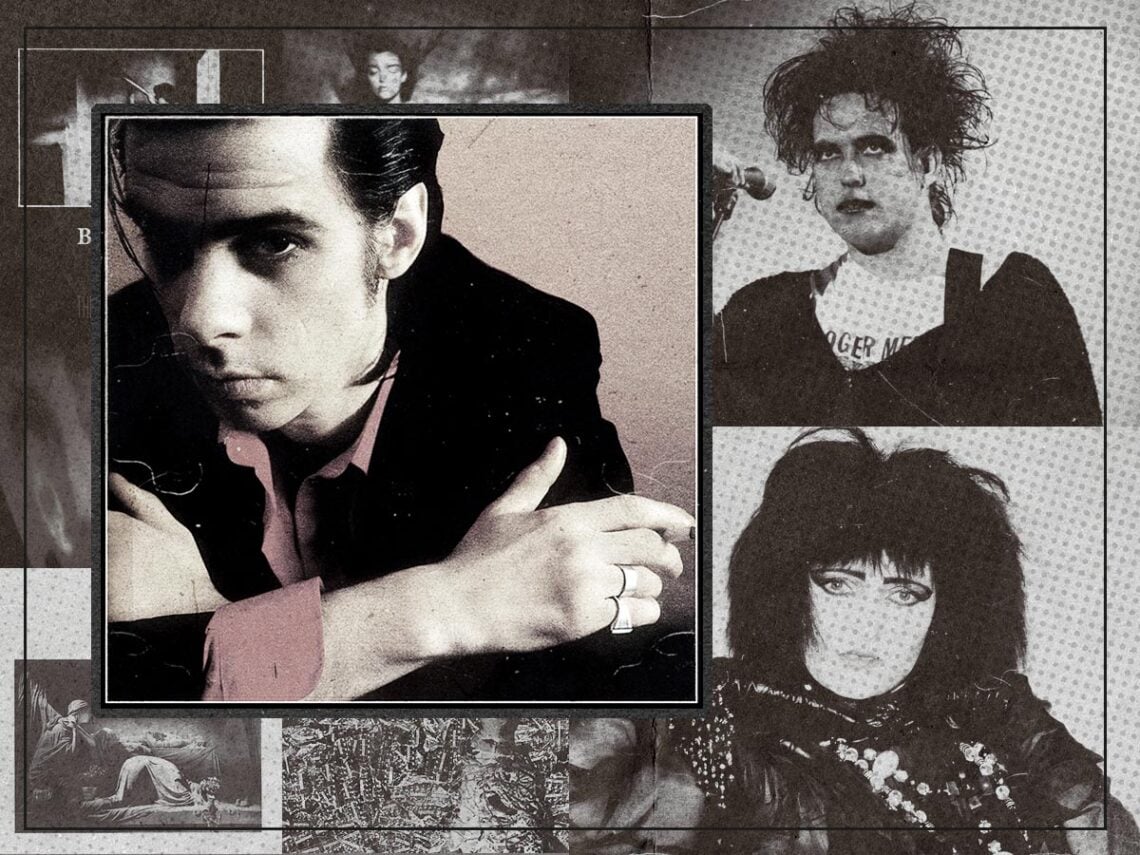
For this reason, the pioneers of the genre are hailed as Siouxsie and the Banshees, Bauhaus, Joy Division, The Cure, The Sisters of Mercy, and Killing Joke, given that they were the groups that helped jot the blueprint for future ones, who would take the form in the various directions that we know it has explored today.
The first wave of goth bands drew heavily from a variety of sources, shaping their distinctive sound and ethos. While they are celebrated for their originality, it’s crucial to recognise the significant influences that contributed to their music. The anti-establishment spirit of early punk was a key factor in helping them reject conventional norms, ironically showing them what they didn’t want to emulate as the punk scene itself devolved into excess and chaos only a few years after the Sex Pistols’ explosive debut.
However, goth rock wouldn’t have evolved as it did without the trailblazing efforts of glam rock pioneers like Marc Bolan, David Bowie, and Iggy Pop. These artists, with their theatricality and defiance of societal expectations, laid the groundwork for goth’s darker aesthetics. Additionally, the proto-punk sounds of Lou Reed’s The Velvet Underground and Iggy Pop’s The Stooges, who boldly explored themes of human darkness and existential angst, were instrumental in paving the way for what would later be known as gothic rock.
It must also be noted that several other artists tapped into the domain years before it had even been thought of as anything akin to the goth aesthetic we know today. These include The Doors, with their stoned fantastical trips balanced on Jim Morrison’s lyrics and sparse music prone to explosive pangs, Alice Cooper, with his shock rock approach and generally macabre live shows, Black Sabbath with their occult-fascinated debut album, and Can with their own entirely subversive work.
It was through the likes of Siouxsie and the Banshees, The Cure, and the other British bands the post-punk era produced that the genre spread in the early-mid 1980s and came to feature an array of distinct acts, such as Christian Death, Cocteau Twins, The Cult, Nick Cave, Xmal Deutschland, Swans, The Cramps, The Gun Club, Fields of the Nephilim, The Mission, and others.
So, which band created goth music?
While Siouxsie and the Banshees’ 1978 debut, The Scream, has been celebrated by the likes of The Cure’s Robert Smith and the late Killing Joke guitarist Geordie Walker for instituting what became aspects of gothic music, including John McKay’s effects-covered sound, it became a more definable metier after the release of Bauhaus’s debut single, ‘Bela Lugosi’s Dead’, which arrived in late 1979.
Although it didn’t seem so at the time, it was after that moment that bands started playing more explicitly with gothic elements, and that is why it has retrospectively been figured as the start of goth music. Ironically, it was incidental, too. Frontman Peter Murphy would later claim that the track, which referred to Dracula actor Bela Lugosi and his monochrome vampire movies – not to mention the minimal but narcotic music – was tongue in cheek. As the audience failed to understand their subtle irony, though, they saw the song as totally serious, and so began the goth style as a set of definable characteristics.
