


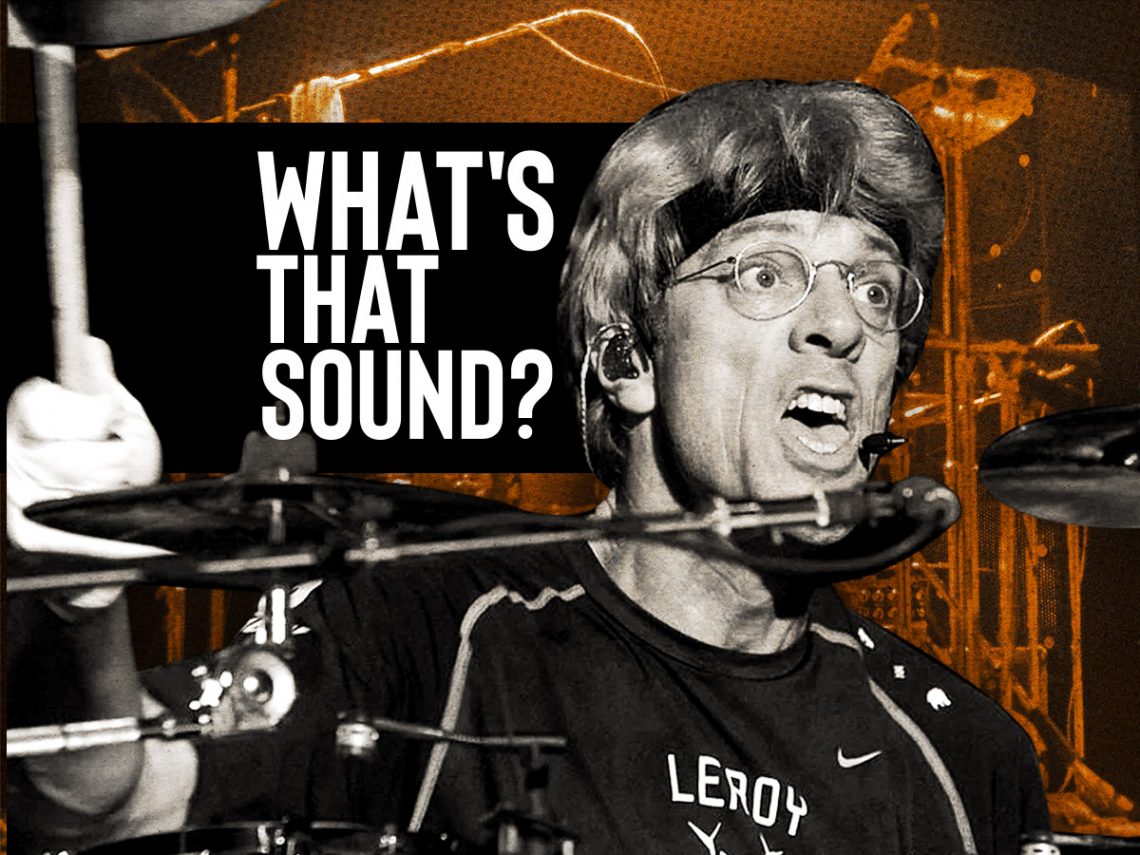
What’s that Sound? Stewart Copeland’s delayed drums on The Police’s ‘Walking on the Moon’

Stewart Copeland had always been a forward thinker when it came to music. Whether it was by embracing the punk scene as an expatriate in England during the mid-1970s or incorporating new synthesiser sounds into the records he was making with The Police, Copeland always seemed to be one step ahead of the curve.
But perhaps Copeland’s biggest step forward as a musician came when he stumbled upon a Roland Space Echo. Delay effects had been a major component of dub music for at least a decade when Copeland got around to it, and since The Police were already playing reggae-inspired rock, the delay became an essential tool for Copeland’s drums.
“The delay was a chance discovery which made cool hi-hat stuff really easy,” Copeland told Rhythm Magazine in 2016. “It was a simple trick which is a one repeat delay, so it doesn’t have multiple delays and it doesn’t build up, it’s just one repeat and that makes it much more crisp and with different settings you can get different rhythms.
“The basic one, which turned into a guitar technique that you can hear all over not only Police albums but U2 albums as well, is the dotted eighth note, or quarter note, delay,” he adds. “What that means is, when you go ‘chunk, chunk, chunk, chunk, chunk,’ the delay of it is a repeat of the one before the last chunk that you played, so the result is ‘chugga-chugga-chugga-chugga’. Instead of it just being hit-repeat-hit-repeat, it’s hit and then repeat that you’re hearing is a repeat of the hit before the last hit. Am I making any sense? It’s one step removed, and the note value is either a dotted quarter note or a dotted eighth note.”
The first album where Copeland managed to implement his new delay technique was on Reggatta de Blanc. The album’s title track became a playground for Copeland’s new mastery of effects, but most listeners would first hear Copeland’s new delay fascination on the song ‘Walking on the Moon’. Just before Copeland and the band were set to record the album, they came into a large windfall of money.
“One afternoon when we got a payday, we were touring in America and one day we were in New York with money in our pockets and we went down to Manny’s Music store on 48th Street, a dream of many musicians to go down to Manny’s,” Copeland claimed. “We just picked instruments off the wall. Sting and I both bought Stratocasters, loaded up on Roland amplifiers as Roland was the brand of the day. We got every Roland device they made – Sting and Andy each got a set of bass pedals, amps, and delay lines. The Roland Space Echo, Andy got one, so I wanted one too and I got me one.”
Adding: “The next day at soundcheck out in Long Island, we brought all our new toys, arrayed on the stage. They’re trying to get the sound together and we’re playing with all our new toys! With my new Roland amp and my new Roland echo device, I’m sitting there playing my drums and I haven’t got a guitar but I want to play with my echo, so I put my snare drum through the echo. Within seconds, ‘whoa! This is cool!'”
“And so we spent the afternoon in an orgy of repeat echo and totally fucked up the gig that night with repeat echo and that was the beginning of it,” Copeland concluded. “It became more refined. I had a foot switch where I could switch it on and off so I could have it for the verse and then switch it off for the chorus when I don’t want all that clattering going on. There were other ramifications where sometimes I could feed the kick to it and other times it’s on the snare drum and other times on the hi-hat.”
Copeland’s mastery of delay pedals opened up new sonic realms for The Police. By the same token, new advancements in technology inspired Sting and Andy Summers to begin composing outside the traditional three-piece punk set-up of the band’s early years. Soon, The Police would become a pioneering act of new wave, and it all started with an echo unit.
Check out Copeland’s isolated drums on ‘Walking on the Moon’ down below.
