


What was the first song to use backmasking in music?

A song that’s potentially going to be heard by millions of people maybe isn’t the most conventional place to hide your deepest, darkest secrets, but there’s also something quite mysterious and exciting about trying to decode a hidden message: a private listeners club, if you will, for superfans turned Agatha Christie wannabes meticulously searching for any scrap of clues or information as to lyrical meanings and sonic suggestions. Unfortunately, over time, this process became too easy to work out, so the musicians had to one-up us. They did that in the form of backmasking.
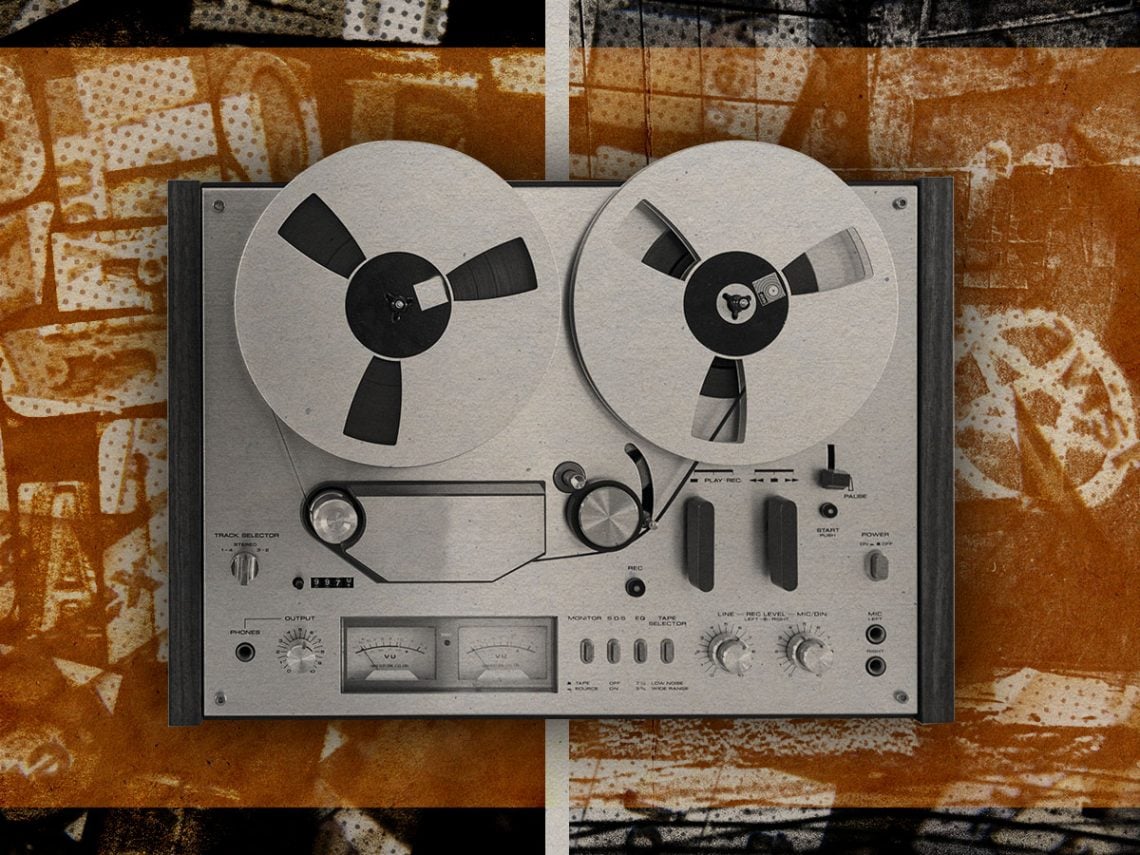
The technique of backmasking is essentially what it says on the tin – a message or lyric is recorded onto a forward-playing track in reverse in an attempt to scramble the words or censor certain elements of it. This came to be a bit of a fad within songs starting in the 1950s and ‘60s, with The Beatles often using it in their rock days and other heavy metal and rock artists popularising a resurgence in the technique throughout the 1970s and ‘80s.
Of course, with something so artistic and innovative, many may lay claim to having used backmasking first. But to set the record straight, we have the real answer. Despite them having made the technique’s name, The Beatles were, in fact, not the first to implement the recording method into their songs.
So, who was it?
That would be the pop vocal group The Eligibles and their song ‘Car Trouble’, released in 1959. It depicts the story of an ill-fated boy whose car gets stuck when trying to take a girl home. When he eventually returns her, the girl’s father comes to shout some indiscernible messages – but actually, that might not be strictly true.
Though these words are seemingly indistinguishable, backmasking allows us to hear that he supposedly says, “And you can get my daughter back by 10:30, you bum!” and ‘”Now, lookit here, cats, stop running these records backwards!”. While ‘Car Trouble’ as a song in itself was not all that critically successful, it did set a precedent for a technique that would take the musical world by storm and most clearly caught the attention of the Fab Four.
The Beatles would backmask various lyrics throughout their discography – one of which infamously initiated a whole conspiracy theory. Rumours were abound in 1969 that Paul McCartney was dead due to backmasked lyrics on ‘Revolution 9’ and ‘I’m So Tired’ from the White Album. Lines from both songs respectively allegedly said, “Turn me on, dead man” and, “Paul is a dead man, miss him, miss him, miss him”, sending fans into a frenzy and hugely popularising the technique in rock music throughout the following two decades. But, like most things, someone had to put a stop to all the fun.
Eventually, by the late ‘70s, the idea of backmasking became mired in controversy as sections of evangelical Christian groups became concerned that the increasing use of the technique was being employed to hide disturbing satanic messages that were corrupting the youth. Whether this was true or not remains to be decided, but what’s a good story in the rock and roll canon that doesn’t cause a bit of a scene?

Never Miss A Beat
The Far Out Beatles Newsletter
All the latest stories about The Beatles from the independent voice of culture.
Straight to your inbox.