


A brief history of the musical dark art of backmasking

To understand what backmasking is and why it rose to mythic prominence, we must first consider the era in which it came to the fore. As a certain vagabond once grovelled, the times were a-changing as they had never changed before. Suddenly culture was not just a book by candlelight or some bloke with a fiddle who hands his hat around the pub. It was an everyday force. And those extolling it held more immediate sway than ever before.
As William S. Burroughs would once proclaim: “Artists, to my mind are the real architects of change, and not the political legislators who implement change after the fact.” Well, the artists coming through in the 1960s had spent their childhoods dwelling in the darkest days of human history. Therefore, it was only natural that they figured they would tackle life in a different way to their forbearers. Pop culture presented itself as the perfect engine to do so.
Peace and love were what was needed, so that was delivered like an assegai of liberation. Everything got freed up, and that set several stilted conservative noses out of joint. They wanted to get a handle on this wanton cultural explosion. However, they were out of the loop—it was like a geriatric trying to get to grips with the TV’s HDMI input. Suddenly, modern music was a form of black magic to the suited-and-booted status quo. And the kids knew this.
In part, this youthful knowledge came from the folly of the authorities themselves. When The Kingsmen recorded ‘Louie, Louie’ in a dinghy studio for $50, the lyrics were rendered unintelligible owing to the shoddy sound quality. But the level of incoherence worried FBI head J. Edgar Hoover. It was the height of the Cold War, and he worried that the college kids must’ve coded a secret commie message into their songs. Bearing in mind that this was in an era where LSD experimentation was rampant, this sort of illogical thought process was commonplace.
Thus, the song was banned, and that made it an instant sensation with the kids. What could be cooler than a forbidden record? And what could make the stuffy establishment look more foolish than a two-year uber-expensive investigation into a garage song with printed lyrics and a backstory discernible within a quick listen, let alone a passing probe?
This farce coincided with the covert backstory of rock ‘n’ roll. Hailing from the blues, the progenitors of the genre in the deep south had to code their chants with messages from the start. This would mean that secrets were passed on under the noses of plantation owners. Thus, it was naturally in the lifeblood of rock ‘n’ roll to be subversive.
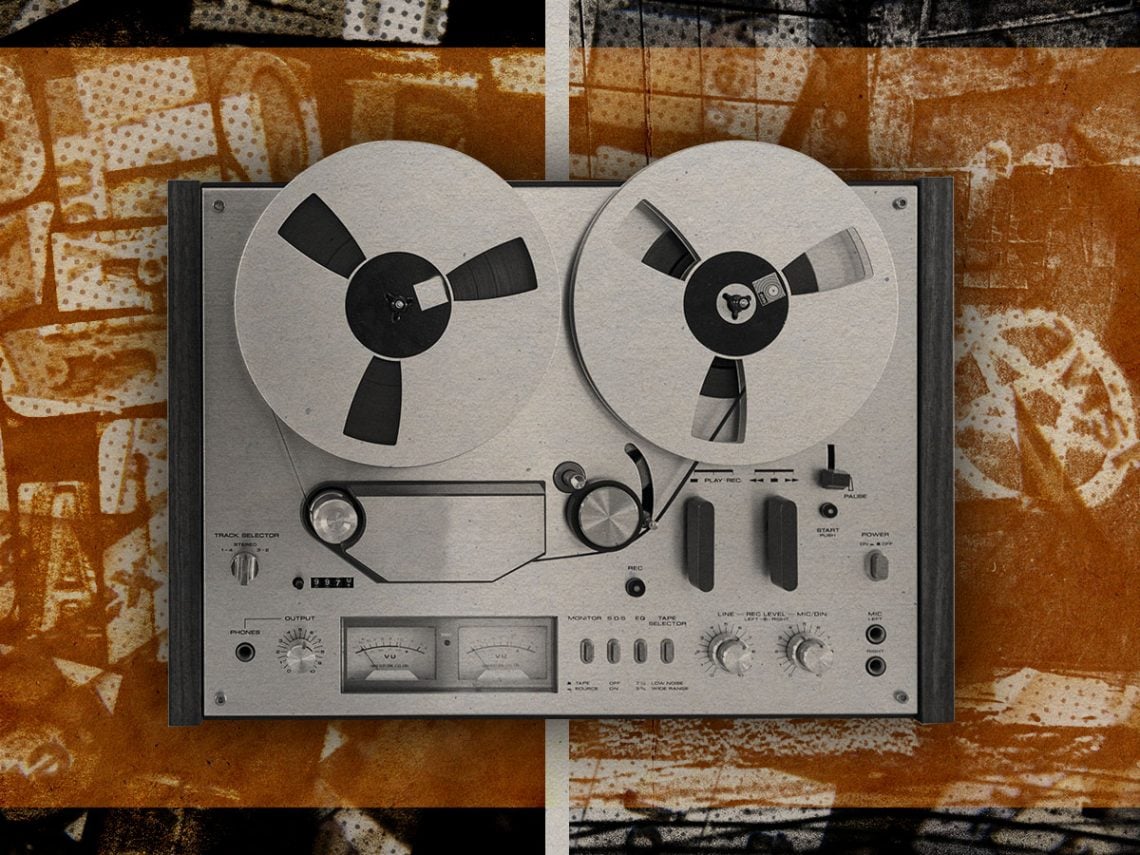
When the third factor of drugs entered this potent mix, we saw the birth of backmasking as an art form. The premise is simple. Record a message and relay it backwards. That way, it sounds like artful gibberish, but when you reverse the track, you hear the actual words played forward. The first popular song to do this was, of course, by the inventors of everything: The Beatles.
John Lennon explains how the practice in question came to be deployed on the ‘Paperback Writer’ B-side ‘Rain’. “I got home about five in the morning, stoned out of my head,” he recalled. “I staggered up to my tape recorder and I put [‘Rain’] on, but it came out backwards, and I was in a trance in the earphones. What is it? What is it? It’s too much. I really wanted the whole song backwards almost, and that was it. So we tagged it on the end.”
Sitting in the already shady world of the B-side, this technique created an eerie aura that allured fans. Furthermore, it was avant-garde enough to once more show that the biggest band in the world were pulling away from the known centre. In those days, pretty much every big act was against the square establishment in some way. And with The Beatles leading the way, others were soon set to follow in the subversive act of backmasking.
So, what exactly was Lennon encoding? Well, as he said, he simply played the original song backwards in error. That is all that makes the final edit in the closing stages—it is simply a vocal snippet of Lennon’s singing played in reverse. So, how could that be deemed subversive? Well, it was just because the authorities didn’t get it, man. And thereafter, a wave of hysteria took over. The establishment were subsumed by the paranoia that comes with not getting the joke and worrying that you may be the butt of it.
Lennon’s exhibition was an entirely intentional piece of experimental art. Literally, all you had to do was reverse the sound and you could hear him singing the song. Granted, it might have sounded a little bit funny, but the content was the same. However, fuelled by the meshuga that beset the floundering authorities, now fans, spies, and fanatics alike were looking for more. What else was being said within the strange sounds of psychedelia? Well, not a lot.
But that didn’t stop fans from hearing “Paul is dead” in ‘Revolution 9’ and “worship Satan” in Led Zeppelin songs. None of these was actually the case, it was a mere unintentional phonetic reversal. In other words, play enough songs backwards, and squint your ears, and you’re going to pick up on something you can twist.
Nevertheless, before Lennon, there was actually an oculist origin to the practice. The Satanic spirit leader Aleister Crowley encouraged magicians to play records backwards so that they became adept at “thinking backwards by external means”. In essence, if you wanted to know how a trick was done, you had to reverse engineer it and not focus on the end result but on how it got there. Apparently, listening to something backwards was a way of training your brain to be more efficient at this.
That origin is not just some coincidental tidbit either. Crowley’s otherworldly ways attracted many counterculture stars of the day. They leaned into the dark subversion on offer. With drugs bountiful, the old standards were being rewritten. People wanted to do with the traditions and indoctrinations that had ‘caged’ society. Thus, avant-garde experimentation was rampant.
The problem was that this expressive experiment was largely an artistic venture and used for show. However, when the satanic panic swept America, this all changed, and the dying flame of backmasking was reignited in an eternalising way. The 1980s saw a child abduction case hit the headlines. The statistic showed that it was no more widespread than usual, but this story gained traction and capitalised on the fact that parents were feeling guilty for spending more time at work than at any point in modern history. They were scared about their children. And the rise of the evangelical Christian right amplified this. Suddenly, fears ran wild that Satan had infiltrated America.
Naturally, heavy metal bands bore the brunt of this and accusations of sinister backmasking ran riot without any grounds. Rob Halford of Judas Priest was slandered for coding suicidal messages in his music, to which he very shrewdly pointed out, “why would I want to kill off our fanbase? If I was coding messages, then surely it would be to urge fans to buy more of our singles.” However, logic has never had any place in this discussion—it was always a pop culture sensation, and as with many things in culture, it satiated our desire to indulge in fantasy. Thus, the practice is now enshrined in the lore of mystic alternative art.
